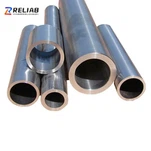
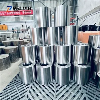
Titanium tubes offer significant advantages in terms of environmental protection and sustainability, making them one of the preferred pipe materials across a wide range of industries. The following sections will explore in detail the key advantages of titanium tubes in these areas.
First, titanium tubing offers exceptional corrosion resistance, making it ideal for handling corrosive media. In many chemical, pharmaceutical, and marine engineering applications, piping systems must withstand the corrosive effects of various acids, alkalis, salts, and other corrosive substances. While traditional metal pipes often struggle to withstand such corrosion, titanium tubing can operate reliably over the long term, reducing the frequency of leaks and replacements caused by corrosion and thereby lowering the risk of potential environmental pollution.
Secondly, titanium pipes possess excellent biocompatibility, making them widely used in industries such as medicine, food, and pharmaceuticals. Titanium pipes do not release harmful substances into biological tissues nor cause allergic reactions, allowing them to be safely used in the manufacture of medical implants and medical devices. Furthermore, in the food and pharmaceutical sectors, the use of titanium pipes ensures product purity and safety, preventing quality issues caused by contamination from pipe materials.
Furthermore, titanium tubes are highly recyclable. As resources become increasingly scarce, recycling has become a vital pathway to sustainable development. As a metallic material, titanium tubes can be reused through specialized recycling and remanufacturing processes, reducing reliance on virgin resources while lowering energy consumption and waste emissions. This recyclability not only helps protect the environment but also delivers economic benefits to businesses.
Moreover, titanium tubes have a long service life and low maintenance costs. Due to their excellent corrosion resistance and strength, titanium tubes can operate stably over the long term in harsh environments, reducing downtime and repair costs caused by pipeline failures. This not only improves production efficiency but also minimizes negative environmental impacts.
Furthermore, the production and use of titanium tubes align with the principles of green manufacturing. During the manufacturing process, environmental impact can be minimized through process optimization, reduced energy consumption, and minimized waste emissions. Simultaneously, the superior performance of titanium tubes during use helps reduce environmental pollution and damage, meeting the requirements of sustainable development.
In summary, titanium tubes offer a wide range of advantages in terms of environmental protection and sustainable development. Their corrosion resistance, biocompatibility, recyclability, long service life, and low maintenance costs make them an ideal choice for environmental protection and sustainable development across numerous industries. As public awareness of environmental protection and sustainable development continues to grow, the application prospects for titanium tubes will become even broader. In the future, we can expect more sectors to adopt titanium tubes as solutions for environmental protection and sustainable development, working together to contribute to the creation of a better ecological environment.


 E-mail: garychen3215@hotmail.com
 Address: No.35, Baoti Rd, Baoji city, Shaanxi Province, China
 Contact: Mr. Gary Chen
 Phone: +86-917-8883215
 Mobile/WhatsApp: +86 13092900605