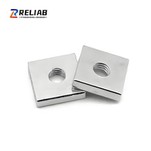
Metallic materials are the most fundamental and widely used engineering materials in the fields of modern mechanical manufacturing, equipment engineering, and structural engineering. The overall practical value of a titanium material is primarily determined by two key sets of properties: mechanical properties and processing properties. Mechanical properties determine a component's load-bearing capacity, safety, stability, and service life; processing properties directly affect the difficulty of forming the material, machining quality, production costs, and production efficiency. This paper systematically elaborates on the definitions, characteristics, and engineering significance of various core properties of metallic materials, providing a theoretical basis for material selection, process development, and product optimization.
I. Mechanical Properties of Metallic Materials
Mechanical properties refer to the ability of metallic materials to resist deformation, failure, and energy absorption under the action of external forces, loads, temperature, and stress; they serve as the core basis for structural component design, strength verification, and safety assessment. They primarily include key indicators such as strength, ductility, hardness, and toughness.
1. Strength: Strength is the core ability of a material to resist deformation and fracture under external forces, and it is the primary criterion for material selection in engineering. Under tensile loads, material properties are primarily divided into two categories: Yield Strength-the critical stress at which a material undergoes plastic deformation, representing the upper limit of the safe load for a component's long-term service; and Tensile Strength-the maximum stress a material can withstand before fracture, reflecting its ultimate load-bearing capacity. In engineering, yield strength is used to determine the allowable stress in a structure, while tensile strength is used to evaluate the material's safety margin, effectively preventing structural failure due to overloading.
2. Ductility: Ductility refers to a material's ability to undergo irreversible, permanent deformation under applied stress without fracturing. Common evaluation metrics include elongation and reduction of area. Metals with excellent ductility are less prone to cracking during stamping, bending, and forging processes. Additionally, when equipment is overloaded, they can preemptively release stress through deformation, thereby preventing sudden fracture and enhancing the equipment's safety and fault tolerance.
3. Hardness: Hardness characterizes a material's ability to resist indentation by external objects, surface wear, and localized deformation, directly reflecting the material's surface strength and wear resistance. Common industrial testing methods include Brinell hardness, Rockwell hardness, and Vickers hardness. The higher the hardness, the greater the material's wear resistance and resistance to extrusion, making it suitable for manufacturing wear-resistant critical components such as gears, molds, and shafts.
4. Toughness: Toughness is a material's ability to resist impact loads and absorb impact energy. Materials with poor impact toughness are prone to brittle fracture under low-temperature or impact conditions; therefore, it is a critical parameter that must be evaluated for materials used in construction machinery, pressure vessels, and rail transit.
II. Processability of Metallic Materials
Processability refers to a material's overall ability to withstand various cold and hot forming processes. It determines whether a material can be efficiently machined into high-quality, conforming parts and serves as a key basis for process design, production scheduling, and cost control. It primarily includes machinability, forgeability, castability, and weldability.
1. Machinability: Machinability reflects the ease or difficulty of mechanical processing operations such as turning, milling, planing, and grinding. Metals with excellent machinability exhibit low cutting resistance, smooth chip removal, low tool wear, and high surface finish quality. Conversely, materials with high hardness and high viscosity are prone to issues such as tool sticking, chatter marks, and surface roughness, requiring optimized cutting parameters and specialized tool selection.
2. Forgeability: Forgeability represents a metal's ability to undergo plastic deformation under pressure and depends primarily on the material's plasticity and resistance to deformation. Materials with good forgeability can undergo grain refinement and structural densification through hot and cold forging, significantly enhancing the comprehensive mechanical properties of parts; they are widely used in the manufacture of high-strength structural components.
3. Castability: Castability is a comprehensive reflection of a metal's ability to be formed in a molten state, encompassing melt fluidity, mold-filling ability, shrinkage characteristics, oxidation resistance, and resistance to porosity. Metals with excellent castability produce well-filled castings with few defects and are suitable for the mass production of mechanical castings with complex internal cavities and complex external shapes.
4. Weldability: Weldability refers to a material's ability to form a strong, defect-free welded joint after localized high-temperature fusion. Materials with good weldability produce welds with high strength that are resistant to cracks, porosity, and embrittlement defects, serving as the fundamental guarantee for the assembly and manufacturing of steel structures, pressure vessels, and piping systems.
Conclusion:
The mechanical properties and process properties of metallic materials are the two core systems for evaluating a material's engineering value. Mechanical properties ensure the safety and stability of equipment in use, while process properties determine manufacturing feasibility and cost-effectiveness. A thorough understanding of the performance characteristics of various materials and the appropriate selection of processing techniques form a crucial technical foundation for improving the quality of mechanical products, reducing production costs, and optimizing product design.

 E-mail: garychen3215@hotmail.com
 Address: No.35, Baoti Rd, Baoji city, Shaanxi Province, China
 Contact: Mr. Gary Chen
 Phone: +86-917-8883215
 Mobile/WhatsApp: +86 13092900605