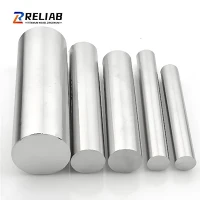
When it comes to fasteners, the Titanium Socket Head Screw M6 stands out as a high - performance option. As a supplier of this product, I've had the opportunity to observe and understand how different factors, especially the length of the screw, can significantly impact its performance.
1. Basics of Titanium Socket Head Screw M6
The Titanium Socket Head Screw M6 is a specialized fastener made from titanium, a metal renowned for its excellent strength - to - weight ratio, corrosion resistance, and biocompatibility. The "M6" designation refers to the metric size of the screw, with a nominal diameter of 6 millimeters. These screws are commonly used in various industries such as aerospace, medical, and high - end automotive due to their superior properties.
The socket head design allows for a more compact and flush - fitting installation compared to traditional hex - head screws. This is particularly useful in applications where space is limited or a smooth surface finish is required. You can find more details about our Titanium Socket Head Screw M6 on our website.
2. Impact of Screw Length on Tensile Strength
One of the most critical performance aspects affected by the length of the Titanium Socket Head Screw M6 is its tensile strength. Tensile strength refers to the maximum amount of pulling force the screw can withstand before breaking.
In general, as the length of the screw increases, its tensile strength also increases to a certain extent. This is because a longer screw has more material to distribute the applied load. When a pulling force is applied to the screw, the stress is spread over a larger volume of titanium. However, there is a limit to this relationship. If the screw becomes too long, it may be more prone to bending or buckling under load, which can actually reduce its effective tensile strength.
For example, in a simple experiment where two Titanium Socket Head Screw M6 with different lengths are subjected to a tensile test, the longer screw will typically start to show signs of yielding at a higher load. But if the length is excessive, the screw may start to deform in a non - linear way, and the load - bearing capacity will be compromised.
3. Effect on Shear Strength
Shear strength is another important performance factor. It measures the screw's ability to resist forces that act parallel to its axis. The length of the screw plays a crucial role in determining its shear strength.
A shorter Titanium Socket Head Screw M6 is generally more resistant to shear forces. This is because the shear stress is concentrated over a shorter length, and the screw can better withstand the forces without deforming. In contrast, a longer screw has a larger surface area along its axis, which means that the shear stress is distributed over a greater length. As a result, the screw may be more likely to experience shear failure under high - load conditions.
In applications where shear forces are dominant, such as in some mechanical joints, a shorter screw may be the preferred choice. However, it's important to note that the overall design of the joint and the mating materials also have a significant impact on the screw's shear performance.
4. Influence on Installation and Stability
The length of the Titanium Socket Head Screw M6 also affects the installation process and the stability of the fastened joint.
During installation, a longer screw requires more torque to tighten properly. This is because the friction between the screw threads and the mating material increases with the length of the screw. If the installer does not apply enough torque, the screw may not be tightened securely, leading to a loose joint. On the other hand, over - tightening a long screw can cause damage to the screw or the mating material.
In terms of stability, a longer screw can provide a more secure connection in some cases. It can penetrate deeper into the mating material, increasing the contact area and the holding force. However, if the material is not thick enough to accommodate the full length of the screw, it may cause the material to split or crack, reducing the stability of the joint.
5. Thermal and Chemical Performance
Titanium is known for its good thermal and chemical resistance. The length of the Titanium Socket Head Screw M6 can influence these properties in different ways.
In terms of thermal performance, a longer screw has a larger surface area exposed to the surrounding environment. This means that it can transfer heat more effectively. In high - temperature applications, this can be an advantage as it helps to dissipate heat and prevent overheating of the joint. However, in low - temperature environments, a longer screw may also lose heat more quickly, which could potentially affect the mechanical properties of the screw and the joint.
Chemically, a longer screw has more surface area that can react with the surrounding chemicals. While titanium is highly corrosion - resistant, in extremely aggressive chemical environments, a longer screw may be more prone to surface corrosion over time. This can weaken the screw and reduce its performance.
6. Applications and Optimal Length Selection
The choice of the optimal length for the Titanium Socket Head Screw M6 depends on the specific application.
In aerospace applications, where weight and strength are of utmost importance, a shorter screw may be preferred for joints where shear forces are dominant. For example, in the assembly of aircraft wings, shorter screws can provide a high - strength connection without adding excessive weight. On the other hand, in some structural components where tensile forces are more significant, a longer screw may be used to ensure a strong and stable connection.


In the medical industry, where biocompatibility and precision are crucial, the length of the screw is carefully selected based on the anatomical requirements. For example, in orthopedic implants, the screw length must be appropriate to ensure proper fixation without causing damage to the surrounding tissues.
7. Related Titanium Products
In addition to the Titanium Socket Head Screw M6, we also offer other high - quality titanium products. Our Grade 2 Titanium Full Threading Bolt is another popular choice for various industrial applications. It provides similar benefits in terms of strength and corrosion resistance. We also supply High Purity Titanium Particles, which are used in advanced manufacturing processes such as powder metallurgy.
8. Conclusion and Call to Action
In conclusion, the length of the Titanium Socket Head Screw M6 has a profound impact on its performance in terms of tensile strength, shear strength, installation, stability, and thermal and chemical properties. Choosing the right length is crucial for ensuring the optimal performance of the fastener in different applications.
If you are in need of high - quality Titanium Socket Head Screw M6 or other titanium products, we are here to help. Our team of experts can provide you with professional advice on product selection and usage. We invite you to contact us for more information and to start a procurement discussion. We look forward to serving your needs and providing you with the best titanium fasteners on the market.
References
- ASM Handbook Committee, "ASM Handbook Volume 2: Properties and Selection: Nonferrous Alloys and Special - Purpose Materials", ASM International, 2001.
- Budynas, R. G., & Nisbett, J. K., "Shigley's Mechanical Engineering Design", McGraw - Hill Education, 2015.
- Callister, W. D., & Rethwisch, D. G., "Materials Science and Engineering: An Introduction", Wiley, 2016.