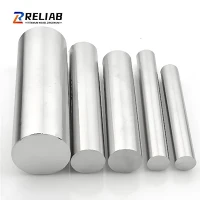
Hey there! I'm a supplier in the titanium business, and today I'm gonna take you through the ins and outs of how titanium is processed. It's a super interesting journey, from the raw ore to the high - quality products we offer.
Mining and Ore Extraction
First things first, we gotta get the titanium from the ground. Titanium is the ninth most abundant element in the Earth's crust, but it's rarely found in its pure form. Most of the time, it exists as titanium dioxide (TiO₂) in minerals like ilmenite and rutile.


Mining operations use different methods depending on the location and type of deposit. Open - pit mining is common when the ore is close to the surface. Big machines dig up the soil and rock that contain the titanium minerals. After the ore is mined, it's transported to a processing plant.
Once at the plant, the ore goes through a series of steps to separate the titanium - bearing minerals from the rest. Magnetic separation is often used since ilmenite is weakly magnetic. This helps to separate it from non - magnetic materials. Gravity separation can also be used, taking advantage of the difference in density between the titanium minerals and other substances.
Converting Ore to Titanium Sponge
After we've got the concentrated titanium ore, the next big step is to convert it into titanium sponge. This process usually starts with the Kroll process, which is the most widely used method.
The titanium ore is first reacted with chlorine gas at high temperatures in the presence of carbon. This produces titanium tetrachloride (TiCl₄), a volatile liquid. The reaction is something like this: 2FeTiO₃ + 7Cl₂ + 6C → 2TiCl₄ + 2FeCl₃+ 6CO.
The titanium tetrachloride is then purified through distillation to remove impurities. Now, here comes the cool part. The purified TiCl₄ is reacted with molten magnesium in a sealed reactor at high temperatures according to the reaction: TiCl₄ + 2Mg → Ti + 2MgCl₂.
The magnesium reduces the titanium tetrachloride to titanium metal, and magnesium chloride is formed as a by - product. After the reaction is complete, the remaining magnesium and magnesium chloride are removed through a vacuum distillation process, leaving behind a porous, sponge - like form of titanium called titanium sponge. This sponge is the raw material for many further titanium - based products.
Melting and Forming
Once we have the titanium sponge, it's time to turn it into useful shapes. The sponge is melted in an electric arc furnace or a vacuum arc remelting (VAR) furnace. These furnaces operate in a vacuum or an inert gas environment to prevent the titanium from reacting with oxygen, nitrogen, or other elements that could degrade its quality.
After the titanium is melted, it can be cast into ingots. These ingots are then used for further processing. For example, they can be forged. Forging involves applying pressure to the heated titanium ingot to shape it. This process can improve the mechanical properties of the titanium, making it stronger and more ductile.
We offer a High Quality Titanium Grade 2 Forged Ring that goes through a meticulous forging process. The forging not only gives it the right shape but also enhances its performance in various applications.
Machining and Finishing
Once the titanium has been formed into a basic shape, it often needs to be machined to achieve the final dimensions and surface finish. Machining titanium can be a bit tricky because it has a high strength - to - weight ratio and a low thermal conductivity. This means that it can generate a lot of heat during machining, which can cause tool wear.
Special cutting tools and techniques are used to machine titanium. For example, high - speed steel or carbide tools with specific coatings can help reduce friction and heat generation. CNC (Computer Numerical Control) machining is also commonly used to ensure precise and accurate cuts.
After machining, the titanium product may go through a finishing process. This could include polishing, which gives the titanium a smooth, shiny surface. Anodizing is another finishing technique. It creates a thin oxide layer on the surface of the titanium, which can improve its corrosion resistance and also give it different colors.
Welding and Joining
In many applications, titanium parts need to be joined together. Welding titanium is different from welding other metals. Since titanium is highly reactive at high temperatures, it must be welded in an inert gas environment, usually argon. This prevents the titanium from reacting with oxygen or nitrogen in the air, which could form brittle compounds and weaken the weld.
TIG (Tungsten Inert Gas) welding is a popular method for welding titanium. It uses a tungsten electrode to create an arc that melts the titanium, and a filler rod can be added if needed. The argon gas shields the weld area from the surrounding atmosphere.
We also have ASTM B862 Titanium Welded Pipe in our product range. The welding process for these pipes is carefully controlled to ensure high - quality joints that can withstand the rigors of different applications.
Making Fasteners and Small Parts
Titanium is also used to make a wide range of fasteners and small machined parts. For example, CP Titanium Plain Washers are made from commercially pure (CP) titanium. These washers have excellent corrosion resistance and are lightweight, making them suitable for many applications, especially in harsh environments.
The process of making these small parts involves starting with a suitable titanium bar or sheet. The material is then cut, machined, and sometimes heat - treated to achieve the desired properties. Precision machining is crucial to ensure that the fasteners and parts meet the required dimensions and tolerances.
Quality Control
Throughout the entire processing journey, quality control is of utmost importance. We use a variety of testing methods to ensure that our titanium products meet the highest standards.
Non - destructive testing (NDT) methods such as ultrasonic testing and X - ray testing are used to detect internal defects in the titanium, like cracks or voids. Chemical analysis is also carried out to check the composition of the titanium and make sure it meets the required specifications.
Mechanical testing, including tensile testing, hardness testing, and impact testing, is done to evaluate the mechanical properties of the titanium products. This helps us ensure that they can perform well in their intended applications.
Conclusion
So there you have it! That's a pretty comprehensive look at how titanium is processed. From mining the ore to creating high - quality finished products, it's a complex but fascinating process.
If you're in the market for titanium products, whether it's forged rings, welded pipes, or plain washers, we've got you covered. We're dedicated to providing top - notch titanium products at competitive prices. If you'd like to learn more about our offerings or discuss a potential purchase, just reach out. We're here to answer your questions and help you find the right titanium solutions for your needs.
References
- "Titanium: A Technical Guide" by John C. Williams
- "The Chemistry of Titanium" by G. Wilkinson, R. D. Gillard, and J. A. McCleverty