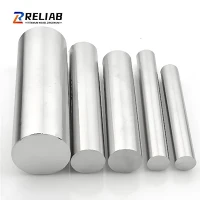
As a supplier of Ti - 3AI - 2.5V alloy rod and bar, I understand the importance of preventing the aging of these products. Ti - 3AI - 2.5V alloy is widely used in various industries due to its excellent properties such as high strength, good corrosion resistance, and low density. However, like any other material, it is susceptible to aging, which can lead to a decrease in its mechanical properties and performance. In this blog, I will share some effective ways to prevent the aging of Ti - 3AI - 2.5V alloy rod and bar.
Understanding the Aging Mechanism of Ti - 3AI - 2.5V Alloy
Before discussing the prevention methods, it is essential to understand the aging mechanism of Ti - 3AI - 2.5V alloy. Aging in titanium alloys is mainly caused by the precipitation of secondary phases within the matrix. When the alloy is exposed to elevated temperatures for a certain period, the solute atoms in the solid solution start to diffuse and form precipitates. These precipitates can change the microstructure of the alloy, leading to hardening and embrittlement.
The aging process can be divided into two main types: natural aging and artificial aging. Natural aging occurs at room temperature over a long period, while artificial aging is carried out at elevated temperatures to accelerate the precipitation process. In the case of Ti - 3AI - 2.5V alloy, artificial aging is more likely to occur during heat treatment processes or when the alloy is used in high - temperature environments.
Storage Conditions
Proper storage is the first step in preventing the aging of Ti - 3AI - 2.5V alloy rod and bar. The alloy should be stored in a dry and well - ventilated environment. Moisture can accelerate the corrosion process, which can further promote aging. The storage area should be free from any sources of humidity, such as water leaks or high - humidity areas.
It is also important to protect the alloy from direct contact with other metals. Galvanic corrosion can occur when different metals are in contact, especially in the presence of an electrolyte. Therefore, the Ti - 3AI - 2.5V alloy rod and bar should be stored separately from other metals or use appropriate insulation materials to prevent contact.
Surface Protection
Applying a protective coating on the surface of the Ti - 3AI - 2.5V alloy rod and bar can effectively prevent aging. There are several types of coatings available, such as oxide coatings, nitride coatings, and organic coatings.
Oxide coatings can be formed by heat treatment in an oxygen - containing atmosphere. This type of coating can provide a barrier against oxygen and moisture, reducing the risk of oxidation and corrosion. Nitride coatings, on the other hand, are usually formed by chemical vapor deposition (CVD) or physical vapor deposition (PVD). These coatings have high hardness and good wear resistance, which can protect the alloy from mechanical damage and environmental factors.
Organic coatings, such as paints and varnishes, can also be used to protect the surface of the alloy. They can provide a physical barrier against moisture, chemicals, and UV radiation. However, the choice of organic coating should be carefully considered, as some coatings may not be compatible with the titanium alloy and may cause adhesion problems.
Heat Treatment Control
Heat treatment is an important process in the production of Ti - 3AI - 2.5V alloy rod and bar. However, improper heat treatment can accelerate the aging process. Therefore, it is crucial to control the heat treatment parameters, such as temperature, time, and cooling rate.
The heat treatment temperature should be carefully selected to avoid over - aging. If the temperature is too high, the precipitation of secondary phases will be accelerated, leading to hardening and embrittlement. On the other hand, if the temperature is too low, the desired microstructure and properties may not be achieved.
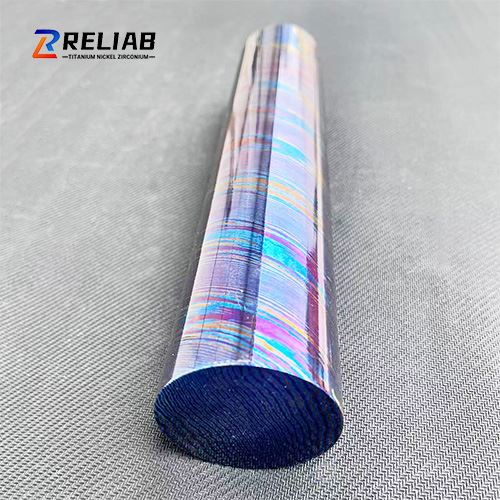

The time of heat treatment also plays an important role. Prolonged heat treatment can cause excessive precipitation, while short - time heat treatment may not be sufficient to achieve the desired properties. Therefore, the heat treatment time should be optimized based on the specific requirements of the alloy.
The cooling rate after heat treatment is also critical. A rapid cooling rate can prevent the formation of large - sized precipitates, while a slow cooling rate may promote the growth of precipitates. Therefore, a controlled cooling rate should be used to ensure the stability of the alloy microstructure.
Avoiding Stress Concentration
Stress concentration can accelerate the aging process of Ti - 3AI - 2.5V alloy rod and bar. When the alloy is subjected to stress, the lattice structure is distorted, which can promote the diffusion of solute atoms and the formation of precipitates. Therefore, it is important to avoid stress concentration during the manufacturing, processing, and use of the alloy.
During the manufacturing process, proper machining techniques should be used to avoid creating sharp corners or notches, which can cause stress concentration. In addition, the alloy should be handled carefully to avoid any mechanical damage that may introduce stress.
When the alloy is used in a structure, the design should be optimized to distribute the stress evenly. This can be achieved by using appropriate cross - sectional shapes and dimensions, as well as by avoiding sudden changes in the geometry of the structure.
Regular Inspection and Maintenance
Regular inspection and maintenance are essential to detect any signs of aging early and take appropriate measures to prevent further deterioration. Visual inspection can be used to check for any surface defects, such as cracks, corrosion, or discoloration. Non - destructive testing methods, such as ultrasonic testing, X - ray testing, and magnetic particle testing, can be used to detect internal defects.
If any signs of aging are detected, appropriate measures should be taken immediately. This may include surface treatment, heat treatment, or replacement of the damaged parts. Regular maintenance can also help to keep the alloy in good condition and extend its service life.
Conclusion
Preventing the aging of Ti - 3AI - 2.5V alloy rod and bar is crucial to ensure its long - term performance and reliability. By following the above - mentioned methods, such as proper storage, surface protection, heat treatment control, avoiding stress concentration, and regular inspection and maintenance, the aging process can be effectively delayed.
As a supplier of Ti - 3AI - 2.5V alloy rod and bar, we are committed to providing high - quality products and technical support to our customers. If you are interested in our Mokuti Titanium Rod, TIG Titanium Welding Rod, or Titanium AMS 6242 Bar for Aerospace, please feel free to contact us for more information and to discuss your specific requirements. We look forward to working with you to meet your needs and provide the best solutions for your applications.
References
- Boyer, R. R., Welsch, G., & Collings, E. W. (1994). Materials Properties Handbook: Titanium Alloys. ASM International.
- Williams, J. C., & Starke, E. A. (2003). Progress in structural materials for aerospace systems. Acta Materialia, 51(19), 5775 - 5799.
- Lutjering, G., & Williams, J. C. (2007). Titanium. Springer Science & Business Media.