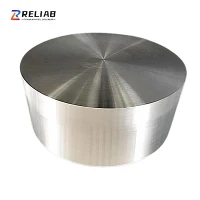
Is Grade 3 Pure Titanium Plate suitable for high - pressure applications?
As a supplier of Grade 3 Pure Titanium Plate, I often encounter inquiries from customers regarding its suitability for high - pressure applications. In this blog, I will delve into the properties of Grade 3 Pure Titanium Plate and analyze whether it is a good fit for high - pressure scenarios.
Properties of Grade 3 Pure Titanium Plate
Grade 3 pure titanium is known for its excellent corrosion resistance, high strength - to - weight ratio, and good formability. It contains a relatively low amount of interstitial elements such as oxygen, nitrogen, and carbon compared to some other titanium grades. This purity gives it unique characteristics that are beneficial in many applications.
The corrosion resistance of Grade 3 pure titanium is outstanding. It can resist corrosion in a wide range of environments, including seawater, chlorinated solutions, and many chemical substances. This makes it a popular choice in industries such as marine, chemical processing, and desalination plants. The high strength - to - weight ratio means that it can provide significant strength while being relatively lightweight. This property is highly valued in aerospace and automotive industries, where weight reduction is crucial for fuel efficiency and performance.


In terms of formability, Grade 3 pure titanium can be easily fabricated into various shapes, including plates, sheets, bars, and tubes. This allows manufacturers to create complex components for different applications.
High - Pressure Environments and Requirements
High - pressure applications typically require materials that can withstand significant forces without deforming or failing. The pressure can come from various sources, such as hydraulic systems, deep - sea exploration equipment, and high - pressure chemical reactors.
In high - pressure environments, materials need to have high yield strength and ultimate tensile strength. Yield strength is the point at which a material begins to deform plastically, while ultimate tensile strength is the maximum stress a material can withstand before breaking. Additionally, materials should have good fatigue resistance, as they may be subjected to cyclic loading in high - pressure systems.
Suitability of Grade 3 Pure Titanium Plate for High - Pressure Applications
Strength Considerations
Grade 3 pure titanium has a relatively high yield strength and ultimate tensile strength. Its yield strength is typically around 345 - 485 MPa, and its ultimate tensile strength is approximately 485 - 620 MPa. These values indicate that it can withstand a certain level of pressure without significant deformation. However, in extremely high - pressure applications, such as those in deep - sea oil and gas exploration where pressures can reach thousands of psi, the strength of Grade 3 pure titanium may be insufficient. In such cases, higher - strength titanium alloys or other high - strength materials may be more appropriate.
Corrosion Resistance in High - Pressure Environments
One of the major advantages of using Grade 3 pure titanium in high - pressure applications is its excellent corrosion resistance. In high - pressure chemical reactors or hydraulic systems where the fluid may be corrosive, Grade 3 pure titanium can prevent corrosion and ensure the long - term reliability of the equipment. For example, in a high - pressure seawater desalination plant, the Grade 3 pure titanium plate can resist the corrosive effects of seawater under high pressure, reducing the need for frequent maintenance and replacement.
Fatigue Resistance
High - pressure systems often involve cyclic loading, which can lead to fatigue failure of materials. Grade 3 pure titanium has good fatigue resistance, which means it can withstand repeated stress cycles without cracking or failing. This property is particularly important in applications such as high - pressure pumps and valves, where the components are constantly subjected to pressure changes.
Applications of Grade 3 Pure Titanium Plate in High - Pressure Situations
Although Grade 3 pure titanium may not be suitable for the most extreme high - pressure applications, it has found its place in several high - pressure scenarios.
Hydraulic Systems
In hydraulic systems, Grade 3 pure titanium plates can be used to manufacture cylinders, pistons, and other components. Its high strength - to - weight ratio reduces the overall weight of the hydraulic system, while its corrosion resistance ensures the durability of the components in the presence of hydraulic fluids. For example, in some aerospace hydraulic systems, Grade 3 pure titanium plates are used to replace heavier steel components, improving the performance and efficiency of the system.
Chemical Processing
In chemical processing plants, high - pressure reactors are often used to carry out chemical reactions. Grade 3 pure titanium plates can be used as the lining material for these reactors due to their corrosion resistance. They can protect the reactor from the corrosive effects of chemicals under high pressure, extending the service life of the equipment.
Comparison with Other Materials
When considering materials for high - pressure applications, it is important to compare Grade 3 pure titanium with other options.
Steel
Steel is a commonly used material in high - pressure applications due to its high strength. However, steel is prone to corrosion, especially in corrosive environments. In contrast, Grade 3 pure titanium has superior corrosion resistance, which makes it a better choice in applications where corrosion is a concern. Additionally, the high strength - to - weight ratio of Grade 3 pure titanium gives it an advantage in weight - sensitive applications.
Other Titanium Alloys
There are other titanium alloys that have higher strength than Grade 3 pure titanium, such as Grade 5 titanium alloy (Ti - 6Al - 4V). These alloys are often used in more demanding high - pressure applications. However, Grade 3 pure titanium is more cost - effective and easier to fabricate compared to some of the high - strength titanium alloys. It also has better biocompatibility, which makes it suitable for medical applications such as Dental Medical Titanium Alloy Plates.
Conclusion
In conclusion, Grade 3 pure titanium plate has both advantages and limitations when it comes to high - pressure applications. Its excellent corrosion resistance, good formability, and reasonable strength make it suitable for many high - pressure scenarios, especially those where corrosion is a concern and weight reduction is desired. However, in extremely high - pressure environments, its strength may not be sufficient, and higher - strength materials may be required.
If you are considering using Grade 3 pure titanium plate for your high - pressure applications, I recommend conducting thorough testing and analysis to ensure its suitability. As a supplier, I have extensive experience in providing high - quality Grade 3 pure titanium plates. We can offer customized solutions based on your specific requirements. Whether you need Best Titanium Cutting Boards or Pure Cut Titanium Cutting Board, we can meet your needs.
If you are interested in learning more about our Grade 3 pure titanium plates or have any questions regarding their suitability for your high - pressure applications, please feel free to contact us for a detailed discussion and potential procurement opportunities.
References
- ASM Handbook Volume 2: Properties and Selection: Nonferrous Alloys and Special - Purpose Materials.
- Titanium: A Technical Guide, Second Edition by J. R. Davis.
- Corrosion Resistance of Titanium by G. E. Troiano.