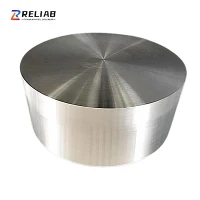
As a supplier of Grade 3 Pure Titanium Plate, I understand that cost - effectiveness is a significant concern for many of our clients. While Grade 3 Pure Titanium Plate offers excellent corrosion resistance, high strength - to - weight ratio, and biocompatibility, there are situations where more budget - friendly alternatives may be required. In this blog post, I will explore some cost - effective alternatives to Grade 3 Pure Titanium Plate.
1. Titanium Alloys
Titanium alloys are a popular alternative to pure titanium plates. They are created by combining titanium with other elements such as aluminum, vanadium, or molybdenum. These alloys can offer similar properties to Grade 3 Pure Titanium Plate at a lower cost.
One of the most common titanium alloys is Ti - 6Al - 4V (Grade 5). This alloy contains 6% aluminum and 4% vanadium. It has excellent strength, good corrosion resistance, and is widely used in aerospace, medical, and marine applications. Compared to Grade 3 Pure Titanium Plate, Ti - 6Al - 4V can be more cost - effective, especially when large quantities are required. The addition of alloying elements improves its mechanical properties, allowing for the use of thinner sections in some applications, which can further reduce costs.
Another alloy worth considering is Ti - 3Al - 2.5V (Grade 9). It has a lower aluminum and vanadium content compared to Ti - 6Al - 4V. This alloy offers good formability and weldability, making it suitable for applications where complex shapes are required. It also has a relatively lower cost than Grade 3 Pure Titanium Plate, making it an attractive alternative for cost - conscious projects.
2. Stainless Steel
Stainless steel is a well - known and widely used material that can be a cost - effective alternative to Grade 3 Pure Titanium Plate in certain applications. Stainless steel comes in various grades, each with different properties.
Austenitic stainless steels, such as 304 and 316, are commonly used. They offer good corrosion resistance, especially in mild to moderately corrosive environments. While their corrosion resistance is not as high as that of Grade 3 Pure Titanium Plate in highly corrosive conditions, they can be a great choice for applications where the corrosion risk is relatively low. For example, in some architectural applications or food processing equipment where the exposure to corrosive substances is limited, stainless steel can provide a cost - effective solution.
Duplex stainless steels, like 2205, offer a combination of high strength and good corrosion resistance. They have a higher strength - to - weight ratio compared to austenitic stainless steels and can be used in applications where strength is a critical factor. Although they are more expensive than austenitic stainless steels, they are still generally more affordable than Grade 3 Pure Titanium Plate, especially for large - scale projects.
3. Aluminum Alloys
Aluminum alloys are lightweight and relatively inexpensive, making them an attractive alternative to Grade 3 Pure Titanium Plate in applications where weight is a major concern and high - end corrosion resistance is not required.
6061 aluminum alloy is one of the most commonly used aluminum alloys. It has good mechanical properties, excellent formability, and is easy to machine. It is widely used in the automotive, aerospace, and construction industries. While it does not have the same level of corrosion resistance as Grade 3 Pure Titanium Plate, it can be protected with appropriate surface treatments such as anodizing to improve its corrosion resistance.
7075 aluminum alloy is known for its high strength. It is often used in applications where high - strength materials are required, such as aircraft structures. Although it is more expensive than 6061, it is still much more affordable than Grade 3 Pure Titanium Plate. However, it is important to note that aluminum alloys are more susceptible to corrosion in certain environments compared to titanium, so careful consideration of the application environment is necessary.
4. Composite Materials
Composite materials are made by combining two or more different materials to achieve specific properties. They can offer a unique combination of strength, light weight, and cost - effectiveness.
Fiber - reinforced composites, such as carbon fiber - reinforced polymers (CFRP) and glass fiber - reinforced polymers (GFRP), are increasingly being used as alternatives to metal plates. CFRP has a very high strength - to - weight ratio and can be used in applications where weight reduction is crucial, such as in the aerospace and automotive industries. GFRP is more affordable than CFRP and offers good mechanical properties and corrosion resistance. It is commonly used in applications such as boat hulls, automotive parts, and construction components.
While composite materials may not have the same level of durability as Grade 3 Pure Titanium Plate in all environments, they can be designed to meet specific performance requirements. The ability to tailor the properties of composite materials through the choice of fibers, resins, and manufacturing processes makes them a viable alternative for cost - effective solutions.
5. Alternative Titanium Products
In addition to considering different materials, there are also alternative titanium products that can be more cost - effective than Grade 3 Pure Titanium Plate.


Titanium Plate Strip is a narrower and thinner form of titanium plate. It can be used in applications where a full - size plate is not required. The manufacturing process for titanium plate strip is often more efficient, which can result in lower costs. It is suitable for applications such as electrical connectors, springs, and small - scale components.
Pure Cut Titanium Cutting Board is another option. While it is a specific product, it can be used in some applications where a flat titanium surface is needed. The design and manufacturing process of the cutting board may make it more cost - effective than a traditional Grade 3 Pure Titanium Plate in certain cases.
Titanium Flat Bar is a long, rectangular bar of titanium. It can be used in structural applications or as a raw material for further machining. The production of flat bars may be more cost - efficient than large - scale plate production, especially for smaller projects or when a specific shape is required.
Conclusion
In conclusion, there are several cost - effective alternatives to Grade 3 Pure Titanium Plate, each with its own advantages and limitations. Titanium alloys, stainless steel, aluminum alloys, composite materials, and alternative titanium products can all be considered depending on the specific requirements of the application.
When choosing an alternative, it is important to carefully evaluate the mechanical properties, corrosion resistance, formability, and cost of each option. Consider the long - term performance and maintenance requirements of the material to ensure that it is a suitable choice for your project.
If you are interested in exploring these alternatives further or have any questions about Grade 3 Pure Titanium Plate or its alternatives, please feel free to contact us for a detailed discussion. We are here to help you find the most cost - effective solution for your needs.
References
- ASM Handbook Volume 2: Properties and Selection: Nonferrous Alloys and Special - Purpose Materials
- "Titanium: A Technical Guide" by John R. Davis
- "Stainless Steel: A Primer" by The Nickel Institute
- "Aluminum: Properties and Physical Metallurgy" by David S. Davis