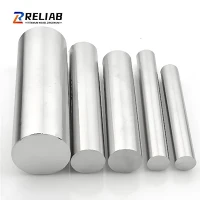
Titanium forgings are highly sought after in various industries due to their exceptional strength-to-weight ratio, corrosion resistance, and high-temperature performance. As a leading titanium forgings supplier, I understand the importance of using the right forging press types to produce high-quality titanium products. In this blog post, I will discuss the different forging press types used for titanium forgings and their applications.
Hydraulic Presses
Hydraulic presses are one of the most commonly used forging presses for titanium forgings. These presses use hydraulic cylinders to generate the force required for forging. Hydraulic presses offer several advantages when it comes to titanium forging.
Firstly, they provide a high degree of control over the forging process. The hydraulic system allows for precise adjustment of the forging force, speed, and stroke length. This level of control is crucial when working with titanium, as it is a relatively soft and ductile metal that requires careful handling to avoid cracking or other defects.
Secondly, hydraulic presses can generate a large amount of force, making them suitable for forging large and complex titanium parts. They can apply a consistent force throughout the forging process, ensuring uniform deformation of the titanium material.
Another advantage of hydraulic presses is their versatility. They can be used for a wide range of forging operations, including open-die forging, closed-die forging, and upset forging. This makes them a popular choice for titanium forgings used in various industries, such as aerospace, automotive, and medical.
However, hydraulic presses also have some limitations. They tend to be slower than mechanical presses, which can affect the production rate. Additionally, the hydraulic system requires regular maintenance to ensure its proper functioning.
Mechanical Presses
Mechanical presses are another type of forging press commonly used for titanium forgings. These presses use a mechanical crankshaft or eccentric mechanism to generate the forging force.
Mechanical presses offer several advantages over hydraulic presses. They are generally faster, which can increase the production rate. This is especially important for high-volume production of titanium forgings.
Mechanical presses also provide a more consistent and repeatable forging force. The mechanical design ensures that the same force is applied with each stroke, resulting in uniform forging of the titanium material.
In addition, mechanical presses are relatively simple in design and require less maintenance compared to hydraulic presses. This can reduce the overall operating costs of the forging process.
However, mechanical presses have some limitations when it comes to titanium forging. They are not as flexible as hydraulic presses in terms of adjusting the forging force and speed. This can make them less suitable for forging complex or large titanium parts that require precise control.
Screw Presses
Screw presses are a type of forging press that uses a screw mechanism to generate the forging force. These presses are known for their high energy efficiency and precise control.
Screw presses offer several advantages for titanium forging. They can deliver a large amount of energy in a short period of time, which is beneficial for forging titanium materials that require high deformation rates.
The screw mechanism allows for precise control of the forging force and stroke length. This enables the production of high-quality titanium forgings with accurate dimensions and excellent surface finish.
Screw presses are also relatively compact and require less floor space compared to other types of forging presses. This makes them a suitable choice for smaller forging facilities.
However, screw presses have some limitations. They are generally slower than mechanical presses, which can affect the production rate. Additionally, the screw mechanism requires regular maintenance to ensure its proper functioning.
Hammer Forging Presses
Hammer forging presses, also known as drop hammers, are a traditional type of forging press that uses a falling weight to generate the forging force. These presses are known for their high impact energy and ability to produce complex titanium forgings.
Hammer forging presses offer several advantages for titanium forging. They can deliver a high impact force, which is beneficial for forging titanium materials that require high deformation rates. The impact force can also help to break up the grain structure of the titanium material, resulting in improved mechanical properties.
Hammer forging presses are also very versatile and can be used for a wide range of forging operations, including open-die forging, closed-die forging, and upset forging. This makes them a popular choice for titanium forgings used in various industries.
However, hammer forging presses have some limitations. They are relatively noisy and require a large amount of energy to operate. Additionally, the forging process can be less precise compared to other types of forging presses, which can result in some variation in the dimensions and quality of the titanium forgings.
Applications of Different Forging Press Types for Titanium Forgings
The choice of forging press type depends on several factors, including the size and complexity of the titanium part, the required production rate, and the desired quality of the forging.
For large and complex titanium parts, hydraulic presses are often the preferred choice. Their high force and precise control make them suitable for forging parts such as aircraft engine components and medical implants.
Mechanical presses are commonly used for high-volume production of titanium forgings. Their fast operation and consistent force make them ideal for producing parts such as automotive components and consumer goods.


Screw presses are often used for forging titanium parts that require high energy efficiency and precise control. They are suitable for producing parts such as aerospace fasteners and precision medical instruments.
Hammer forging presses are typically used for forging complex titanium parts that require high impact energy. They are commonly used in the production of parts such as turbine blades and landing gear components.
Our Titanium Forging Products
As a titanium forgings supplier, we offer a wide range of high-quality titanium forging products. Our product portfolio includes TI6AL4V Titanium Alloy Forged Billets, Gr5 Titanium Alloy Square Blocks, and Gr5 Titanium Aerospace Forgings.
We use the latest forging technologies and equipment, including hydraulic presses, mechanical presses, screw presses, and hammer forging presses, to ensure the highest quality of our titanium forgings. Our experienced team of engineers and technicians carefully selects the appropriate forging press type for each project to meet the specific requirements of our customers.
Contact Us for Titanium Forging Procurement
If you are interested in purchasing titanium forgings, we would be happy to discuss your requirements and provide you with a competitive quote. Our team of experts can help you choose the right forging press type and titanium material for your application.
Contact us today to start the procurement process and experience the high-quality titanium forgings that we have to offer.
References
- ASM Handbook, Volume 14A: Metalworking: Forging, ASM International
- Forging Technology, Second Edition, by George E. Dieter
- Titanium: A Technical Guide, Second Edition, by Don Eylon, et al.