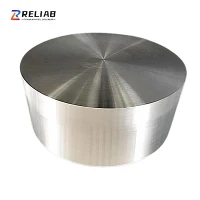
As a supplier of Ti - 3Al - 2.5V alloy rod and bar, I've witnessed firsthand the growing demand for this remarkable material in various industries. In this blog, I'll explore the future development trends of Ti - 3Al - 2.5V alloy rod and bar, highlighting its unique properties, current applications, and the exciting possibilities that lie ahead.
Properties of Ti - 3Al - 2.5V Alloy
Ti - 3Al - 2.5V alloy, also known as Ti - 3 - 2.5, is a titanium alloy that offers a combination of excellent mechanical properties and corrosion resistance. The addition of aluminum (Al) and vanadium (V) enhances the alloy's strength, toughness, and weldability, making it suitable for a wide range of applications.
One of the key advantages of Ti - 3Al - 2.5V alloy is its high strength - to - weight ratio. Titanium is known for being lightweight, and this alloy maintains that characteristic while providing substantial strength. This makes it an ideal choice for applications where weight reduction is crucial, such as in the aerospace and automotive industries.
Another important property is its corrosion resistance. Titanium alloys, including Ti - 3Al - 2.5V, are highly resistant to corrosion in a variety of environments, including seawater, acids, and alkalis. This resistance extends the lifespan of components made from this alloy, reducing maintenance costs and improving reliability.
Current Applications
The aerospace industry is one of the primary consumers of Ti - 3Al - 2.5V alloy rod and bar. In aircraft, these materials are used in critical components such as hydraulic tubing, landing gear parts, and structural elements. The high strength - to - weight ratio and corrosion resistance of Ti - 3Al - 2.5V alloy contribute to improved fuel efficiency, longer service life, and enhanced safety of aircraft.
The automotive industry also benefits from the use of Ti - 3Al - 2.5V alloy. As automakers strive to reduce vehicle weight and improve performance, titanium alloys are increasingly being considered for engine components, exhaust systems, and suspension parts. The alloy's ability to withstand high temperatures and its excellent fatigue resistance make it well - suited for these demanding applications.
In the medical field, Ti - 3Al - 2.5V alloy is used in orthopedic implants and dental applications. Its biocompatibility, combined with its strength and corrosion resistance, makes it a preferred material for devices that are in contact with the human body for extended periods.


Future Development Trends
1. Advancements in Manufacturing Processes
One of the significant trends in the future of Ti - 3Al - 2.5V alloy rod and bar is the continuous improvement of manufacturing processes. Additive manufacturing, also known as 3D printing, is emerging as a revolutionary technology in the production of titanium components. This process allows for the creation of complex geometries that were previously difficult or impossible to achieve using traditional manufacturing methods.
With 3D printing, it is possible to optimize the design of Ti - 3Al - 2.5V alloy parts, reducing material waste and improving performance. For example, internal lattice structures can be created within the components, which can further reduce weight while maintaining or even increasing strength. As the technology matures, we can expect to see more widespread use of 3D - printed Ti - 3Al - 2.5V alloy parts in various industries.
2. Expansion into New Industries
As the properties of Ti - 3Al - 2.5V alloy become more widely recognized, we anticipate its expansion into new industries. The renewable energy sector, for instance, is a potential area of growth. In wind turbines, the alloy could be used in components such as shafts and gears, where its high strength and corrosion resistance would be beneficial. In the energy storage field, Ti - 3Al - 2.5V alloy may find applications in battery casings and other critical parts.
The marine industry is another area where the alloy's corrosion resistance and strength make it an attractive option. It could be used in shipbuilding for hull components, propellers, and other marine equipment, offering improved durability and reduced maintenance requirements.
3. Enhanced Performance through Alloy Modification
Research is ongoing to further enhance the performance of Ti - 3Al - 2.5V alloy through the addition of other elements or the optimization of the existing alloy composition. By carefully selecting and controlling the alloying elements, it may be possible to improve specific properties such as high - temperature strength, creep resistance, or formability.
For example, the addition of small amounts of rare - earth elements could potentially enhance the alloy's high - temperature performance, making it suitable for even more extreme applications in the aerospace and power generation industries.
4. Integration with Smart Technologies
In the era of Industry 4.0, the integration of Ti - 3Al - 2.5V alloy components with smart technologies is a promising trend. Sensors can be embedded in the alloy parts to monitor their performance in real - time, such as stress, strain, and temperature. This data can then be used to predict component failure, optimize maintenance schedules, and improve overall system performance.
For example, in an aerospace application, sensors in Ti - 3Al - 2.5V alloy landing gear parts could provide early warnings of potential issues, allowing for proactive maintenance and reducing the risk of in - flight failures.
Comparison with Other Titanium Bars
When considering titanium bars, it's useful to compare Ti - 3Al - 2.5V alloy with other popular options. TI6AL4V Titanium Round Bar is another well - known titanium alloy. TI6AL4V offers higher strength compared to Ti - 3Al - 2.5V, but it may be more expensive and less formable in some cases.
ASTM F67 H9 Titanium Bar is often used in medical applications due to its high purity and excellent biocompatibility. While it shares some similarities with Ti - 3Al - 2.5V in terms of corrosion resistance, its mechanical properties are different, and it may not be as suitable for high - stress structural applications.
CP Titanium Bar, or commercially pure titanium bar, is known for its good corrosion resistance and ductility. However, it has lower strength compared to Ti - 3Al - 2.5V alloy, which limits its use in applications where high strength is required.
Conclusion
The future of Ti - 3Al - 2.5V alloy rod and bar looks extremely promising. With advancements in manufacturing processes, expansion into new industries, enhanced performance through alloy modification, and integration with smart technologies, this alloy is set to play an even more significant role in various sectors.
If you're interested in exploring the potential of Ti - 3Al - 2.5V alloy rod and bar for your specific applications, I encourage you to reach out for a detailed discussion. Whether you're in the aerospace, automotive, medical, or any other industry, we can work together to find the best solutions using this remarkable material.
References
- "Titanium Alloys: Properties, Processing, and Applications" by John C. Williams.
- "Additive Manufacturing of Titanium Alloys" in the Journal of Materials Science and Technology.
- Research papers on the integration of smart technologies in metal components from leading industry conferences.