What are the sources of titanium? Well, let me break it down for you. As a titanium supplier, I've got a pretty good handle on where this amazing metal comes from.
First off, titanium is the ninth - most abundant element in the Earth's crust. That's a pretty big deal! But just because it's abundant doesn't mean it's easy to get. Most of the titanium in the crust is in the form of titanium dioxide (TiO₂), which is found in various minerals.
One of the main sources of titanium is ilmenite. Ilmenite is a black, heavy mineral that contains titanium, iron, and oxygen. It's widely distributed around the world. Australia is one of the biggest producers of ilmenite. They've got large deposits along their coastlines. The ilmenite there is often mined through open - pit mining methods. Miners dig up the ore from the ground, and then it goes through a series of processing steps. First, the ore is crushed and ground into a fine powder. Then, it's treated with chemicals to separate the titanium from the other elements. This process is called beneficiation, and it's crucial for getting high - quality titanium.
Another important source is rutile. Rutile is a mineral that also contains titanium dioxide, but it has a higher titanium content compared to ilmenite. It's often found in beach sands, especially in areas like South Africa and India. The mining of rutile from beach sands is a bit different from ilmenite mining. Special equipment is used to extract the sand, and then a process called gravity separation is employed to separate the rutile from the other minerals in the sand. Rutile is highly valued because it's easier to process into pure titanium compared to ilmenite.
Some other less common sources of titanium include leucoxene and perovskite. Leucoxene is a weathered form of ilmenite, and it can be found in some deposits. Perovskite is a mineral that contains titanium, along with calcium and other elements. While these sources are not as widely used as ilmenite and rutile, they still contribute to the overall supply of titanium.
Now, let's talk about how these raw materials are turned into the titanium products that we offer. Once the titanium - containing minerals are mined and processed to get a concentrated titanium compound, it goes through a series of chemical reactions to produce pure titanium metal. This process is called the Kroll process. In the Kroll process, the titanium compound is first converted into titanium tetrachloride (TiCl₄). Then, the titanium tetrachloride is reacted with magnesium to produce pure titanium metal.
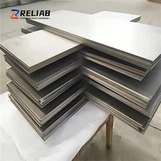
The pure titanium metal can then be further processed into different forms. For example, it can be made into sheets, bars, or fasteners. If you're interested in laser - cut titanium sheet metal, you can check out Laser Cutting Titanium Sheet Metal. This process allows for precise cuts and is great for applications where accuracy is key.
Ti - 6AL - 4V is a very popular titanium alloy. It's strong, lightweight, and corrosion - resistant. If you're in the market for a Ti - 6AL - 4V Titanium Sheet, we've got you covered. This alloy is used in a wide range of industries, from aerospace to medical.
We also offer Titanium Alloy Square Nuts. These nuts are made from high - quality titanium alloys and are perfect for applications where you need a strong and reliable fastener.


If you're thinking about using titanium in your projects, whether it's for a small DIY job or a large - scale industrial application, we're here to help. We've got a wide range of titanium products, and we can work with you to find the right solution for your needs. Don't hesitate to reach out and start a conversation about your titanium requirements. We're always happy to assist with any questions you might have and guide you through the procurement process.
In conclusion, titanium comes from a variety of sources, mainly ilmenite and rutile. The process of getting from the raw ore to the final titanium product is complex but well - established. Whether you're looking for a specific type of titanium sheet or a titanium fastener, we've got the expertise and the products to meet your needs. So, if you're interested in purchasing titanium products, don't wait. Contact us today and let's start a partnership that will take your projects to the next level.
References:
- "Titanium: A Technical Guide" by Don Eylon
- "Mineral Commodity Summaries" published by the U.S. Geological Survey