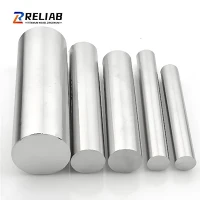
Hey there, fellow industry enthusiasts! As a supplier of Ti - 3AI - 2.5V Alloy Rod and Bar, I'm stoked to dive into the standards for these amazing products. In this blog, I'll break down what makes these rods and bars top - notch and why they're so crucial in various industries.
Chemical Composition Standards
First off, let's talk about the chemical composition. The Ti - 3AI - 2.5V alloy, as the name suggests, primarily consists of titanium (Ti), aluminum (Al), and vanadium (V). The aluminum content is around 3%, and the vanadium content is about 2.5%. These percentages are super important because they determine the alloy's properties.
Aluminum helps to increase the strength of the alloy. It forms a solid - solution with titanium, which enhances the overall mechanical properties. Vanadium, on the other hand, improves the alloy's ductility and weldability. A precise balance of these elements is necessary to meet the industry standards. Any deviation from the standard composition can lead to inferior performance. For instance, if the aluminum content is too high, the alloy might become brittle, while a low vanadium content could reduce its weldability.
Mechanical Property Standards
When it comes to mechanical properties, Ti - 3AI - 2.5V Alloy Rod and Bar have some strict requirements. One of the key properties is tensile strength. The minimum tensile strength for these products is usually set at a certain level to ensure they can withstand the forces they'll encounter in real - world applications.
Yield strength is another important factor. It indicates the stress at which the material begins to deform plastically. A high yield strength means the rod or bar can handle significant loads without permanent deformation. Elongation is also a crucial mechanical property. It measures the ability of the material to stretch before breaking. Good elongation values ensure that the alloy can be formed into different shapes without cracking.
Dimensional Standards
Dimensional accuracy is a must for Ti - 3AI - 2.5V Alloy Rod and Bar. The diameter or cross - sectional dimensions need to be within a specified tolerance range. This is because these products are often used in precision applications where even a small deviation in size can cause fitting problems.
For example, if a rod is supposed to fit into a particular component, and its diameter is larger than the standard, it won't fit properly. On the other hand, if it's too small, it might not provide the necessary strength or stability. Surface finish is also part of the dimensional standards. A smooth surface finish not only looks good but also reduces the risk of corrosion and stress concentration.
Quality Control Standards
To ensure that our Ti - 3AI - 2.5V Alloy Rod and Bar meet all the standards, we have a rigorous quality control process. We start with the raw materials. We source high - quality titanium, aluminum, and vanadium from reliable suppliers. Before we start the manufacturing process, we test the raw materials to make sure they meet the chemical composition requirements.
During the manufacturing process, we use advanced techniques to control the alloying process and shape the rods and bars. We also conduct in - process inspections to catch any potential issues early on. After the products are finished, we perform a series of final tests. These include chemical analysis to confirm the composition, mechanical testing to verify the strength and other properties, and dimensional checks to ensure accuracy.
Applications and Why Standards Matter
Ti - 3AI - 2.5V Alloy Rod and Bar are used in a wide range of industries. One of the major applications is in the aerospace industry. In airplanes, these rods and bars are used in structural components, landing gear, and hydraulic systems. The high strength - to - weight ratio of the alloy makes it ideal for aerospace applications, where weight reduction is crucial for fuel efficiency.
The automotive industry also uses these products. They can be found in engine components, suspension systems, and exhaust systems. In the medical field, Ti - 3AI - 2.5V Alloy Rod and Bar are used in orthopedic implants. The biocompatibility of titanium makes it a great choice for medical applications, as it doesn't cause adverse reactions in the human body.
Meeting the standards is essential in all these applications. In aerospace, a sub - standard rod or bar could lead to a catastrophic failure, endangering lives. In the automotive industry, it could result in poor performance and safety issues. In the medical field, non - compliant products could cause health problems for patients.
Comparison with Other Titanium Alloys
It's also interesting to compare Ti - 3AI - 2.5V Alloy Rod and Bar with other titanium alloys. For example, the TIG Titanium Welding Rod is designed specifically for welding applications. While it shares some properties with Ti - 3AI - 2.5V alloy, its composition and performance are optimized for welding.
The Grade2 Titanium Bar For Industrial is a commercially pure titanium bar. It has different properties compared to the Ti - 3AI - 2.5V alloy. Grade 2 titanium is known for its excellent corrosion resistance, but it might not have the same strength as the Ti - 3AI - 2.5V alloy.
The Gr5 ELI Medical Titanium Alloy Bar is used in medical applications. It has a different chemical composition and is designed to meet the strict requirements of the medical industry. Each alloy has its own unique characteristics and applications, and understanding these differences helps customers choose the right product for their needs.
Conclusion
In conclusion, the standards for Ti - 3AI - 2.5V Alloy Rod and Bar are crucial for ensuring their quality and performance in various industries. From chemical composition to mechanical properties, dimensional accuracy, and quality control, every aspect is carefully regulated. As a supplier, we're committed to meeting these standards to provide our customers with the best products possible.


If you're in the market for high - quality Ti - 3AI - 2.5V Alloy Rod and Bar, I encourage you to reach out for a procurement discussion. We can talk about your specific requirements and how our products can meet them. Whether you're in aerospace, automotive, or medical industries, we have the expertise and the products to serve you.
References
- ASM Handbook Volume 2: Properties and Selection: Nonferrous Alloys and Special - Purpose Materials
- Titanium: A Technical Guide by John R. Welch