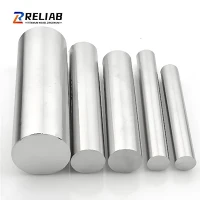
Hey there! As a supplier of CP1 Titanium Exhaust Tubes, I often get asked about the creep resistance of these tubes. So, let's dive right into it and explore what creep resistance means for CP1 Titanium Exhaust Tubes.
First off, what's creep? Creep is the slow, time - dependent deformation of a material under a constant load at elevated temperatures. In the context of CP1 Titanium Exhaust Tubes, this is super important because exhaust systems can get really hot. When an engine is running, the exhaust gases passing through the tubes can reach high temperatures, and the tubes need to withstand these conditions without deforming over time.


CP1 titanium is a commercially pure titanium. It has some great properties that contribute to its creep resistance. One of the key factors is its high melting point. Titanium has a melting point of around 1668°C (3034°F). This high melting point means that it can maintain its structural integrity at relatively high temperatures without quickly turning into a mushy mess.
Another aspect is the crystal structure of CP1 titanium. It has a hexagonal close - packed (HCP) crystal structure at room temperature. This structure gives it good strength and stability. At elevated temperatures, although the structure may change slightly, it still retains a fair amount of its mechanical properties.
Now, let's talk about how creep resistance affects the performance of CP1 Titanium Exhaust Tubes. In an exhaust system, if the tubes start to deform due to creep, it can lead to a bunch of problems. For example, the shape of the tube might change, which can disrupt the flow of exhaust gases. This can result in reduced engine performance, as the engine has to work harder to push the gases out. It can also cause uneven wear on other components of the exhaust system, leading to premature failure.
Let's compare CP1 titanium with some other materials commonly used in exhaust systems. Steel is a popular choice, but it generally has lower creep resistance compared to CP1 titanium. Steel starts to lose its strength at much lower temperatures than titanium. So, in high - performance exhaust systems where temperatures are consistently high, steel may not be the best option.
When it comes to our CP1 Titanium Exhaust Tubes, we've put them through rigorous testing to ensure their creep resistance. We heat the tubes to the temperatures they're likely to encounter in real - world applications and apply a constant load for an extended period. This way, we can accurately measure how much deformation occurs over time. Our tests have shown that our tubes have excellent creep resistance, which means they'll last longer and perform better in your exhaust systems.
If you're in the market for high - quality titanium tubing, we also offer other great products. Check out our 3AL - 2.5V High Quality Titanium Alloy Tubing. This alloy has even better mechanical properties in some aspects compared to CP1 titanium. It's great for applications where you need a bit more strength and corrosion resistance.
For those in the bicycle industry, we have Grade 9 Titanium Tubing for Bicycles. Grade 9 titanium has a good balance of strength and lightness, making it perfect for bike frames.
And if you need fittings for your titanium tubing, we've got you covered with our Industrial Titanium Tubing Fittings. These fittings are designed to work seamlessly with our tubes, ensuring a tight and reliable connection.
The creep resistance of CP1 Titanium Exhaust Tubes is a crucial factor in their performance. It allows them to withstand the high temperatures and constant loads in exhaust systems without deforming. This results in better engine performance, longer - lasting exhaust systems, and less hassle for you.
If you're interested in our CP1 Titanium Exhaust Tubes or any of our other products, don't hesitate to reach out. We're always ready to have a chat about your specific needs and how our products can meet them. Whether you're a small - scale garage mechanic or a large - scale automotive manufacturer, we've got the right titanium tubing solutions for you.
References:
- "Titanium: A Technical Guide", Second Edition by John R. Davis
- "Materials Science and Engineering: An Introduction" by William D. Callister Jr. and David G. Rethwisch