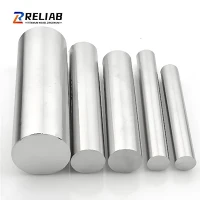
Hey there! As a titanium supplier, I often get asked about all sorts of things related to titanium. One question that pops up quite a bit is, "What is the density of titanium?" Well, let's dive right into it and explore this fascinating topic.
First off, density is basically how much mass is packed into a certain volume. It's like how many people can fit into a room. If you've got a lot of people in a small room, it's pretty dense, right? In the world of materials, density is measured in grams per cubic centimeter (g/cm³).
So, what's the deal with titanium's density? Pure titanium has a density of about 4.506 g/cm³. That might not mean much to you at first glance, but when you compare it to other metals, it starts to get interesting. For example, steel has a density that can range from about 7.75 to 8.05 g/cm³. That means titanium is significantly lighter than steel. Aluminum, on the other hand, has a density of around 2.7 g/cm³, so titanium is heavier than aluminum but still relatively light compared to many other metals.
This low density combined with titanium's high strength is what makes it such a superstar in a lot of industries. Take the aerospace industry, for instance. Planes need to be as light as possible to use less fuel and fly more efficiently. Titanium's low density allows manufacturers to build parts that are strong enough to withstand the stresses of flight but light enough to keep the overall weight of the plane down. It's used in everything from engine components to airframe structures.
In the medical field, titanium's density also plays a crucial role. Medical implants, like hip and knee replacements, need to be strong and lightweight. Titanium's density makes it a great choice because it can support the body's weight without adding too much extra bulk. Plus, titanium is biocompatible, which means the body doesn't reject it easily.
Another industry that benefits from titanium's density is the sports equipment industry. Bicycles made with titanium frames are lighter and more durable than those made with other materials. This allows cyclists to go faster and climb hills more easily. And in golf clubs, titanium heads are used because they can be designed to have a larger sweet spot while still being lightweight, giving golfers more power and accuracy.
Now, I mentioned pure titanium earlier, but most of the titanium we use in real-world applications is actually in the form of alloys. Titanium alloys are created by mixing titanium with other elements like aluminum, vanadium, or iron. These alloys can have different densities depending on the specific elements and their proportions. For example, the popular Ti-6Al-4V alloy, which contains 6% aluminum and 4% vanadium, has a density of around 4.43 g/cm³. This alloy is widely used in aerospace and medical applications because it combines the low density of titanium with even greater strength and corrosion resistance.
So, why should you care about all this if you're in the market for titanium products? Well, understanding the density of titanium can help you make more informed decisions when it comes to choosing the right material for your project. If you need something that's lightweight but strong, titanium might be the way to go. And as a titanium supplier, I can help you find the perfect titanium alloy for your specific needs.
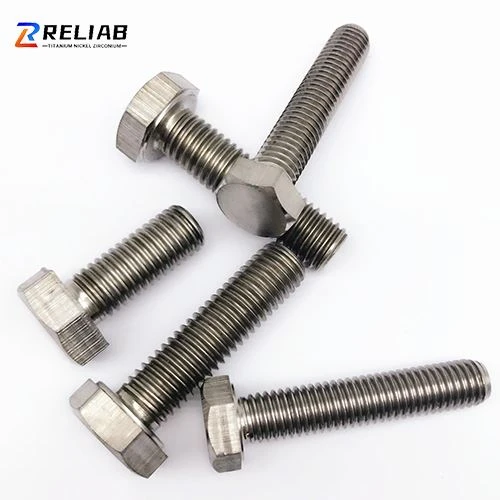
We offer a wide range of titanium products, including Titanium Alloy Bolts Hexagon Head DIN933. These bolts are made from high-quality titanium alloys and are designed to meet the strictest industry standards. They're perfect for applications where you need a strong, lightweight, and corrosion-resistant fastener.
Whether you're in the aerospace, medical, sports, or any other industry that uses titanium, we've got you covered. Our team of experts can help you select the right titanium products and answer any questions you might have about density, alloys, or anything else related to titanium.
So, if you're interested in learning more about our titanium products or have a project that requires titanium, don't hesitate to reach out. We're here to help you get the best titanium solutions for your needs. Just drop us a line, and we'll start the conversation.

In conclusion, the density of titanium is a key factor in its many applications. Its low density combined with high strength makes it a valuable material in a wide range of industries. And as a titanium supplier, we're committed to providing you with the highest quality titanium products and the expertise to help you make the most of this amazing metal.
References
- ASM Handbook, Volume 2: Properties and Selection: Nonferrous Alloys and Special-Purpose Materials
- Titanium: A Technical Guide, Second Edition by John C. Williams