

Hey there! As a titanium plate supplier, I've been getting a lot of questions lately about the differences between different grades of titanium plates. So, I thought I'd write this blog to clear things up and give you a better understanding of what each grade has to offer.
First off, let's talk about why titanium is such a big deal. Titanium is an amazing metal. It's super strong, lightweight, and has excellent corrosion resistance. That's why it's used in so many different industries, from aerospace and automotive to medical and consumer goods.
Now, when it comes to titanium plates, there are several grades available, each with its own unique properties and applications. The most common grades you'll come across are Grade 1, Grade 2, Grade 5, and Grade 9.
Grade 1 Titanium Plates
Grade 1 titanium is the purest form of commercially available titanium. It's known for its excellent formability and corrosion resistance. This grade is very ductile, which means it can be easily shaped and formed into different products. It's also highly resistant to corrosion, especially in marine environments and against many chemicals.
Because of its formability and corrosion resistance, Grade 1 titanium plates are often used in applications where these properties are crucial. For example, they're commonly used in the chemical processing industry for making tanks, pipes, and heat exchangers. They're also used in the marine industry for boat components and offshore structures. And in the consumer goods sector, you might find Grade 1 titanium in things like Titanium Cutting Board For Kitchen.
Grade 2 Titanium Plates
Grade 2 titanium is also a pure titanium grade, but it has slightly higher strength compared to Grade 1. It still retains good formability and corrosion resistance, but it's a bit stronger and more durable. This makes it a popular choice for a wide range of applications.
In the aerospace industry, Grade 2 titanium plates are used for parts that require a balance of strength and corrosion resistance, such as aircraft skins and structural components. In the automotive industry, they can be found in exhaust systems and other parts that need to withstand high temperatures and corrosive environments. Grade 2 titanium is also used in the medical field for surgical instruments and implants because of its biocompatibility.
Grade 5 Titanium Plates
Grade 5 titanium, also known as Ti-6Al-4V, is an alloy of titanium with 6% aluminum and 4% vanadium. This is one of the most widely used titanium alloys because of its high strength-to-weight ratio. It has excellent mechanical properties, including high tensile strength and good fatigue resistance.

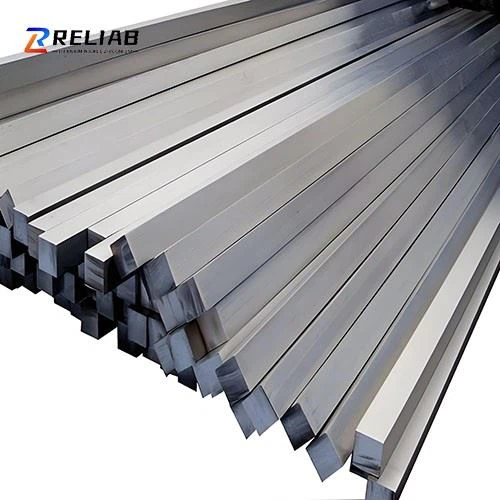
Grade 5 titanium plates are commonly used in aerospace applications, such as aircraft frames, landing gear, and engine components. They're also used in the military for armor plating and other high-performance applications. In the sports equipment industry, you'll find Grade 5 titanium in things like bicycle frames and golf clubs because of its strength and lightweight nature. If you're looking for a high-strength titanium product, like Titanium Alloy Narrow Strip, Grade 5 is a great option.
Grade 9 Titanium Plates
Grade 9 titanium, or Ti-3Al-2.5V, is another titanium alloy. It has a good balance of strength, ductility, and corrosion resistance. It's stronger than pure titanium grades but not as strong as Grade 5. However, it has better formability than Grade 5, which makes it suitable for applications where both strength and formability are required.
Grade 9 titanium plates are often used in the aerospace industry for tubing and hydraulic components. They're also used in the bicycle industry for frames and other parts because of their lightweight and corrosion-resistant properties. In the medical field, Grade 9 titanium can be used for orthopedic implants and dental fixtures.
Other Grades of Titanium Plates
Apart from the four main grades I've mentioned, there are other grades of titanium plates available as well. For example, Grade 7 titanium is similar to Grade 2 but has a small amount of palladium added to improve its resistance to crevice corrosion. Grade 12 titanium is an alloy with 0.3% molybdenum and 0.8% nickel, which gives it good corrosion resistance and high strength.
These less common grades are used in specific applications where their unique properties are needed. For instance, 1mm Titanium Piece For Lab Scientific Research might require a specific grade of titanium depending on the research requirements.
How to Choose the Right Grade of Titanium Plate
So, how do you choose the right grade of titanium plate for your application? Well, it all depends on your specific needs. Here are some factors to consider:
- Strength Requirements: If you need a high-strength material, then Grade 5 or other alloy grades might be the way to go. But if you can get by with lower strength and need better formability, a pure titanium grade like Grade 1 or Grade 2 could be sufficient.
- Corrosion Resistance: If your application is in a corrosive environment, such as a marine or chemical environment, you'll want to choose a grade with good corrosion resistance. Grades 1, 2, and 7 are all known for their excellent corrosion resistance.
- Formability: If you need to shape the titanium plate into a complex form, then a grade with high formability like Grade 1 or Grade 9 would be a good choice.
- Cost: Different grades of titanium plates have different costs. Generally, pure titanium grades are less expensive than alloy grades. So, if cost is a major factor, you might want to consider a lower-cost grade that still meets your requirements.
Conclusion
In conclusion, the different grades of titanium plates offer a wide range of properties and applications. Whether you're in the aerospace, automotive, medical, or consumer goods industry, there's a grade of titanium plate that's right for you. As a titanium plate supplier, I'm here to help you choose the best grade for your specific needs.
If you're interested in purchasing titanium plates or have any questions about the different grades, feel free to reach out. We can have a chat about your requirements and find the perfect solution for you. Let's work together to get you the high-quality titanium plates you need for your projects.
References
- ASM Handbook Volume 2: Properties and Selection: Nonferrous Alloys and Special-Purpose Materials
- Titanium: A Technical Guide by John C. Williams


