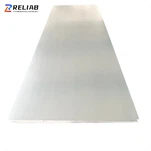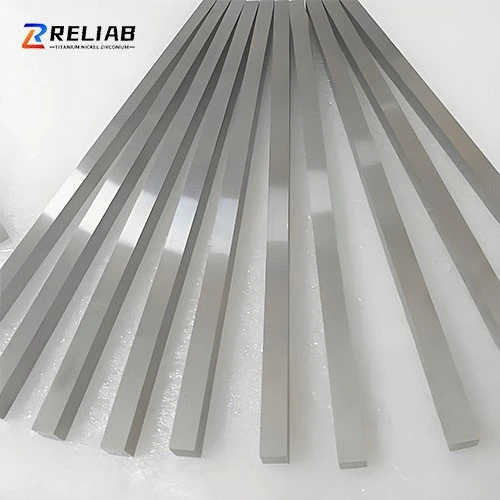
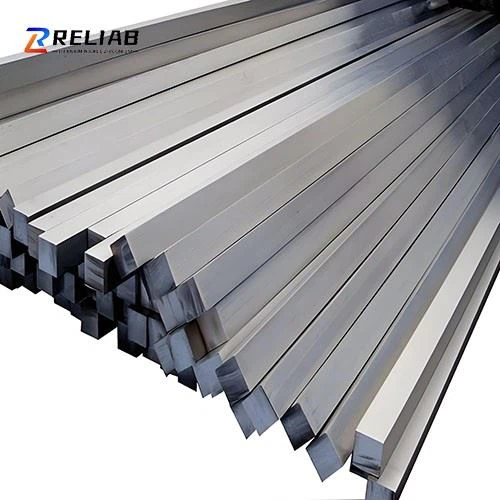
1. definition of Titanium alloy narrow strip
Titanium alloy narrow strip is a metal sheet product with titanium as the main component, usually in the form of flat strips, square bars, etc., and is widely used in the industrial field .
It is lightweight, high strength and excellent corrosion resistance, which makes it stand out in harsh environments.
Industrial pure titanium is classified into different grades based on its impurity content, such as Gr1, Gr2 and Gr3. Among them, Gr2 is the most common commercial grade. Its mechanical strength and hardness increase with the increase of impurity elements (such as oxygen and nitrogen), but its plasticity and toughness decrease accordingly .
These characteristics enable titanium strips to play a crucial role in fields such as aviation, medical care, chemical engineering, and architectural decoration, for instance, they are used as structural supports and anti-corrosion components for large equipment.
The processing techniques are diverse, including shearing, rolling, extrusion, milling, stamping, welding, bending and surface treatment, etc. These techniques can be combined and adjusted according to requirements to optimize performance and appearance.
2. Common specifications of the Titanium alloy narrow strip
The common specifications of titanium plate strips are classified into multiple dimensions based on different standards and grades (such as Gr1, Gr2 or Gr5), mainly covering parameters such as thickness, width and length.
The specific specification range is as follows:
Thickness interval:
0.3-0.5mm: width not exceeding 1000mm, length not exceeding 2000mm
0.6-1.0 mm: width not exceeding 1200 mm, length not exceeding 2000 mm
1.0-6.0 mm: width not exceeding 2000 mm, length up to 6000 mm
5.0-8.0 mm and 8.0-50.0 mm: width not exceeding 2000 mm, length up to 6000 mm
In addition, common thicknesses in stock range from 0.8mm to 16mm, and for some applications such as heat exchanger-specific slats, up to 60mm
The width range of is: it is usually between 400 mm and 2000 mm. For example, the width of thin plates (0.3-6.0 mm) is 400-1000 mm, and the width of thick plates (4.7-60.0 mm) can reach 1050 mm.
Length limit: The standard length ranges from 1000 mm to 6000 mm. Specifically, the length of thin plates is 1000-3000 mm, and the length of thick plates is extended to 6000 mm to meet the requirements of large equipment.
3. Features of the Titanium alloy narrow strip
Core features:
1) Lightweight and high strength
With a density of only 4.51g /cm³ (approximately 57% of that of steel), its tensile strength can reach up to 1800 MPa, and its specific strength (strength-to-density ratio) far exceeds that of steel and aluminum alloy.
For example, the strength of Ti-6.5Al-1Mo-1V-2Zr titanium alloy at room temperature reaches 980 MPa, and its strength remains at 620 MPa at 2) high temperatures (500-550℃).
Excellent corrosion resistance
A dense oxide film forms on the surface, resisting seawater, acid and alkali solutions (except hydrofluoric acid and hot concentrated hydrochloric acid), and even aqua regia corrosion.
Ti80 titanium plates for ships can resist chloride ion stress corrosion, with a critical stress of ≥80%
3) biocompatibility
Non-toxic and harmless, widely used in orthopedic implants (such as artificial joints), dental instruments and other medical fields
4) Environmental adaptability
High-temperature resistance : Melting point 1942 K (approximately 1669℃), TA15 alloy operates stably at 550℃
low-temperature toughness : aviation-grade titanium plates still maintain fracture toughness in ultra-low-temperature environments.
4. Applications of the Titanium alloy narrow strip
Titanium plate strips, with their high strength, corrosion resistance, lightweight and biocompatibility, have been deeply integrated into multiple core industrial fields. The specific application industries and technical advantages are as follows:
A. Aerospace and military industry
Key applications :
Aircraft engine compressor blades, rocket fuel tanks, hypersonic vehicle skins
The Long March 9 rocket uses titanium plate strips to manufacture low-temperature resistant fuel tanks, which can adapt to extreme environments of -196℃
Performance advantages :
Reduce weight by 15%↑ and improve fuel efficiency by 20%↑; TA15 titanium alloy can withstand 550 ° C high temperature while maintaining a strength of 620 MPa
B. Biomedical field
Key applications:
Artificial joints (with a service life of 10-20 years), skull repair plates, dental implants
3D printed custom jawbone prosthesis, bone surface fitting accuracy > 96.9%
Performance advantages:
Biocompatibility promotes bone bonding, and flexural fatigue resistance increases by 30%↑; No toxic side effects, extremely low rejection rate
C. Energy and chemical engineering field
Key applications:
Ultra-thin current collectors for hydrogen energy batteries (thickness < 0.1mm), gas diffusion layers for fuel cells
Chemical reactors, acid-resistant pipes (3 times longer than stainless steel)
Performance advantages :
The internal resistance of the battery is reduced by 15%, and the charging and discharging efficiency is increased by 25%↑; Resistant to aqua regia corrosion, maintenance cost ↓50%
D. Marine engineering and nuclear energy field
Key applications:
Deep-sea submarine pressure-resistant shell (6,000-meter class pressure-resistant), seawater desalination heat exchanger
The first wall protective layer of the nuclear fusion reactor (resistant to 14 MeV neutron irradiation), superconducting magnet support
Performance advantages:
Resistant to chloride ion stress corrosion, critical stress ≥80%; Low magnetic permeability (TA19 alloy approaches 0) avoids magnetic field interference
5. Pictures of titanium alloy narrow strip


6. surface treatment of titanium alloy narrow strip
Surface treatment of titanium plates:
1) Pickling treatment:
Pickling is the process of removing the oxide scale on the surface of titanium alloy plates with a mixture of hydrofluoric acid and nitric acid. After acid washing treatment, the surface of the sheet is clean, which can improve its subsequent processing and usage performance, such as welding and coating.
2) Sandblasting and polishing:
Sandblasting can remove impurities and defects on the surface of titanium alloy plates, making the surface roughness uniform.
Polishing can make the surface of the sheet as bright as a mirror, enhance its aesthetic appeal and corrosion resistance, and is often used in products with extremely high surface quality requirements
3) Anodic oxidation treatment:
Anodic oxidation treatment can form a dense oxide film on the surface of titanium alloys, improving their corrosion resistance and wear resistance
For instance, in the manufacturing of medical devices, titanium alloy components that have undergone anodic oxidation treatment can better resist the corrosion of human body fluids and extend their service life.
Hot Tags: titanium alloy narrow strip, China titanium alloy narrow strip manufacturers, suppliers, factory, CP2 Titanium Plate ASTM B265, rainbow titanium, titanium plate, pure titanium price per kg, titanium steel, titanium magnetic