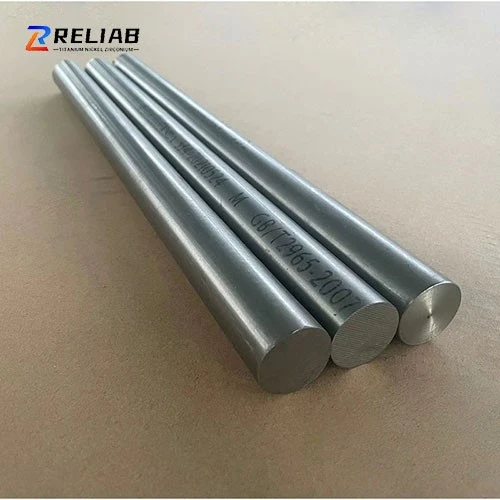
Hey there, welding enthusiasts! I'm a supplier of TIG Titanium Welding Rods, and today I'm gonna dive deep into the heat input range for these bad boys. It's a topic that's super important for getting the best results when you're working with titanium.
First off, let's talk about why heat input matters so much in TIG titanium welding. Titanium is a bit of a finicky metal. It reacts really quickly with oxygen, nitrogen, and hydrogen in the air when it's heated up. If you use too much heat, you can end up with a bunch of problems like oxidation, porosity, and reduced mechanical properties in the welded joint. On the other hand, if you don't use enough heat, the weld might not fuse properly, leading to weak joints.
So, what's the ideal heat input range? Well, it depends on a few factors like the thickness of the titanium, the type of joint you're making, and the specific grade of titanium you're using. Generally speaking, for most common titanium grades used in welding, the heat input range for TIG welding is between 0.5 and 2.0 kilojoules per millimeter (kJ/mm).
Let's break it down a bit more. When you're working with thinner titanium sheets, say less than 3 millimeters thick, you'll want to stay on the lower end of that heat input range. Around 0.5 to 1.0 kJ/mm is usually a good starting point. This helps prevent overheating and distortion of the thin material. You can achieve this by using a lower welding current and a faster travel speed.
For thicker titanium pieces, like those over 3 millimeters thick, you can bump up the heat input to between 1.0 and 2.0 kJ/mm. The extra heat is needed to ensure proper fusion throughout the thickness of the metal. But be careful not to go too high, or you'll run into those issues I mentioned earlier.
Now, let's talk about how to control the heat input. The two main factors you can adjust are the welding current and the travel speed. The welding current is basically how much electricity you're sending through the welding rod. Higher current means more heat, but it also means you need to be more careful to avoid overheating. The travel speed is how fast you're moving the welding torch along the joint. A slower travel speed will result in more heat being applied to the metal, while a faster speed will reduce the heat input.
It's also important to consider the type of joint you're making. For example, a butt joint might require a different heat input than a fillet joint. Butt joints usually need a bit more heat to ensure full penetration, while fillet joints can sometimes get by with a slightly lower heat input.
Another factor that can affect the heat input range is the shielding gas you're using. In TIG welding of titanium, argon is the most commonly used shielding gas. It helps protect the molten metal from reacting with the air. Make sure you're using the right flow rate of argon to keep the weld area properly shielded. If the shielding isn't good, you might need to adjust the heat input to compensate for any oxidation that's occurring.
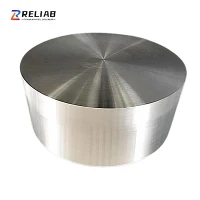
Now, I want to mention some of the titanium products we offer as a supplier. We have a great selection of titanium bars, including the Gr5 ELI Medical Titanium Alloy Bar, the ASTM F67 H9 Titanium Bar, and the CP Titanium Bar. These bars are made from high-quality titanium and are suitable for a variety of welding applications.

If you're new to TIG titanium welding, it's a good idea to do some test welds on scrap pieces of the same titanium grade and thickness you'll be using in your actual project. This will help you get a feel for the right heat input and welding parameters. You can also experiment with different settings to see how they affect the quality of the weld.
In conclusion, getting the right heat input range for TIG titanium welding is crucial for achieving strong, high-quality welds. Remember to consider the thickness of the titanium, the type of joint, and the other factors I mentioned. If you have any questions or need more advice on TIG titanium welding or our products, don't hesitate to reach out. We're here to help you get the best results in your welding projects. Whether you're a professional welder or a hobbyist, we've got the TIG Titanium Welding Rods and other titanium products you need. So, if you're in the market for some top-notch titanium welding supplies, contact us for a chat and let's see how we can work together.
References
- AWS D16.1:2017, Structural Welding Code - Titanium
- Welding Handbook, Volume 2: Welding Processes, American Welding Society