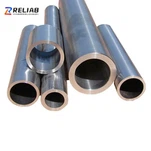
Titanium alloys, as a key category of metallic materials, are widely used in aerospace, medical devices, and chemical industries due to their excellent comprehensive properties. Their forging process requires stringent conditions, and the cooling process directly determines the final microstructure and properties of the forgings. Selecting the appropriate cooling method based on product requirements is a core element in ensuring quality. The following is a summary of five commonly used cooling methods.
I. Natural Cooling (Air Cooling): After forging, the forging is placed in the air, relying on natural convection and radiation for cooling. This method is convenient, requires no additional equipment, and has the lowest energy consumption. However, the cooling rate is relatively slow, which can easily lead to poor internal microstructure uniformity. It is suitable for conventional parts with low performance requirements.
II. Forced Air Cooling: This method uses a fan or blower to deliver a high-speed airflow to the surface of the forging, significantly increasing the cooling rate. This method effectively reduces thermal stress and improves mechanical properties. However, precise control of the wind speed and blowing distance is required; otherwise, surface oxidation or a hardened layer may occur, affecting subsequent processing.
III. Water quenching involves directly immersing the forging in water for rapid cooling, resulting in higher strength and hardness. However, the intense heat exchange can create large temperature gradients, increasing the risk of cracking and deformation. Strict control of the immersion temperature and transfer time is necessary, and this method is typically used in specific applications requiring high strength and toughness.
IV. Oil quenching involves cooling in a temperature-controlled oil medium. The cooling rate falls between that of water quenching and air cooling, reducing the tendency to crack and improving surface finish. However, oil temperature stability is crucial; temperature fluctuations can easily lead to localized defects, necessitating a precise temperature control system.
V. Vacuum Cooling: Cooling is achieved through efficient thermal radiation conduction in a vacuum environment, avoiding surface oxidation and contamination, making it particularly suitable for precision forgings requiring high purity. While it offers rapid cooling and superior quality, it involves significant equipment investment and complex processes, necessitating a comprehensive cost-benefit analysis.
In summary:
For most α and α+β alloys (such as TA15 and GR5), small forgings are typically air-cooled; air cooling can be used to refine the microstructure.
β and near-β alloys, however, must undergo solution cooling (either water or oil) followed by aging to fully realize their strengthening effect.
Regardless of the method, care must be taken during the cooling process to prevent surface contamination (oxidation, hydrogen absorption) of the forgings at high temperatures. This usually requires maintaining appropriate forging residual heat or using a protective atmosphere/anti-oxidation coating.

 E-mail: garychen3215@hotmail.com
 Address: No.35, Baoti Rd, Baoji city, Shaanxi Province, China
 Contact: Mr. Gary Chen
 Phone: +86-917-8883215
 Mobile/WhatsApp: +86 13092900605