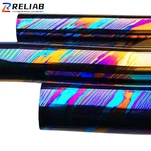
Titanium alloys, with their high specific strength, excellent corrosion resistance, and good biocompatibility, are playing an increasingly important role in aerospace, medical devices, and new energy equipment. However, the raw processed surfaces of titanium alloys often suffer from oxide layers, microcracks, and high roughness, directly affecting their suitability for precision applications. Polishing, as a core step in titanium alloy surface treatment, bears the dual responsibility of improving both appearance and performance.
I. The Dual Value of Polishing Process:
More Than Just Aesthetics From an engineering perspective, the significance of polishing titanium alloys lies in three aspects: • Reducing surface roughness, minimizing stress concentration points, and improving fatigue life; • Removing the processing-modified layer and restoring the material's intrinsic corrosion resistance; • Obtaining a high-gloss surface to meet the stringent surface quality requirements of medical implants, optical components, and other applications.
II. Polishing Process Breakdown
(I) Surface Pretreatment
After hot working or heat treatment, titanium alloys develop an oxygen-rich α-layer and mixed oxides on the surface, resulting in high hardness and brittleness. Failure to remove these layers will affect subsequent polishing. Common pretreatment methods include:
· Acid pickling: Using a mixed solution of HF and HNO₃, the oxide scale is chemically dissolved. Strict control of acid concentration and time is required to prevent hydrogen embrittlement or over-corrosion.
· Electrolytic polishing: Using the titanium alloy as the anode in an electrolyte, surface protrusions are preferentially dissolved through an electrochemical reaction. Suitable for batch pretreatment, it is highly efficient, but precise control of current density and bath temperature is necessary.
(II) Grinding – A Key Step in Smoothing
Grinding uses bonded or free abrasives to mechanically cut the surface, removing macroscopic imperfections and providing a uniform substrate for polishing.
· In terms of abrasive selection, diamond and cubic boron nitride (CBN) are the main abrasives for titanium alloy grinding due to their high hardness and good thermal conductivity, effectively avoiding surface burns caused by grinding heat. • The process path typically follows coarse grinding → medium grinding → fine grinding, progressively reducing the abrasive particle size to ensure a gradual decrease in surface scratch depth and avoid deep damage caused by skipping stages.
(III) Polishing – The Core Link for Leaping Up Surface Finish
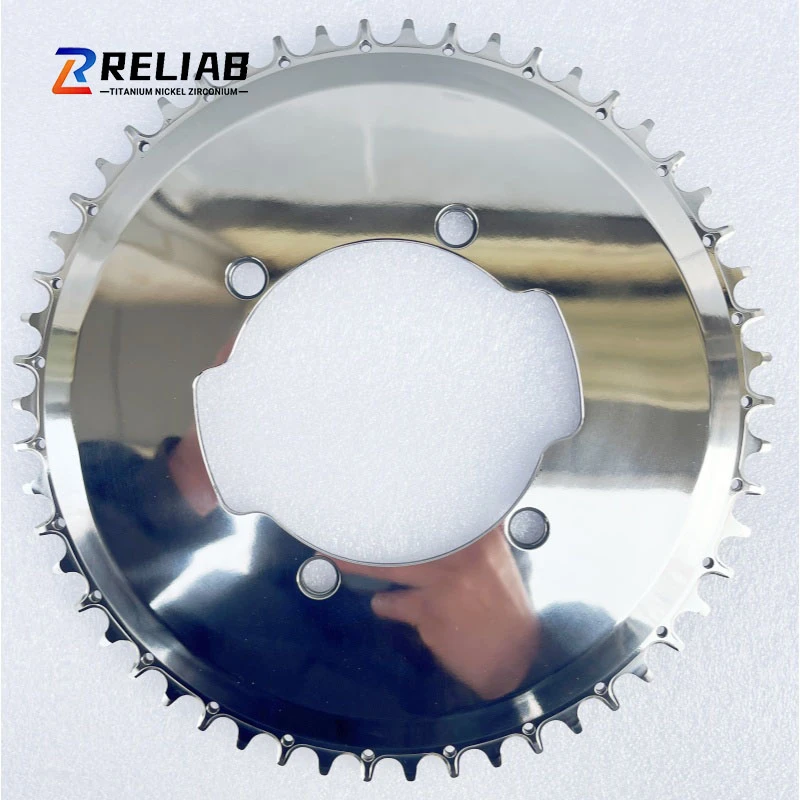
• Mechanical Polishing: Divided into four stages: coarse polishing, medium polishing, fine polishing, and mirror polishing. Using a soft polishing wheel with fine polishing paste, the surface roughness is reduced to Ra≤0.05μm under high-speed rotation through the micro-cutting and rolling action of the abrasive particles, achieving a mirror finish. Precise control of rotation speed, pressure, and polishing direction is required to prevent the formation of a secondary deformation layer.
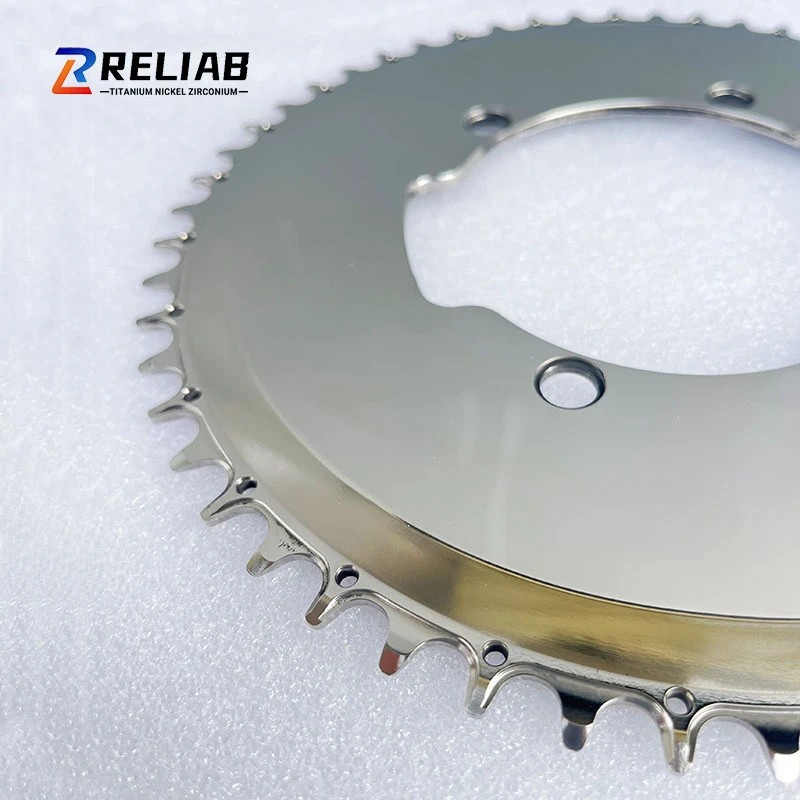
• Chemical Polishing: Relies on the selective dissolution of microscopic protrusions on the surface by chemical reagents to smooth the surface. It requires no complex equipment and is not limited by shape, making it suitable for complex structural parts (such as denture frameworks). However, because the reaction rate is greatly affected by temperature and concentration, and the process window is narrow, strict control based on experience is required to prevent over-dissolution from affecting dimensional accuracy. (iv) After post-treatment and functional polishing, residual abrasive and polishing paste must be removed by ultrasonic cleaning, and the surface texture should be adjusted by sandblasting (if a matte finish is required). Depending on the end user requirements, anodizing or electroplating can be selected to enhance corrosion resistance while giving the surface a specific color or additional functions such as conductivity and wear resistance.
In summary:
Polishing titanium alloys is far more than simply "grinding to make them shiny"; it is a complex system engineering process involving materials science, chemistry, mechanics, and precision control. The selection of parameters at each step directly impacts the final product's performance. As high-end manufacturing demands increasingly higher surface quality from titanium alloys, polishing technology is transforming from an "auxiliary process" to a "core technology," becoming a crucial dividing line in determining the competitiveness of titanium alloy products.
 E-mail: garychen3215@hotmail.com
 Address: No.35, Baoti Rd, Baoji city, Shaanxi Province, China
 Contact: Mr. Gary Chen
 Phone: +86-917-8883215
 Mobile/WhatsApp: +86 13092900605