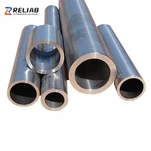
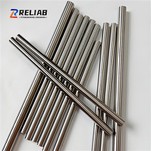
Anodizing technology originated in the 1920s and is a traditional surface modification technique. It refers to an electrochemical oxidation method in which, under the action of an external current and under specific process conditions using an appropriate electrolyte, a thin oxide film is formed on the surface of a metal or alloy (the anode). Titanium anodizing is a process in which titanium serves as the anode and metals such as stainless steel serve as the cathode. Using aqueous, non-aqueous, or molten salt solutions as electrolytes, electrochemical reactions cause oxidation on the anode surface to form a titanium oxide film. The process is simple to operate and easy to control, and is widely applied to metals such as Al, Mg, and Ti, as well as their alloys. Anodic oxidation films not only possess excellent mechanical properties and corrosion resistance, but also, due to their porous nature, exhibit strong adsorption capabilities. They are easily dyed to meet a variety of requirements, and are therefore referred to as a versatile surface protective coating.
Since titanium alloys form an oxide film when exposed to air, pretreatment of the titanium alloy specimens is necessary prior to anodizing to avoid quality issues and microstructural defects associated with the process, and to meet more environmentally friendly and cost-effective production requirements. To ensure the resulting oxide film exhibits good performance, post-treatment of the specimens is required after anodizing to ensure the film is dense, uniform, and continuous.
1. Pretreatment
Typical anodizing processes involve a pretreatment stage, which primarily includes grinding, polishing, degreasing, acid washing, and rinsing. The surface of the titanium alloy specimen is ground using sandpaper of progressively coarser grit sizes to ensure it is smooth and free of visible scratches. The specimen is then mechanically polished using a polishing machine to achieve a bright, scratch-free finish.
2. Solution Preparation and Anodizing
After completing the pretreatment, the electrolyte required for anodizing must be prepared. There are many types of electrolytes used for titanium alloy anodizing, which can be broadly classified into the following four categories: acidic solutions, alkaline solutions, molten salt solutions, and mixed solutions. The appropriate electrolyte should be selected based on experimental requirements. The power sources used for titanium alloy anodizing can be divided into four major categories: DC power sources, AC power sources, pulsed power sources, and superimposed power sources. The most commonly used methods are DC anodizing and pulse anodizing. The former produces an oxide film with minimal color variation and uniform color, and it also effectively prevents contact corrosion; the latter is a process developed from the former, which significantly improves the hardness of the film and its resistance to friction and wear. However, its voltage is far higher than the specified safe voltage, so it is strictly prohibited to touch the anodizing equipment or electrodes with bare hands during the anodizing process.
3. Post-Treatment
After anodizing titanium alloy specimens, an oxide film consisting of a barrier layer and a porous layer is formed. The outer porous layer is highly susceptible to contamination, which can adversely affect the coloring and performance of the oxide film. Therefore, the specimens must undergo a sealing treatment. Typically, immediately after the oxide film is formed, the specimens are immersed in hot water. The heat causes the inner structure of the film to expand outward, sealing the pores and achieving the desired sealing effect. In recent years, a post-treatment process based on a calcium acetate system has also been adopted for sealing titanium alloy oxide films after oxidation. The specimens are immersed in calcium acetate and sealed at a specific temperature; this process effectively seals the pores and crevices on the surface of the titanium alloy oxide film through a combination of physical and chemical mechanisms.


 E-mail: garychen3215@hotmail.com
 Address: No.35, Baoti Rd, Baoji city, Shaanxi Province, China
 Contact: Mr. Gary Chen
 Phone: +86-917-8883215
 Mobile/WhatsApp: +86 13092900605