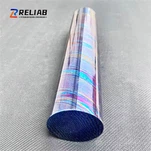
In industrial applications such as electroplating, electrolysis, and copper foil post-processing, the choice of anode material directly affects current efficiency, energy consumption, bath life, and product quality. Precious metal oxide-coated titanium anodes are increasingly replacing traditional platinum-plated electrodes due to their high current density capacity, energy efficiency, environmental friendliness, and cost-effectiveness.
High current efficiency and long service life: Precious metal oxide-coated titanium anodes can withstand current densities of up to 10,000 A/m², meeting the demands of high-intensity, continuous production. The coating offers excellent corrosion resistance, ensuring long-term stable operation in both acidic and alkaline electrolytes. This significantly extends anode life and reduces production downtime caused by frequent anode replacements.
Pollution-free, ensuring the purity of the plating solution. The active layer of the precious metal oxide-coated titanium anode consists of iridium-based ceramic oxides. This oxide exhibits exceptional chemical stability, being virtually insoluble in any acid or alkaline solution, and with a coating thickness of only 18–40 microns, the total oxide consumption is minimal. Consequently, during electroplating or electrolysis, this anode releases virtually no harmful impurities into the plating bath, ensuring it remains uncontaminated. In this regard, its performance is comparable to that of platinum-plated electrodes, and both can be classified as "clean anodes." For high-end electroplating processes that are sensitive to impurities (such as semiconductor copper plating and precision gold plating), maintaining the purity of the plating bath is critical, and titanium anodes with precious metal oxide coatings provide an ideal solution.
Typical Application:
Copper Foil Post-Treatment: When used as a replacement for platinum anodes in alkaline copper plating baths, it reduces bath voltage, saves energy, and maintains long-term bath stability.
Printed Circuit Board (PCB) Electroplating: High current density requires an anode material that is stable and free of contamination. Titanium anodes with a precious metal oxide coating fully meet these requirements and help improve the uniformity of copper plating.
Electrolytic Copper Foil Production: When operated continuously in an oxygen-evolving environment, this anode offers superior corrosion resistance and energy efficiency compared to traditional platinum-plated electrodes.
Precious Metal Plating: In processes such as gold and rhodium plating, the anode does not leach impurities, effectively preventing cross-contamination and ensuring the purity of the precious metal plating.
Electrolytic Water Hydrogen Production: When used as an oxygen evolution anode, its low overpotential helps improve electrolysis efficiency and reduce energy consumption in hydrogen production.
In summary, titanium anodes with a precious metal oxide coating combine high current density, low oxygen evolution overpotential, pollution-free operation, long service life, and cost-effectiveness, making them a mature technical solution for replacing platinum-plated electrodes. In fields such as copper foil post-treatment, PCB electroplating, electrolytic copper foil production, precious metal electroplating, and hydrogen production via water electrolysis, this anode is gaining increasing recognition from users due to its tangible energy-saving and consumption-reducing benefits and stable process performance.


 E-mail: garychen3215@hotmail.com
 Address: No.35, Baoti Rd, Baoji city, Shaanxi Province, China
 Contact: Mr. Gary Chen
 Phone: +86-917-8883215
 Mobile/WhatsApp: +86 13092900605