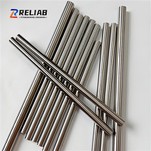
3D printing of titanium alloys (titanium alloy additive manufacturing) has emerged as one of the most representative technological trends in the field of advanced manufacturing in recent years. By combining the excellent mechanical properties of titanium alloys with the "layer-by-layer build-up and near-net-shape" characteristics of additive manufacturing, this technology is reshaping supply chains in industries such as aerospace, healthcare, and consumer electronics. The following provides a brief analysis from five perspectives: technical approaches, core advantages, application scenarios, existing challenges, and future trends.
I. Breakthroughs in 3D Printing Processes and Technologies
1. Mainstream Manufacturing Technologies
Powder Bed Fusion: Achieves precision molding with a tolerance of ±0.05 mm and improves material utilization by 60%; suitable for manufacturing biomimetic structural components in the aerospace industry.
DLP Photopolymerization: Utilizes photopolymer resin combined with titanium powder for forming, with a shrinkage rate of 3.5%–4.2%; requires software-based precision compensation; suitable for complex components such as turbine blades.
Plasma Arc Directional Deposition: Certified to the aerospace standard AMS 7004, overcoming manufacturing bottlenecks for large-scale aerospace structural components.
2. Material Performance Optimization
Titanium alloy powder sphericity >95%, particle size 15–53 μm, ensuring high densification during forming;
Gradient annealing process eliminates 85% of residual stress; hot isostatic pressing (HIP) treatment increases fatigue life by 3–5 times;
Surface roughness reaches Ra 0.8 μm after sandblasting and polishing.
II. Key Application Scenarios
Consumer Electronics: The titanium alloy hinge in the Honor Magic V2 foldable phone and titanium components in the iPhone 17 Air, featuring a 150% increase in strength and a 20% reduction in thickness;
Aerospace: Engine combustion chamber liners and critical structural components for Northrop Grumman Aerospace, capable of withstanding temperatures up to 550°C and extreme operating conditions;
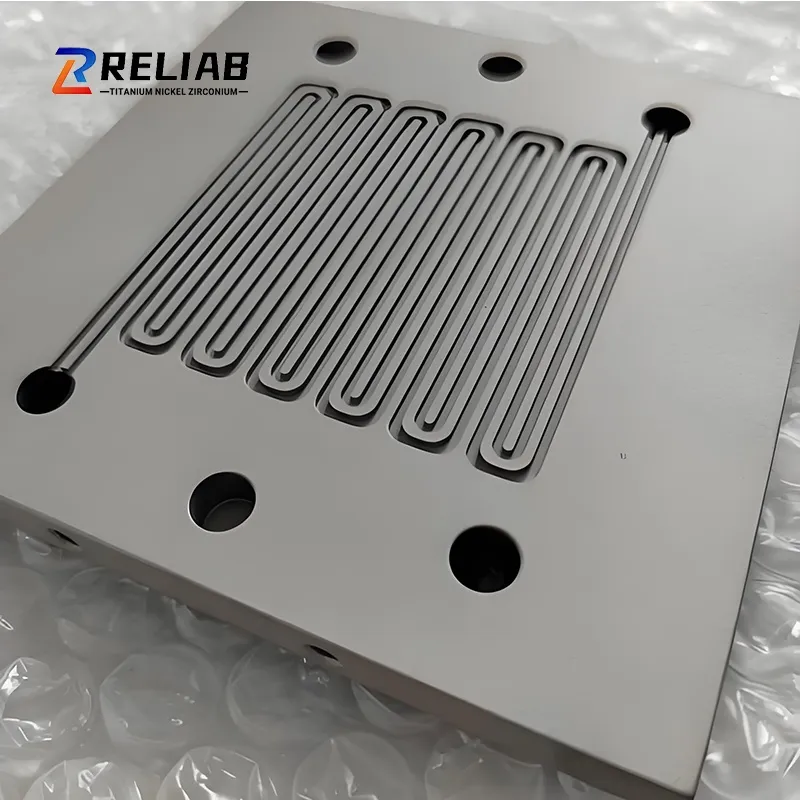
Industrial Equipment: Corrosion-resistant seals for chemical processing and conformal cooling channel molds, reducing cooling cycles;
III. Progress in Industrialization
1. Widespread Adoption Driven by Falling Costs
The price of titanium powder has dropped from 600 yuan/kg to 300 yuan/kg, with cost optimization driven by argon gas recovery technology and lower prices for titanium sponge;
The mass delivery of domestically produced lasers and accelerated technological iteration of core components are driving penetration into the civilian market.
2. Cutting-Edge Technology Trends
Large-Scale Manufacturing: 1.2-meter multi-laser stitching technology boosts efficiency by 70%, breaking through traditional size limitations;
Intelligent Upgrades: AI molten pool monitoring achieves a 99.3% defect detection accuracy rate;
Multi-Material Composites: Research and development of titanium-ceramic gradient materials to optimize interface performance for medical implants.
IV. Representative Product Cases
Lightweight Consumer Products: Domestically produced 3D-printed titanium alloy bicycle frames that combine high strength with a matte finish;
High-End Aerospace Components: Load-bearing structural components for aircraft manufactured using Norsk Titanium plasma arc technology, certified by the FAA;
 E-mail: garychen3215@hotmail.com
 Address: No.35, Baoti Rd, Baoji city, Shaanxi Province, China
 Contact: Mr. Gary Chen
 Phone: +86-917-8883215
 Mobile/WhatsApp: +86 13092900605