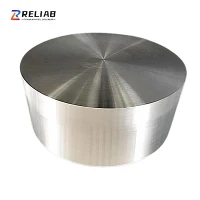
Can titanium alloy round bars be used in chemical processing plants?
As a supplier of Titanium Alloy Round Bars, I am often asked whether our products can be used in chemical processing plants. The answer is a resounding yes, and in this blog post, I will explore the reasons why titanium alloy round bars are an excellent choice for such demanding environments.
The Properties of Titanium Alloys
Titanium alloys are known for their exceptional combination of properties, making them highly suitable for chemical processing applications. One of the most significant advantages of titanium alloys is their outstanding corrosion resistance. In chemical processing plants, where various corrosive substances are handled, this property is crucial. Titanium forms a passive oxide layer on its surface when exposed to oxygen, which acts as a protective barrier against corrosion. This layer can self - repair if damaged, providing long - term protection even in harsh chemical environments.
Another important property is their high strength - to - weight ratio. Titanium alloys are as strong as some steels but much lighter. This is beneficial in chemical processing equipment, as it allows for the construction of lighter structures without sacrificing strength. Lighter equipment is easier to install, maintain, and transport, which can lead to cost savings in the long run.
Titanium alloys also have good heat resistance. They can maintain their mechanical properties at elevated temperatures, which is essential in chemical processes that involve high - temperature reactions. Additionally, titanium has low thermal expansion, which means that it will not expand or contract significantly with temperature changes, reducing the risk of structural damage due to thermal stress.
Applications in Chemical Processing Plants
Reaction Vessels
Reaction vessels are at the heart of chemical processing plants, where various chemical reactions take place. Titanium alloy round bars can be used to fabricate the structural components of these vessels, such as support frames and reinforcement bars. The corrosion resistance of titanium ensures that these components will not degrade over time due to contact with corrosive chemicals, extending the lifespan of the reaction vessels. For example, in the production of certain acids or alkalis, where traditional materials like carbon steel would corrode rapidly, titanium alloy components can provide reliable service for many years.
Piping Systems
Piping systems are used to transport various chemicals within a chemical processing plant. Titanium alloy round bars can be used to manufacture pipes, fittings, and valves. The smooth surface of titanium pipes reduces friction, which helps in the efficient flow of chemicals. Moreover, the corrosion resistance of titanium prevents the formation of rust or other deposits inside the pipes, which could otherwise contaminate the chemicals being transported or reduce the flow rate. For instance, in a plant that processes seawater for desalination or chemical extraction, titanium pipes are highly preferred due to their resistance to the corrosive effects of saltwater.
Heat Exchangers
Heat exchangers are used to transfer heat between different chemical streams in a processing plant. Titanium alloy round bars are an ideal material for the construction of heat exchanger tubes. Their high thermal conductivity and corrosion resistance allow for efficient heat transfer while maintaining the integrity of the tubes. In applications where the heat exchanger is in contact with aggressive chemicals, such as in the petrochemical industry, titanium heat exchangers can operate effectively without the need for frequent replacement.
Specific Titanium Alloy Grades for Chemical Processing
ASTM F67 H9 Titanium Bar
The ASTM F67 H9 Titanium Bar is a pure titanium grade with excellent corrosion resistance. It is often used in applications where high - purity titanium is required, such as in the pharmaceutical and food processing industries. In chemical processing plants, it can be used for components that come into contact with highly corrosive substances in a relatively pure form, such as in the production of certain specialty chemicals.
AMS 4928 Titanium Bar
The AMS 4928 Titanium Bar is an alpha - beta titanium alloy. It offers a good balance of strength, ductility, and corrosion resistance. This grade is commonly used in aerospace and chemical processing applications. In chemical plants, it can be used for structural components that require high strength and corrosion resistance, such as the frames of large - scale reaction vessels or the support structures for piping systems.


Dia6mm Gr5Eli ASTM F136 Titanium Medical Rod
Although the Dia6mm Gr5Eli ASTM F136 Titanium Medical Rod is primarily known for its medical applications, its high - quality titanium alloy composition also makes it suitable for certain chemical processing applications. Its excellent corrosion resistance and biocompatibility can be an advantage in processes where the chemical environment is sensitive or where contamination needs to be minimized, such as in the production of high - purity chemicals.
Challenges and Considerations
While titanium alloy round bars offer many advantages in chemical processing plants, there are also some challenges and considerations. One of the main challenges is the cost. Titanium alloys are generally more expensive than traditional materials like carbon steel or stainless steel. However, when considering the long - term benefits, such as reduced maintenance costs and longer service life, the higher initial investment can be justified.
Another consideration is the machining difficulty. Titanium alloys are more difficult to machine compared to some other metals. Specialized machining techniques and tools are required to ensure accurate and efficient processing. This can add to the overall cost of manufacturing components from titanium alloy round bars.
Conclusion
In conclusion, titanium alloy round bars can indeed be used in chemical processing plants. Their exceptional corrosion resistance, high strength - to - weight ratio, heat resistance, and other properties make them a valuable choice for a wide range of applications in these facilities. Whether it is for reaction vessels, piping systems, or heat exchangers, titanium alloy round bars can provide reliable and long - lasting service.
If you are involved in a chemical processing plant and are considering using titanium alloy round bars for your projects, I encourage you to contact me for more information and to discuss your specific requirements. We can work together to find the best titanium alloy solutions for your needs.
References
- "Titanium and Titanium Alloys: Fundamentals and Applications" by Yuri Estrin, et al.
- "Corrosion Resistance of Titanium Alloys in Chemical Environments" - Journal of Corrosion Science and Engineering.
- "Engineering Materials for Chemical Processing" - A comprehensive industry report on materials selection.