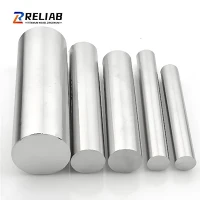
Hey there! As a supplier of AMS 4928 Titanium Bar, I've got a lot to share about how this awesome material reacts with acids. Titanium bars are pretty well - known for their unique properties, and AMS 4928 is no exception.
First off, let's talk a bit about AMS 4928 Titanium Bar. It's a high - quality titanium product that meets the Aerospace Material Specification 4928. This spec ensures that the bar has specific chemical and mechanical properties, making it suitable for a wide range of applications, from aerospace to medical.


Now, onto the main topic: how does it react with acids? Well, titanium in general is quite resistant to corrosion, and AMS 4928 Titanium Bar follows this trend. But different acids have different effects on it.
Let's start with hydrochloric acid (HCl). At low concentrations and normal temperatures, AMS 4928 Titanium Bar shows excellent resistance. The surface of the titanium forms a passive oxide layer that acts as a barrier between the metal and the acid. This oxide layer is very stable and prevents the acid from further reacting with the titanium. However, as the concentration of hydrochloric acid increases and the temperature goes up, things start to change. At high concentrations and elevated temperatures, the acid can start to break down the passive oxide layer, and corrosion can occur. The reaction rate also depends on the presence of other impurities in the acid. For example, if there are some metal ions in the hydrochloric acid, they can accelerate the corrosion process.
Nitric acid (HNO₃) is another common acid, and AMS 4928 Titanium Bar has great resistance to it. Nitric acid is a strong oxidizing agent, and it actually helps to maintain and strengthen the passive oxide layer on the titanium surface. Even at relatively high concentrations and temperatures, the bar remains largely unaffected. This makes it a great choice for applications where contact with nitric acid is possible, such as in some chemical processing plants.
Sulfuric acid (H₂SO₄) is a bit more complex. At low concentrations and normal temperatures, the titanium bar has good resistance. But as the concentration increases, especially at higher temperatures, the situation becomes more challenging. Concentrated sulfuric acid can react with the titanium, although the reaction rate is relatively slow compared to some other metals. The reaction can lead to the formation of titanium sulfate and hydrogen gas. The presence of certain additives or impurities in the sulfuric acid can also influence the reaction. For instance, if there are some reducing agents in the acid, they can enhance the corrosion of the titanium bar.
Phosphoric acid (H₃PO₄) also has an interesting relationship with AMS 4928 Titanium Bar. At low to moderate concentrations, the bar shows decent resistance. The acid can interact with the passive oxide layer on the titanium surface, but usually, it doesn't cause significant corrosion. However, at high concentrations and elevated temperatures, the acid can start to dissolve the oxide layer and attack the underlying metal.
The reaction of AMS 4928 Titanium Bar with acids is not just about the type and concentration of the acid. The surface finish of the bar also plays a role. A smooth, polished surface has better resistance compared to a rough surface. A rough surface has more areas where the acid can penetrate and start the corrosion process. Also, the presence of stress on the bar can affect its corrosion resistance. If the bar is under stress, it can be more susceptible to corrosion in acidic environments.
Now, let's talk about some of the applications where the acid - resistance of AMS 4928 Titanium Bar comes in handy. In the medical field, it's used for Orthopedic Implant Eli Titanium Bar. Since the human body has various acidic and alkaline substances, the acid - resistant property of the titanium bar ensures that the implant remains stable and doesn't corrode over time. This is crucial for the long - term success of the implant.
In the aerospace industry, the bar is used in components that may come into contact with acidic substances during flight, such as in the fuel system or in areas exposed to atmospheric pollutants. The acid resistance helps to maintain the integrity of these components and ensures the safety and reliability of the aircraft.
For industrial applications, ASTM B348 Titanium Round Bar and Grade2 Titanium Bar For Industrial which share some similarities with AMS 4928 Titanium Bar in terms of acid resistance, are widely used. They are used in chemical processing plants, where they may be exposed to different acids during the manufacturing process.
If you're in the market for high - quality AMS 4928 Titanium Bar, you've come to the right place. Whether you need it for medical, aerospace, or industrial applications, we can provide you with top - notch products. Our bars are carefully manufactured to meet the strict AMS 4928 specifications, ensuring consistent quality and excellent acid - resistance. If you have any questions about how our AMS 4928 Titanium Bar will perform in your specific acidic environment, or if you're interested in placing an order, don't hesitate to reach out and start a procurement discussion. We're here to help you get the best titanium bar for your needs.
References
- ASM Handbook Volume 13A: Corrosion: Fundamentals, Testing, and Protection.
- Titanium: A Technical Guide by Don Eylon.
- Corrosion Resistance of Titanium and Titanium Alloys by R. Winston Revie.