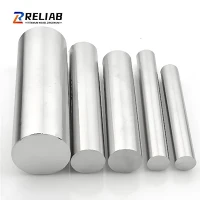
As a supplier of TI6AL4V Titanium Round Bars, I've witnessed firsthand the importance of surface finish in determining the corrosion resistance of these high - performance materials. In this blog, I'll delve into the intricate relationship between surface finish and corrosion resistance, and how it impacts the quality and longevity of TI6AL4V titanium round bars.
Understanding TI6AL4V Titanium Round Bars
TI6AL4V, also known as Grade 5 titanium, is one of the most widely used titanium alloys. It combines high strength, low density, and excellent corrosion resistance, making it ideal for a variety of applications, from aerospace components to medical implants. The round bars made from TI6AL4V are commonly used in industries where high - performance materials are required.
The Role of Surface Finish in Corrosion Resistance
The surface finish of a TI6AL4V titanium round bar plays a crucial role in its ability to resist corrosion. A smooth and uniform surface finish can significantly enhance the corrosion resistance of the material. When a TI6AL4V bar has a rough surface, it provides more sites for corrosion to initiate. Microscopic irregularities, such as pits, scratches, and asperities, can act as stress concentration points and create an environment where corrosive agents can penetrate more easily.
On the other hand, a smooth surface finish reduces the contact area between the material and the corrosive medium. This minimizes the chances of corrosion initiation and propagation. For example, in a marine environment, a TI6AL4V round bar with a smooth finish will be less likely to corrode compared to one with a rough finish, as the smooth surface is less likely to trap saltwater and other corrosive substances.
Different Surface Finishes and Their Impact on Corrosion
Polished Finish
A polished finish is one of the smoothest surface finishes available for TI6AL4V titanium round bars. Polishing the surface removes surface imperfections and creates a mirror - like finish. This type of finish not only enhances the aesthetic appeal of the bar but also significantly improves its corrosion resistance. The smooth surface reduces the adhesion of corrosive agents, and it is easier to clean, which helps in maintaining the integrity of the material over time.
Ground Finish
A ground finish is achieved by using abrasive wheels to remove a thin layer of material from the surface of the bar. This results in a relatively smooth surface with a more uniform texture compared to a rough - cut surface. Ground finishes can improve corrosion resistance by reducing the number of surface irregularities. However, they may not be as effective as a polished finish in highly corrosive environments.
Shot - Peened Finish
Shot - peening is a process where small spherical particles are shot at the surface of the bar at high velocity. This creates a compressive stress layer on the surface, which can improve the fatigue resistance of the material. In terms of corrosion resistance, shot - peening can have mixed effects. While it can increase the surface area slightly, which may seem counter - intuitive for corrosion resistance, the compressive stress can also help in preventing crack initiation and propagation, which are often associated with corrosion.
Factors Affecting Surface Finish and Corrosion Resistance
Manufacturing Processes
The manufacturing processes used to produce TI6AL4V titanium round bars can have a significant impact on the surface finish. For example, machining operations such as turning, milling, and drilling can leave tool marks and surface roughness on the bar. Proper selection of cutting tools, cutting parameters, and coolant can help in achieving a better surface finish. Heat treatment processes can also affect the surface finish and corrosion resistance. Improper heat treatment can lead to the formation of surface oxides or other surface defects, which can reduce the corrosion resistance of the material.
Environmental Conditions
The environmental conditions in which the TI6AL4V round bar is used also play a crucial role. In a highly corrosive environment, such as a chemical processing plant or a marine environment, a high - quality surface finish is even more important. Exposure to aggressive chemicals, high humidity, and saltwater can accelerate the corrosion process, and a smooth surface finish can provide better protection.
Comparing with Other Titanium Bars
When comparing TI6AL4V titanium round bars with other types of titanium bars, such as Grade 7 Titanium Solid Round Bar, Titanium Timascus Bar, and Grade 23 Medical Titanium Bars, the surface finish still remains a critical factor in corrosion resistance. Each grade of titanium has its own unique properties, but a good surface finish can enhance the corrosion resistance of all these bars.
For example, Grade 7 titanium has excellent corrosion resistance in many chemical environments due to the addition of palladium. However, a proper surface finish can further improve its performance in these environments. Similarly, Grade 23 medical titanium bars, which are used in medical implants, require a high - quality surface finish to prevent corrosion and ensure biocompatibility.


Maintaining Surface Finish and Corrosion Resistance
Proper maintenance of the surface finish is essential for ensuring long - term corrosion resistance. Regular cleaning of the TI6AL4V round bars can help in removing any corrosive substances that may have adhered to the surface. Avoiding contact with abrasive materials and sharp objects can prevent scratches and damage to the surface finish. In some cases, applying a protective coating can also enhance the corrosion resistance of the bar.
Conclusion
In conclusion, the surface finish of TI6AL4V titanium round bars has a profound impact on their corrosion resistance. A smooth and uniform surface finish can significantly reduce the risk of corrosion, while a rough surface can provide sites for corrosion initiation. By understanding the different surface finishes available, the factors affecting them, and how to maintain them, users can ensure the long - term performance of TI6AL4V titanium round bars in various applications.
If you are in the market for high - quality TI6AL4V Titanium Round Bars or have any questions regarding surface finish and corrosion resistance, I encourage you to reach out to me for a detailed discussion. We can explore the best options for your specific application and ensure that you get the most out of these exceptional materials.
References
- ASM Handbook Volume 13A: Corrosion: Fundamentals, Testing, and Protection
- Titanium Alloys: Physical, Chemical, and Mechanical Properties by John C. Williams
- Surface Engineering for Corrosion and Wear Protection by M. P. Seah