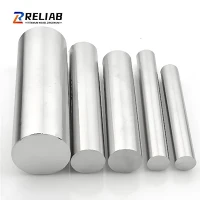
Hey there! As a supplier of Ti - 3Al - 2.5V Alloy Rod and Bar, I often get asked about how these products resist marine corrosion. Well, let's dive right into it.
First off, let's understand what makes the marine environment so tough on metals. The ocean is a harsh place. It's full of saltwater, which is highly corrosive. Saltwater contains a high concentration of chloride ions. These ions can break down the protective oxide layers on many metals, leading to corrosion. There are also other factors like waves, tides, and the presence of marine organisms that can accelerate the corrosion process.
Now, let's talk about the Ti - 3Al - 2.5V Alloy Rod and Bar. Titanium alloys, in general, are known for their excellent corrosion resistance, and the Ti - 3Al - 2.5V alloy is no exception. One of the key reasons for its resistance is the formation of a passive oxide layer on its surface. When titanium comes into contact with oxygen, it forms a thin, stable layer of titanium dioxide (TiO₂). This layer is extremely adherent and acts as a barrier between the metal and the corrosive environment.
In the marine environment, this oxide layer plays a crucial role. The chloride ions in the saltwater are constantly trying to attack the metal. But the TiO₂ layer is resistant to the penetration of these ions. It prevents the chloride ions from reaching the underlying metal and initiating the corrosion process. Even if the oxide layer gets damaged, for example, due to mechanical abrasion from sand or debris in the water, it can quickly reform as long as there is oxygen present.
Another factor that contributes to the corrosion resistance of Ti - 3Al - 2.5V alloy is its alloying elements. The addition of aluminum (Al) and vanadium (V) to titanium enhances its mechanical properties and also improves its corrosion resistance. Aluminum helps in the formation of a more stable oxide layer. It can substitute for some of the titanium atoms in the TiO₂ layer, making it more resistant to breakdown. Vanadium, on the other hand, can improve the toughness and ductility of the alloy, which is important in the marine environment where the material may be subjected to mechanical stresses.
Let's take a look at some real - world applications of Ti - 3Al - 2.5V Alloy Rod and Bar in the marine industry. These rods and bars are commonly used in shipbuilding, especially for components that are in direct contact with seawater. For example, they can be used in the construction of propeller shafts, rudder stocks, and other underwater parts. Their corrosion resistance ensures a long service life for these components, reducing the need for frequent replacements and maintenance.


In addition to shipbuilding, Ti - 3Al - 2.5V Alloy Rod and Bar are also used in offshore oil and gas platforms. These platforms are exposed to the harsh marine environment for long periods of time. The alloy's resistance to corrosion makes it a reliable choice for structural components, such as support beams and pipelines. It can withstand the corrosive effects of saltwater, as well as the high pressures and temperatures often encountered in offshore operations.
Now, I'd like to mention some related products that you might be interested in. If you're looking for other titanium bars, we also offer TI6AL4V Titanium Round Bar. This is another popular titanium alloy bar that has excellent mechanical properties and corrosion resistance. It's widely used in aerospace and automotive industries.
For those in the dental industry, we have Dental Implant Titanium Bars. Titanium is a biocompatible material, which means it can be safely used in the human body. These bars are used in the manufacturing of dental implants, where corrosion resistance is of utmost importance.
And if you're involved in welding, our TIG Titanium Welding Rod is a great option. It allows you to weld titanium alloys effectively, ensuring strong and durable joints.
If you're in the market for high - quality Ti - 3Al - 2.5V Alloy Rod and Bar or any of our other titanium products, don't hesitate to get in touch. We have a wide range of sizes and specifications available to meet your specific needs. Whether you're a small - scale manufacturer or a large - scale industrial company, we can provide you with the right products at competitive prices.
In conclusion, the Ti - 3Al - 2.5V Alloy Rod and Bar are an excellent choice for applications in the marine environment. Their ability to resist corrosion is due to the formation of a passive oxide layer and the beneficial effects of alloying elements. If you have any questions or want to discuss your requirements further, feel free to reach out. We're here to help you find the best titanium solutions for your projects.
References:
- Jones, D. A. (1992). Principles and Prevention of Corrosion. Prentice Hall.
-ASM Handbook Committee. (2000). ASM Handbook Volume 13A: Corrosion: Fundamentals, Testing, and Protection. ASM International.