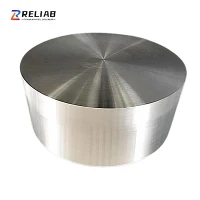
As a titanium bar supplier, I've witnessed firsthand the growing importance of recycling in the metal industry. Titanium, known for its exceptional strength, corrosion resistance, and lightweight properties, is a valuable resource. Recycling titanium bars not only conserves this precious material but also reduces the environmental impact associated with mining and refining new titanium. In this blog, I'll share some insights on how to recycle a titanium bar effectively.
Understanding the Value of Recycling Titanium Bars
Titanium is a strategic metal used in a wide range of industries, including aerospace, automotive, medical, and marine. The demand for titanium continues to rise, driven by its unique properties and applications. However, the extraction and processing of titanium are energy-intensive and environmentally challenging. Recycling titanium bars helps to mitigate these issues by reducing the need for virgin titanium production.
Recycling titanium also offers economic benefits. The cost of producing new titanium from raw materials is relatively high, while recycled titanium can be obtained at a lower cost. By recycling titanium bars, manufacturers can save on material costs and improve their bottom line. Additionally, recycling helps to create a more sustainable supply chain, which is increasingly important to customers and stakeholders.
Steps to Recycle a Titanium Bar
1. Collection and Sorting
The first step in recycling a titanium bar is to collect and sort the material. This involves gathering used or scrap titanium bars from various sources, such as manufacturing facilities, construction sites, and end-of-life products. It's important to separate titanium bars from other metals and materials to ensure the purity of the recycled product.
As a titanium bar supplier, I often work with customers to collect their scrap titanium bars. We provide collection bins and transportation services to make the process as convenient as possible. Once the titanium bars are collected, we sort them based on their composition, size, and quality. This helps us to determine the most appropriate recycling method for each batch of material.
2. Cleaning and Preparation
After sorting, the titanium bars need to be cleaned and prepared for recycling. This involves removing any contaminants, such as dirt, grease, paint, and coatings, from the surface of the bars. Cleaning can be done using a variety of methods, including mechanical cleaning, chemical cleaning, and thermal cleaning.
Mechanical cleaning involves using abrasive materials, such as sandpaper or wire brushes, to remove surface contaminants. Chemical cleaning uses solvents or acids to dissolve and remove contaminants. Thermal cleaning involves heating the titanium bars to a high temperature to burn off organic contaminants. The choice of cleaning method depends on the type and extent of contamination, as well as the specific requirements of the recycling process.
Once the titanium bars are clean, they may need to be cut or shredded into smaller pieces to facilitate further processing. This can be done using a variety of cutting and shredding equipment, such as saws, shears, and crushers. The size and shape of the pieces will depend on the recycling method and the equipment used.
3. Melting and Refining
The next step in recycling a titanium bar is to melt and refine the material. This involves heating the titanium bars to a high temperature in a furnace until they melt. The molten titanium is then refined to remove any remaining impurities and to adjust its composition to meet the desired specifications.
There are several methods for melting and refining titanium, including vacuum arc remelting (VAR), electron beam melting (EBM), and plasma arc melting (PAM). VAR is the most commonly used method for recycling titanium bars. It involves melting the titanium in a vacuum chamber using an electric arc. The molten titanium is then solidified into an ingot, which can be further processed into new titanium products.
EBM and PAM are alternative methods for melting and refining titanium. EBM uses an electron beam to heat and melt the titanium, while PAM uses a plasma arc. These methods offer several advantages over VAR, including higher melting rates, better control over the melting process, and the ability to recycle titanium with higher levels of impurities. However, they are also more expensive and require specialized equipment.
4. Forming and Fabrication
Once the titanium has been melted and refined, it can be formed and fabricated into new products. This involves using a variety of manufacturing processes, such as forging, rolling, extrusion, and machining, to shape the titanium into the desired form.
Forging involves heating the titanium and then using a hammer or press to shape it into the desired form. Rolling involves passing the titanium through a series of rollers to reduce its thickness and increase its length. Extrusion involves forcing the titanium through a die to create a specific shape. Machining involves using cutting tools to remove material from the titanium to create the desired shape and dimensions.
The choice of forming and fabrication method depends on the specific requirements of the product, as well as the properties of the titanium. For example, forging is often used to produce high-strength titanium components, while rolling is commonly used to produce titanium sheets and plates. Extrusion is often used to produce titanium tubes and rods, while machining is used to produce precision components.


Types of Recycled Titanium Products
Recycled titanium can be used to produce a wide range of products, including:
- Titanium Bars: Recycled titanium bars can be used in a variety of applications, such as aerospace, automotive, and medical. They are available in different sizes, shapes, and grades to meet the specific requirements of each application. For example, TI6AL4V Titanium Round Bar is a popular grade of titanium bar used in aerospace and medical applications due to its high strength, corrosion resistance, and biocompatibility.
- Titanium Sheets and Plates: Recycled titanium sheets and plates can be used in a variety of applications, such as construction, marine, and chemical processing. They are available in different thicknesses, widths, and lengths to meet the specific requirements of each application.
- Titanium Tubes and Pipes: Recycled titanium tubes and pipes can be used in a variety of applications, such as oil and gas, power generation, and water treatment. They are available in different diameters, wall thicknesses, and lengths to meet the specific requirements of each application.
- Titanium Welding Rods: Recycled titanium welding rods can be used to weld titanium components in a variety of applications, such as aerospace, automotive, and medical. They are available in different diameters and lengths to meet the specific requirements of each application. For example, TIG Titanium Welding Rod is a popular type of titanium welding rod used in TIG welding applications due to its high quality and performance.
Benefits of Using Recycled Titanium Products
Using recycled titanium products offers several benefits, including:
- Environmental Sustainability: Recycling titanium reduces the need for virgin titanium production, which helps to conserve natural resources and reduce the environmental impact associated with mining and refining. It also reduces energy consumption and greenhouse gas emissions, making it a more sustainable option.
- Cost Savings: Recycled titanium products are often less expensive than products made from virgin titanium. This is because the cost of recycling is generally lower than the cost of producing new titanium from raw materials. By using recycled titanium products, manufacturers can save on material costs and improve their bottom line.
- Quality and Performance: Recycled titanium products offer the same quality and performance as products made from virgin titanium. They meet the same industry standards and specifications, and they are suitable for use in a wide range of applications.
- Supply Chain Security: Using recycled titanium products helps to create a more secure and reliable supply chain. By recycling titanium, manufacturers can reduce their dependence on imported raw materials and ensure a stable supply of high-quality titanium products.
Contact for Procurement and Recycling
If you're interested in purchasing recycled titanium products or recycling your scrap titanium bars, I'd be happy to help. As a titanium bar supplier, I have extensive experience in the recycling and supply of titanium products. I can provide you with high-quality recycled titanium products at competitive prices, and I can also assist you with the recycling process.
Please feel free to contact me to discuss your specific requirements and to learn more about our products and services. I look forward to working with you to create a more sustainable and efficient supply chain for titanium products.
References
- ASM International. (2000). Titanium and Titanium Alloys. Materials Park, OH: ASM International.
- Donachie, M. J. (2000). Titanium: A Technical Guide. Materials Park, OH: ASM International.
- Lütjering, G., & Williams, J. C. (2007). Titanium. Berlin: Springer.
- Scharf, T. W. (2012). Titanium Alloys: Fundamentals and Applications. Hoboken, NJ: Wiley.