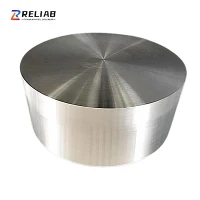
As a reliable supplier of ASTM F67 H9 Titanium Bar, I understand the importance of proper storage to maintain the quality and integrity of this high - performance material. ASTM F67 H9 Titanium Bar is widely used in various industries, especially in medical and dental applications due to its excellent biocompatibility, corrosion resistance, and mechanical properties. In this blog, I will share some key guidelines on how to store ASTM F67 H9 Titanium Bar properly.
1. Storage Environment
The first and most crucial aspect of storing ASTM F67 H9 Titanium Bar is to control the storage environment. Titanium is a reactive metal, and certain environmental conditions can lead to surface oxidation, contamination, or even corrosion.
Temperature and Humidity
The storage area should be maintained at a stable temperature and low humidity. A temperature range of 20 - 25°C (68 - 77°F) is ideal, as extreme temperatures can cause thermal expansion and contraction, which may affect the dimensional stability of the bars. High humidity can lead to the formation of moisture on the surface of the titanium bars, promoting oxidation and corrosion. Therefore, the relative humidity in the storage area should be kept below 60%.
Ventilation
Good ventilation is essential to prevent the accumulation of moisture and harmful gases. The storage facility should have proper air circulation systems to ensure a fresh and dry atmosphere. Stagnant air can trap moisture and contaminants, increasing the risk of corrosion. Additionally, ventilation helps to dissipate any fumes or vapors that may be present in the storage area.
Cleanliness
The storage area must be kept clean and free from dust, dirt, and other contaminants. Regular cleaning of the storage racks, floors, and walls is necessary. Contaminants can scratch the surface of the titanium bars during handling and storage, which may compromise their integrity. It is also important to avoid storing the bars near sources of pollution, such as chemical storage areas or industrial machinery that may emit dust or fumes.
2. Storage Racks and Containers
The choice of storage racks and containers is also important for the proper storage of ASTM F67 H9 Titanium Bar.
Racks
Use sturdy and well - designed storage racks that can support the weight of the bars without causing deformation. The racks should be made of non - corrosive materials, such as stainless steel or coated steel. Wooden racks should be avoided as they may contain moisture and can release organic compounds that may react with the titanium. The bars should be placed on the racks in an orderly manner, with sufficient spacing between each bar to prevent contact and damage.
Containers
If the bars need to be stored in containers, choose containers made of materials that are compatible with titanium. Plastic containers with smooth surfaces are a good option. The containers should be clean and dry before use. When placing the bars in the containers, it is advisable to use protective padding, such as foam or plastic sheets, to prevent scratches and damage during handling and storage.
3. Protection from Physical Damage
ASTM F67 H9 Titanium Bar should be protected from physical damage during storage.
Handling
During the handling process, use appropriate lifting equipment, such as cranes or forklifts, with soft - padded lifting attachments to avoid scratching or denting the bars. Operators should be trained to handle the bars carefully to prevent accidental drops or impacts.
Packaging
The bars should be properly packaged before storage. Wrapping the bars with plastic film or paper can provide an additional layer of protection against scratches and dust. For longer - term storage or transportation, consider using more robust packaging, such as wooden crates or steel boxes.
4. Isolation from Other Metals
Titanium can react with other metals through a process called galvanic corrosion when they are in contact in the presence of an electrolyte (such as moisture). Therefore, it is important to store ASTM F67 H9 Titanium Bar separately from other metals.


Do not store the titanium bars in direct contact with steel, aluminum, or other metals. If they need to be stored in the same area, use non - conductive barriers, such as plastic sheets or rubber pads, to separate them. This will prevent the formation of galvanic cells and reduce the risk of corrosion.
5. Inventory Management
Proper inventory management is also an important part of storing ASTM F67 H9 Titanium Bar.
Labeling
Each bar or package should be clearly labeled with information such as the product specification (ASTM F67 H9), size, batch number, and date of receipt. This makes it easier to identify and track the bars during storage and retrieval.
First - In, First - Out (FIFO)
Implement a FIFO inventory management system. This means that the bars that are received first should be used or shipped first. This helps to ensure that the bars are not stored for an excessive period, reducing the risk of degradation over time.
6. Regular Inspection
Regular inspection of the stored ASTM F67 H9 Titanium Bar is necessary to detect any signs of damage, corrosion, or other issues early.
Visual Inspection
Conduct visual inspections at regular intervals. Check for any signs of surface discoloration, scratches, dents, or corrosion. If any issues are found, take appropriate measures immediately, such as cleaning the surface or replacing the damaged bars.
Dimensional Inspection
Periodically measure the dimensions of the bars to ensure that they are still within the specified tolerance. Any significant changes in dimensions may indicate a problem with the storage conditions or the material itself.
In conclusion, proper storage of ASTM F67 H9 Titanium Bar is crucial to maintain its quality and performance. By controlling the storage environment, using appropriate storage racks and containers, protecting the bars from physical damage, isolating them from other metals, implementing good inventory management, and conducting regular inspections, you can ensure that the bars remain in excellent condition until they are ready for use.
If you are interested in our ASTM F67 H9 Titanium Bar, we also offer other high - quality titanium products, such as Titanium AMS 6242 Bar for Aerospace and ASTM B348 Titanium Round Bar. Please feel free to contact us for more information and to discuss your specific requirements. We are committed to providing you with the best products and services.
References
- ASTM International. ASTM F67 - 19 Standard Specification for Unalloyed Titanium for Surgical Implants (Formed and Unformed).
- ASM Handbook Committee. ASM Handbook Volume 2: Properties and Selection: Nonferrous Alloys and Special - Purpose Materials. ASM International, 2001.
- Titanium Information Group. Titanium: A Technical Guide. ASM International, 1988.