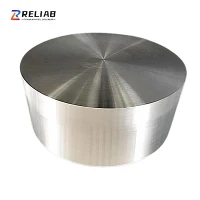
Hey there! As a supplier of CP2 Titanium Plate ASTM B265, I often get asked about the heat treatment processes for this material. So, I thought I'd put together this blog post to share some insights.
First off, let's talk a bit about CP2 Titanium Plate ASTM B265. It's a popular choice in various industries because of its excellent corrosion resistance, good formability, and relatively low cost compared to some other titanium alloys. CP2 titanium is an unalloyed titanium with a purity of about 99%.
Now, onto the heat treatment processes. There are a few key heat treatment methods for CP2 Titanium Plate ASTM B265, and each serves a different purpose.
Annealing
Annealing is one of the most common heat treatment processes for CP2 titanium. The main goal of annealing is to relieve internal stresses that might have been introduced during manufacturing processes like rolling, forging, or machining. It also helps to improve the ductility and toughness of the material.
There are different types of annealing for CP2 titanium. Full annealing is typically done at a temperature range of around 650 - 750°C (1202 - 1382°F). The plate is heated to this temperature and held there for a certain period, usually a few hours, depending on the thickness of the plate. Then, it's slowly cooled down. This slow cooling process allows the internal structure of the titanium to rearrange itself in a more stable and stress - free state.
Another type is stress - relief annealing. This is usually carried out at a lower temperature, around 450 - 550°C (842 - 1022°F). It's mainly used to reduce residual stresses without significantly changing the mechanical properties of the material. Stress - relief annealing is a quicker process compared to full annealing, and it's often used when the main concern is just getting rid of the internal stresses.
Solution Treatment
Solution treatment is another important heat treatment process. It involves heating the CP2 titanium plate to a high temperature, usually above the beta transus temperature (around 882°C or 1620°F for CP2 titanium). At this high temperature, the titanium exists in the beta phase. The plate is held at this temperature for a short period to dissolve any secondary phases that might be present in the material.
After that, it's rapidly quenched, usually in water or oil. This rapid cooling "freezes" the beta phase structure at room temperature. Solution treatment can improve the strength and hardness of the CP2 titanium plate. However, it also makes the material more brittle. So, often, solution treatment is followed by an aging process to balance the properties.
Aging
Aging is a process that's done after solution treatment. The solution - treated plate is heated to a relatively low temperature, typically in the range of 450 - 650°C (842 - 1202°F), and held there for a certain time. During aging, the supersaturated solid solution formed during solution treatment decomposes, and fine precipitates are formed within the titanium matrix.
These precipitates act as obstacles to the movement of dislocations, which in turn increases the strength and hardness of the material. Aging also helps to improve the ductility and toughness that might have been reduced during solution treatment. The exact aging temperature and time depend on the specific requirements of the application and the desired mechanical properties of the CP2 titanium plate.


Why Heat Treatment Matters
The heat treatment processes are crucial for CP2 Titanium Plate ASTM B265. They allow us to tailor the mechanical properties of the plate to meet the specific needs of different applications. For example, in the aerospace industry, where high strength and good ductility are required, a combination of solution treatment and aging might be used to achieve the desired properties.
In the chemical processing industry, where corrosion resistance is of utmost importance, annealing might be the preferred heat treatment method to ensure that the plate has good corrosion resistance and is free from internal stresses that could lead to stress - corrosion cracking.
Our Offerings
As a supplier of CP2 Titanium Plate ASTM B265, we can provide plates that have undergone various heat treatment processes according to your requirements. Whether you need a plate that's been annealed for better formability or one that's been solution - treated and aged for high strength, we've got you covered.
We also offer other related products like Ti - 6AL - 4V Titanium Sheet, 10mm Titanium Plate Sheet, and Industrial Grade 2 Titanium Sheet 2mm 3mm. These products are also available with different heat treatment options to suit your specific needs.
Contact Us for Purchase
If you're in the market for CP2 Titanium Plate ASTM B265 or any of our other titanium products, we'd love to hear from you. Whether you have questions about the heat treatment processes, need a specific size or thickness of the plate, or want to discuss your application requirements, don't hesitate to reach out. We're here to help you find the best titanium solution for your project.
References
- "Titanium: A Technical Guide" by John R. Davis
- "Metallurgy and Processing of Titanium Alloys" by E. A. Olevsky and A. G. Mamivand
So, that's a wrap on the heat treatment processes for CP2 Titanium Plate ASTM B265. I hope this blog post has been helpful to you. If you have any more questions, feel free to drop them in the comments section or contact us directly. Looking forward to working with you!