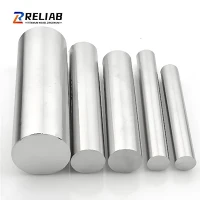
Hey there! I'm a supplier of CP2 Titanium Plate ASTM B265, and today I wanna chat about the quality control measures for these plates.
First off, let's understand what CP2 Titanium Plate ASTM B265 is. CP2 titanium is a commercially pure titanium grade, and ASTM B265 is the standard specification for titanium and titanium alloy strip, sheet, and plate. These plates are widely used in various industries like aerospace, chemical processing, and marine applications because of their excellent corrosion resistance, high strength-to-weight ratio, and good weldability.
Raw Material Inspection
The quality control process starts right at the source - the raw materials. When we receive the titanium ingots or billets, we conduct a thorough inspection. We check the chemical composition of the raw material to make sure it meets the requirements of ASTM B265. This is crucial because even a slight deviation in the chemical composition can affect the properties of the final product.
We use advanced analytical techniques like spectrometry to analyze the elements present in the titanium. The main elements in CP2 titanium are titanium itself, along with small amounts of iron, oxygen, carbon, nitrogen, and hydrogen. The content of these elements must be within the specified limits. For example, the iron content should be no more than 0.30%, and the oxygen content should be in the range of 0.12 - 0.25%.


Manufacturing Process Control
Once the raw materials pass the inspection, they are sent to the manufacturing process. There are several steps involved in making CP2 Titanium Plates, and each step is closely monitored.
Rolling
Rolling is a key process in plate manufacturing. We control the rolling parameters such as temperature, speed, and reduction ratio. The rolling temperature is critical because it affects the grain structure of the titanium. If the temperature is too high, the grains may grow too large, which can reduce the strength and ductility of the plate. On the other hand, if the temperature is too low, the plate may crack during rolling.
We also monitor the rolling speed to ensure uniform deformation of the plate. The reduction ratio, which is the ratio of the initial thickness to the final thickness, is carefully controlled to achieve the desired thickness and mechanical properties of the plate.
Heat Treatment
After rolling, the plates may undergo heat treatment to improve their mechanical properties. Heat treatment involves heating the plates to a specific temperature and then cooling them at a controlled rate. There are different types of heat treatment processes, such as annealing and solution treatment.
During annealing, the plates are heated to a temperature below the beta transus temperature (the temperature at which titanium changes from the alpha phase to the beta phase) and held for a certain period of time. This helps to relieve internal stresses, refine the grain structure, and improve the ductility of the plates.
Solution treatment is usually followed by quenching, which involves rapid cooling. This process is used to dissolve certain elements in the titanium matrix and then trap them in a supersaturated solid solution. The subsequent aging treatment can then precipitate these elements, further enhancing the strength of the plates.
Non - Destructive Testing
Non - destructive testing (NDT) is an important part of the quality control process. It allows us to detect internal and surface defects in the plates without damaging them.
Ultrasonic Testing
Ultrasonic testing is used to detect internal defects such as cracks, porosity, and inclusions. In this method, high - frequency ultrasonic waves are sent into the plate, and the reflections from the internal defects are detected. The size, location, and nature of the defects can be determined based on the characteristics of the reflected waves.
Magnetic Particle Testing
Magnetic particle testing is used to detect surface and near - surface defects in ferromagnetic materials. Although CP2 titanium is non - ferromagnetic, this method can be used for some titanium alloys or in cases where there are ferromagnetic contaminants on the surface of the plates. In magnetic particle testing, a magnetic field is applied to the plate, and magnetic particles are then applied to the surface. The particles will accumulate at the locations of the defects, making them visible.
Eddy Current Testing
Eddy current testing is used to detect surface and near - surface defects in conductive materials. When an alternating current is passed through a coil near the surface of the plate, it induces eddy currents in the plate. Any defects in the plate will cause a change in the eddy current pattern, which can be detected by the testing equipment.
Dimensional Inspection
Dimensional accuracy is also an important aspect of quality control. We measure the thickness, width, length, and flatness of the plates using precision measuring tools. The thickness of the plates must be within the specified tolerance range. For example, if the specified thickness is 5 mm, the actual thickness may be allowed to vary within a certain range, say ±0.1 mm.
The width and length of the plates are also measured to ensure they meet the customer's requirements. Flatness is another important parameter, especially for applications where the plate needs to be installed or used in a flat surface. We use straightedges and other measuring devices to check the flatness of the plates.
Final Inspection and Certification
After all the above tests and inspections, the plates undergo a final inspection. We check the overall appearance of the plates for any surface defects such as scratches, dents, or oxidation. The plates are also visually inspected for color uniformity.
Once the plates pass the final inspection, we issue a quality certification. The certification includes information about the chemical composition, mechanical properties, dimensions, and the results of all the tests and inspections. This certification provides assurance to the customers that the plates meet the requirements of ASTM B265.
Related Products
If you're interested in other titanium products, we also offer BT6 Titanium Wrought Alloy Plate, Pure Cut Titanium Cutting Board, and Titanium Flat Bar. These products also undergo strict quality control measures to ensure their high quality.
Conclusion
In conclusion, the quality control measures for CP2 Titanium Plate ASTM B265 are comprehensive and cover every aspect of the manufacturing process, from raw material inspection to final product certification. By implementing these measures, we can ensure that our customers receive high - quality plates that meet their specific requirements.
If you're in the market for CP2 Titanium Plates or any of our other titanium products, feel free to reach out for a purchase negotiation. We're always ready to provide you with the best products and services.
References
- ASTM International. ASTM B265 - 20 Standard Specification for Titanium and Titanium Alloy Strip, Sheet, and Plate.
- ASM Handbook Volume 2: Properties and Selection: Nonferrous Alloys and Special - Purpose Materials.
- "Titanium: A Technical Guide" by John R. Davis.