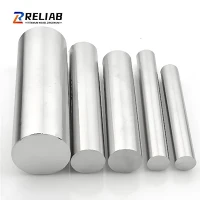
Creep resistance is a critical property for materials used in various high - stress and high - temperature applications. As a supplier of ASTM F67 H9 Titanium Bar, understanding the creep resistance of this material is essential for both us and our customers. In this blog, we will explore what creep resistance is, why it matters for ASTM F67 H9 Titanium Bar, and how it impacts different industries.


What is Creep Resistance?
Creep is the slow and progressive deformation of a material under a constant load or stress over an extended period, especially at elevated temperatures. Creep resistance, therefore, refers to a material's ability to withstand this type of deformation. When a material has high creep resistance, it can maintain its shape and mechanical integrity even when exposed to long - term stress and high temperatures.
The creep process typically occurs in three stages. The first stage is the primary creep, where the deformation rate decreases over time. This is followed by the secondary creep, also known as the steady - state creep, where the deformation rate remains relatively constant. The final stage is the tertiary creep, where the deformation rate increases rapidly until the material fails.
Creep Resistance of ASTM F67 H9 Titanium Bar
ASTM F67 H9 Titanium Bar is a high - quality titanium product that conforms to specific standards set by the American Society for Testing and Materials (ASTM). The "H9" designation indicates a specific heat treatment condition that imparts certain mechanical properties to the bar.
Titanium, in general, has good creep resistance due to its unique crystal structure and high melting point. The hexagonal close - packed (HCP) crystal structure of titanium provides a relatively stable atomic arrangement, which resists the movement of dislocations under stress. Dislocations are defects in the crystal lattice that can cause plastic deformation, and materials with a structure that inhibits their movement tend to have better creep resistance.
The heat treatment of ASTM F67 H9 Titanium Bar further enhances its creep resistance. The H9 heat treatment involves a combination of solution treatment and aging, which results in the precipitation of fine particles within the titanium matrix. These particles act as barriers to dislocation movement, effectively increasing the material's resistance to creep.
Factors Affecting Creep Resistance of ASTM F67 H9 Titanium Bar
Several factors can influence the creep resistance of ASTM F67 H9 Titanium Bar. Temperature is one of the most significant factors. As the temperature increases, the atoms in the material gain more energy, making it easier for dislocations to move and for creep to occur. Therefore, at higher temperatures, the creep rate of the titanium bar will be higher, and its creep resistance will be reduced.
The applied stress also plays a crucial role. Higher stress levels will accelerate the creep process. When the stress exceeds a certain threshold, the material may experience rapid deformation and failure. The duration of the applied stress is another factor. Longer exposure to stress will lead to more significant creep deformation, even at relatively low stress levels.
The microstructure of the titanium bar is also important. A fine - grained microstructure generally provides better creep resistance than a coarse - grained one. The grain boundaries in a fine - grained material can impede the movement of dislocations, thereby reducing the creep rate. Additionally, the presence of impurities or alloying elements can affect the creep behavior. Some alloying elements can form precipitates that enhance creep resistance, while others may have a negative impact.
Importance of Creep Resistance in Different Industries
Aerospace Industry
In the aerospace industry, components such as turbine blades, engine casings, and structural parts are often subjected to high temperatures and stresses during operation. ASTM F67 H9 Titanium Bar's high creep resistance makes it an ideal material for these applications. For example, turbine blades need to maintain their shape and strength at high rotational speeds and elevated temperatures. If the material has poor creep resistance, the blades may deform over time, leading to reduced engine efficiency and potential safety hazards.
Medical Industry
In the medical field, Dental Implant Titanium Bars and Grade 23 Medical Titanium Bars are used for various applications, including dental implants and orthopedic devices. These implants are expected to last for a long time in the human body, which is a warm and chemically active environment. The creep resistance of ASTM F67 H9 Titanium Bar ensures that the implants can maintain their structural integrity over time, reducing the risk of deformation or failure.
Chemical Processing Industry
In chemical processing plants, equipment such as reactors, heat exchangers, and pipes are exposed to corrosive chemicals and high temperatures. Titanium's excellent corrosion resistance combined with the high creep resistance of ASTM F67 H9 Titanium Bar makes it suitable for these harsh environments. The bars can withstand the long - term stress and temperature variations without significant deformation, ensuring the safe and efficient operation of the chemical processing equipment.
Comparison with Other Materials
When compared to other metals, ASTM F67 H9 Titanium Bar offers superior creep resistance in many high - temperature and high - stress applications. For example, steel, which is a commonly used metal, has a lower melting point and is more prone to creep at elevated temperatures. Aluminum also has relatively poor creep resistance compared to titanium, especially at temperatures above 150°C.
Another advantage of ASTM F67 H9 Titanium Bar is its high strength - to - weight ratio. This means that it can provide the same level of strength as heavier materials while reducing the overall weight of the component. In industries such as aerospace, where weight reduction is crucial for fuel efficiency and performance, this is a significant benefit.
Testing and Evaluation of Creep Resistance
To ensure the quality and performance of ASTM F67 H9 Titanium Bar, various testing methods are used to evaluate its creep resistance. One of the most common methods is the creep test, where a specimen of the titanium bar is subjected to a constant load at a specific temperature for a predetermined period. The deformation of the specimen is measured over time, and the creep rate is calculated.
Another method is the stress - rupture test, which involves applying a constant stress to the specimen until it fails. The time to failure is recorded, and this information can be used to assess the material's long - term creep behavior. These tests are typically conducted in accordance with international standards to ensure accurate and comparable results.
Conclusion
As a supplier of ASTM F67 H9 Titanium Bar, we understand the importance of creep resistance in various industries. The high creep resistance of our titanium bar, combined with its other excellent properties such as corrosion resistance and high strength - to - weight ratio, makes it a preferred choice for many high - performance applications.
Whether you are in the aerospace, medical, or chemical processing industry, our ASTM F67 H9 Titanium Bar can meet your specific requirements. If you are interested in our Titanium Timascus Bar or other titanium products, we invite you to contact us for more information and to discuss your procurement needs. We are committed to providing high - quality products and excellent customer service.
References
- Callister, W. D., & Rethwisch, D. G. (2017). Materials Science and Engineering: An Introduction. Wiley.
- ASM Handbook Committee. (2000). ASM Handbook Volume 2: Properties and Selection: Nonferrous Alloys and Special - Purpose Materials. ASM International.
- ASTM International. (2021). ASTM F67 - 19 Standard Specification for Unalloyed Titanium for Surgical Implants (UNS R50250, R50400, R50550, and R50700).