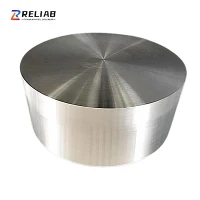
Hey there! As a supplier of Titanium Alloy Round Bars, I often get asked about the differences between different grades of these bars. It's a pretty important topic, especially if you're in the market for some high - quality titanium alloy round bars. So, let's dive right in and explore these differences.
First off, we need to understand what titanium alloy round bars are. Titanium is a super - cool metal. It's strong, lightweight, and corrosion - resistant. When we talk about titanium alloy round bars, we're referring to bars made from titanium combined with other elements like aluminum, vanadium, or iron to enhance its properties.
Commercially Pure (CP) Titanium Bar
Let's start with the CP Titanium Bar. You can check out more about it here. CP titanium is just about as pure as it gets. It's mainly made up of titanium with only a tiny amount of other elements. Grade 1, 2, 3, and 4 are the common grades of CP titanium.
Grade 1 is the most ductile and least strong of the CP grades. It's highly formable, which means it can be easily shaped into different forms. This makes it a great choice for applications where you need a lot of bending or shaping, like in some types of jewelry or certain medical components.
Grade 2 is a bit stronger than Grade 1 while still maintaining good ductility. It's the most widely used CP grade. You'll find it in many industrial applications, such as chemical processing equipment. Its corrosion resistance is top - notch, and it can handle a variety of harsh chemicals without getting damaged.
Grade 3 has even higher strength compared to Grade 2. It's used in applications where a bit more strength is required, like in some aerospace parts where weight is still a concern but you need that extra oomph.
Grade 4 is the strongest of the CP grades. It's often used in applications where high strength and good corrosion resistance are needed, like in marine environments or some high - stress mechanical parts.
Alpha - Beta Titanium Alloys
Next up, we have the alpha - beta titanium alloys. These alloys contain a mixture of alpha and beta phases, which gives them a unique combination of properties.
Grade 5 is probably the most well - known of the alpha - beta alloys. It's also called Ti - 6Al - 4V because it contains 6% aluminum and 4% vanadium. Grade 5 is incredibly strong and has good corrosion resistance. It's used in a wide range of applications, from aerospace components like aircraft frames and engine parts to medical implants. Its high strength - to - weight ratio makes it ideal for applications where you need a strong material that doesn't add too much weight.
Grade 9, or Ti - 3Al - 2.5V, is another important alpha - beta alloy. You can learn more about the Grade 9 Titanium Scooter Bar. It has a lower aluminum and vanadium content compared to Grade 5. This makes it more formable than Grade 5 while still maintaining relatively good strength. It's often used in applications where you need a combination of formability and strength, like in bicycle frames or some types of tubing.
Beta Titanium Alloys
Beta titanium alloys are known for their high strength and excellent ductility. They contain more beta - stabilizing elements like molybdenum, vanadium, or niobium.
Grade 13, for example, is a beta titanium alloy. It has very high strength and can be heat - treated to achieve different levels of hardness. This makes it suitable for applications where you need a material that can withstand high stress and still be machined or formed.
Grade 20 is another beta alloy. It has good corrosion resistance along with high strength. It's used in some high - performance applications, especially in the aerospace and defense industries.
Timascus Titanium Bar
Now, let's talk about the Titanium Timascus Bar. Timascus is a type of pattern - welded titanium. It's made by fusing multiple layers of different titanium alloys together and then forging and heat - treating them to create a beautiful, swirling pattern.
What's unique about Timascus is not just its looks but also its properties. It combines the strength and corrosion resistance of titanium with a unique aesthetic appeal. You'll often find Timascus used in high - end knives, jewelry, and other luxury items where both beauty and performance are important.
Choosing the Right Grade
So, how do you choose the right grade of titanium alloy round bar for your application? Well, it depends on a few factors.
First, consider the strength requirements. If you need a very strong bar for a high - stress application, grades like Grade 5 or Grade 4 (for CP titanium) might be the way to go. If you need something more formable, Grade 1 or Grade 9 could be better choices.
Corrosion resistance is also crucial. If your bar will be exposed to harsh chemicals or a marine environment, you'll want a grade with good corrosion resistance, like Grade 2 or Grade 5.
Cost is another factor. Some grades, like Grade 5, are more expensive due to their high performance and the cost of the alloying elements. If cost is a major concern, you might want to look at CP grades, which are generally more affordable.
Why Choose Us as Your Supplier
As a supplier of Titanium Alloy Round Bars, we have a wide range of grades and sizes available. We source our titanium from high - quality manufacturers and ensure that all our bars meet strict quality standards.


Our team of experts can help you choose the right grade for your specific application. Whether you're a small - scale jeweler or a large - scale aerospace manufacturer, we've got you covered. We offer competitive prices and fast delivery times to make your purchasing experience as smooth as possible.
If you're interested in purchasing Titanium Alloy Round Bars, we'd love to hear from you. Just reach out to us, and we can start discussing your requirements. Whether it's a custom order or a standard size, we're ready to provide you with the best titanium alloy round bars on the market.
References
- "Titanium: A Technical Guide" by John C. Williams
- Various industry reports on titanium alloys from leading metal research institutions
So, there you have it! That's a breakdown of the differences between different grades of titanium alloy round bars. If you have any more questions, don't hesitate to get in touch. We're here to help you make the right choice for your project.