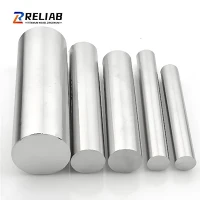
Hey there, fellow welders and metal enthusiasts! I'm a supplier of TIG Titanium Welding Rod, and today, I wanna chat about one of the most crucial aspects of TIG titanium welding: the suitable welding current.
Titanium is an amazing metal. It's lightweight, strong, and highly resistant to corrosion. That's why it's used in so many industries, from aerospace to Dental Implant Titanium Bars. But welding titanium isn't a walk in the park. One of the key factors that can make or break your weld is the welding current.
Let's start by understanding why the right welding current is so important. When you're welding titanium with a TIG welding rod, the current affects the heat input into the metal. Too little current, and the titanium won't melt properly. You'll end up with a weak, incomplete weld that might not hold up under stress. On the other hand, too much current can cause the titanium to overheat. This can lead to a bunch of problems, like oxidation, distortion, and even cracking.
So, how do you figure out the suitable welding current? Well, it depends on a few things.
Thickness of the Titanium
The thickness of the titanium you're welding is one of the most important factors. As a general rule, the thicker the titanium, the higher the welding current you'll need. For thin titanium sheets, say around 0.030 inches (0.76 mm), you might start with a current as low as 20 - 30 amps. This low current is enough to melt the thin metal without overheating it.
As the thickness increases, you'll need to crank up the current. For example, if you're welding a titanium plate that's 1/8 inch (3.18 mm) thick, you might need a current in the range of 100 - 120 amps. And for really thick titanium, like 1/4 inch (6.35 mm) or more, you could be looking at currents of 150 amps or higher.
But remember, these are just rough guidelines. The actual suitable current can vary depending on other factors too.
Type of Titanium Alloy
Not all titanium is created equal. There are different alloys of titanium, each with its own properties. Some alloys are more conductive than others, which means they'll require different welding currents.


For instance, pure titanium (Grade 1) is relatively easy to weld and might need a slightly lower current compared to some of the stronger alloys. Alloys like Grade 5 (Ti-6Al-4V), which is commonly used in aerospace applications, are stronger and more heat-resistant. They might need a slightly higher current to ensure a proper weld.
Welding Position
The position in which you're welding also matters. Welding in a flat position is usually the easiest, as gravity helps keep the molten metal in place. You can often use a slightly higher current in the flat position compared to other positions.
When you're welding in a vertical or overhead position, it's a bit trickier. You'll need to use a lower current to prevent the molten metal from dripping or running. This is because the force of gravity is working against you, and a higher current could cause the metal to flow too much.
Electrode Size
The size of the TIG electrode you're using can also affect the suitable welding current. A smaller electrode has a smaller tip area, which means it can carry less current. If you're using a small electrode, say a 1/16 - inch (1.6 mm) electrode, you'll need to use a lower current. A larger electrode, like a 3/32 - inch (2.4 mm) or 1/8 - inch (3.18 mm) electrode, can handle more current.
Tips for Finding the Right Current
Now that you know the factors that affect the suitable welding current, here are some tips to help you find the sweet spot:
- Test Welds: Before you start welding your actual project, do some test welds on scrap pieces of the same titanium alloy and thickness. Try different currents and see how the weld looks and feels. Look for a smooth, even bead with good penetration.
- Use a Current Range: Instead of trying to find one exact current, it's often better to work within a range. Start at the lower end of the range and gradually increase the current until you get a good weld. This gives you some flexibility and allows you to adjust for any variations in the metal or welding conditions.
- Watch the Arc: Pay attention to the arc while you're welding. A good arc should be stable and quiet. If the arc is sputtering or jumping around, it could be a sign that the current is too high or too low. Adjust the current accordingly.
Conclusion
Finding the suitable welding current for TIG titanium welding rod is a bit of an art. It takes some practice and experimentation to get it right. But by considering factors like the thickness of the titanium, the type of alloy, the welding position, and the electrode size, you can get pretty close.
If you're in the market for high - quality TIG Titanium Welding Rod, we've got you covered. We also offer other great products like Titanium Timascus Bar and Dental Implant Titanium Bars.
If you have any questions about our products or need more advice on welding titanium, don't hesitate to reach out. We're here to help you achieve the best welds possible. Whether you're a professional welder or a hobbyist, we're committed to providing you with the best products and support. So, let's get in touch and start making some great welds together!
References
- AWS D16.1:2021, Specification for Welding Titanium and Titanium Alloys
- Welding Handbook, Volume 2: Welding Processes, American Welding Society