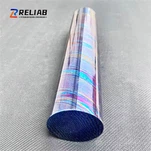
The selection of surface treatment processes for titanium alloys must be based strictly on the structural characteristics of the oxide layer, which are determined by the material's thermal processing history. By appropriately combining descaling methods-such as mechanical, salt bath, and acid pickling-and precisely controlling the parameters of each process step, it is possible to effectively remove the oxide scale and the oxygen-enriched diffusion layer, thereby ensuring reliable surface quality for subsequent coating or direct use.
I. The Necessity and Applications of Surface Treatment: During intermediate heat treatment processes and after final heat treatment of titanium and titanium alloys, surface treatment is typically required to achieve the following objectives:
1. Surface cleaning: To remove metal scale and various contaminants generated during high-temperature heating or machining.
2. Reducing surface reactivity: To reduce the chemical reactivity of the exposed metal surface and prevent contamination during subsequent processing or service.
3. Pre-treatment for Coating: Prior to and during the application of protective or functional coatings (such as corrosion-resistant, high-temperature oxidation-resistant, and wear-resistant coatings), surface treatment is used to achieve an appropriate substrate surface condition, thereby enhancing coating adhesion and service performance. II. Mechanisms of Oxide Layer and Oxygen-Enriched Diffusion Layer Formation The acid pickling conditions for titanium rods and their alloys primarily depend on the type and characteristics of their surface oxide layer and the adjacent reaction layer on the substrate; both of these are significantly influenced by the temperature profiles during high-temperature heating processes and hot working operations (such as forging, casting, and welding). · Low-temperature or short-duration heating (below approximately 600°C): Only a thin oxide film forms on the surface; this film has a relatively porous structure and can generally be dissolved and removed through conventional acid pickling. · High-temperature heating (above approximately 600°C): Not only does a thick, dense oxide layer form, but an oxygen-enriched diffusion zone (i.e., the oxygen-stabilized α layer) also develops beneath it. This diffusion layer is hard, has low ductility, and is relatively chemically stable; it must be thoroughly removed through acid pickling, otherwise it will severely affect subsequent processing and the product's service life. III. Common Methods for Removing Oxide Scale (Descaling) For oxide layers of varying thicknesses and structures, the following three main types of descaling methods are primarily used in industry:
1. Mechanical descaling: Suitable for removing thick native scale and hardened surface layers; methods include sandblasting, shot blasting, or grinding. This method is highly efficient but, when used alone, struggles to completely remove the microscopic oxygen-enriched layer from the substrate surface.
2. Molten salt bath descaling: The workpiece is immersed in a high-temperature molten salt bath (such as an alkali bath), where chemical fusion causes the scale to loosen and flake off. This method is highly effective for removing thick scale from workpieces with complex shapes.
3. Acid Pickling: Scale and the oxygen-enriched layer are removed through chemical dissolution in an acid solution (typically a mixture of HF and HNO₃). This method yields a clean, bright, and relatively less reactive metal surface.
IV. Process Combination Strategies and Selection Principles In actual production, a single method often struggles to balance efficiency and quality; therefore, combined processes are commonly adopted: · Conventional Combination Routes: For oxide layers formed at medium to low temperatures, the combination of "mechanical descaling (optional) + acid pickling" or "molten salt bath + acid pickling" is typically used. That is, the majority of the outer scale is first cracked and removed mechanically or via a molten salt bath, followed by acid pickling to dissolve the residual oxide layer and oxygen-enriched diffusion layer, thereby achieving a uniform, clean surface. · High-temperature oxide layer treatment: For dense oxide layers and diffusion layers formed by heating at temperatures above 600°C, a highly corrosive molten salt bath pretreatment is generally required, followed by acid pickling. However, for some thin oxide layers formed by brief heating at around 600°C, if their structure is not dense, they can be removed in a single step using a conventional acid pickling process.


 E-mail: garychen3215@hotmail.com
 Address: No.35, Baoti Rd, Baoji city, Shaanxi Province, China
 Contact: Mr. Gary Chen
 Phone: +86-917-8883215
 Mobile/WhatsApp: +86 13092900605