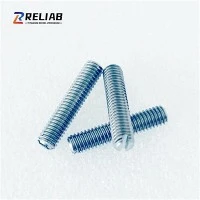
Today, we'll take a closer look to uncover the "culprit" behind the challenges of machining titanium alloys: heat.
How does "heat" make the machining of titanium alloys so challenging? In terms of cutting force, machining titanium alloys requires only slightly more force than machining steel of equivalent hardness-a fact that might lead one to mistakenly assume the process is not particularly difficult. In reality, however, the physical phenomena occurring during the machining of titanium alloys are far more complex than those involved in machining steel, with "heat" playing a critical, disruptive role.
A notable characteristic of titanium alloys is their extremely low thermal conductivity-only 1/7th that of steel and 1/16th that of aluminum. Because of this, heat generated during the cutting process cannot be rapidly dissipated through the workpiece or the chips; instead, it remains concentrated at the interface between the cutting edge and the workpiece. As heat accumulates, local temperatures can quickly exceed 1000°C. Under these extreme conditions, the cutting edge suffers from rapid wear and chipping, and is highly prone to the formation of a "built-up edge." Furthermore, the resulting rapid dulling of the cutting edge intensifies frictional heating, creating a vicious cycle-more wear leads to more heat, and more heat leads to even more wear-ultimately resulting in a drastic reduction in tool life.
When selecting cutting tools, prioritize inserts with a positive rake angle geometry; this effectively reduces cutting forces and heat generation, minimizes workpiece deformation, and creates favorable conditions for subsequent machining operations. During the machining process, maintain a stable feed rate to prevent work hardening of the workpiece surface caused by interruptions or fluctuations in the feed; the tool should remain in a state of continuous feed. For milling operations, it is recommended to keep the radial depth of cut at approximately 30% of the tool radius to ensure a stable cutting process.
The selection and supply of cutting fluid are equally critical. It is recommended to employ a high-pressure, high-flow-rate cooling strategy to efficiently dissipate heat accumulated in the cutting zone, ensure thermal stability during the machining process, and prevent microstructural changes on the workpiece surface caused by overheating-all while reducing the risk of thermal damage to the cutting tool. Furthermore, the cutting edge must be kept sharp at all times; a dull edge significantly exacerbates heat buildup and wear, accelerating tool failure. Consequently, regular inspection and timely maintenance or replacement of cutting tools are essential.
To overcome the challenge of insert wear during the machining of titanium alloys, it is essential to optimize both the insert and the tool body structure in a coordinated manner. A particularly common issue is "notching" (groove wear)-localized wear bands that develop along the depth-of-cut line on both the rake and flank faces of the tool. This phenomenon is driven by the continuous abrasion of the cutting edge against the work-hardened surface layer formed during the machining process, as well as by the extreme heat generated; when temperatures in the cutting zone exceed 800°C, chemical reactions and elemental diffusion occur between the tool and the titanium alloy, further exacerbating this notching.
Furthermore, under high-temperature and high-pressure conditions, titanium molecules tend to accumulate on the tool's rake face and "weld" themselves to the cutting edge, creating a built-up edge (BUE). When this built-up edge breaks away, it often strips off the hard-alloy coating from the insert surface, accelerating tool failure. Consequently, effectively addressing these complex wear mechanisms requires the use of specialized insert materials and optimized cutting-edge geometries specifically designed for titanium alloy machining.
Beyond the cutting edges, the structure of the tool body is also of critical importance. In the machining of titanium alloys, heat is the primary challenge; only by delivering a substantial volume of high-pressure cutting fluid-precisely and promptly-to the cutting edge can heat be removed rapidly. Milling cutters designed specifically for titanium alloys feature unique structural characteristics; they act as "secret weapons" tailored for this material, effectively meeting the stringent requirements for heat dissipation and cutting performance during the machining process.

 E-mail: garychen3215@hotmail.com
 Address: No.35, Baoti Rd, Baoji city, Shaanxi Province, China
 Contact: Mr. Gary Chen
 Phone: +86-917-8883215
 Mobile/WhatsApp: +86 13092900605