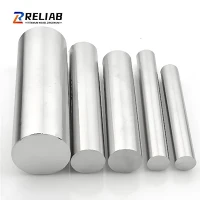
Do titanium alloy round bars have good ductility? That's a question I get asked a lot as a supplier of Titanium Alloy Round Bars. Let's dig into this topic and find out what's what.
First off, let's understand what ductility is. In simple terms, ductility is the ability of a material to be stretched into a wire or deformed under tensile stress without breaking. It's a crucial property, especially in industries where shaping and forming materials are part of the manufacturing process.
Titanium alloy round bars are pretty well - known in the market, and there are good reasons for that. When it comes to ductility, titanium alloys generally have a decent amount of it, but it can vary depending on the specific alloy composition.
Some of the most common titanium alloys used in round bars include Ti - 6Al - 4V, which is a workhorse in the aerospace and medical industries. This alloy has a good balance of strength and ductility. It can be cold - worked to a certain extent, which means it can be bent, drawn, or shaped without immediate failure. The presence of aluminum and vanadium in the alloy helps in maintaining its mechanical properties, including ductility.
For example, in the aerospace industry, parts made from titanium alloy round bars need to withstand high - stress conditions during flight. The ductility of these bars allows them to deform slightly under stress rather than shattering immediately. This gives a bit of a safety margin, as the parts can absorb some energy before reaching their breaking point.


Now, let's talk about some of the products we offer. We have the AMS 4928 Titanium Bar. This bar is often used in high - performance applications. It has a specific chemical composition that gives it a good combination of strength and ductility. The heat - treatment processes it goes through also play a role in enhancing its ductility. When heat - treated properly, the grains in the alloy structure align in a way that allows for better deformation under stress.
Another product is the Titanium Timascus Bar. This bar is not only known for its unique visual appearance but also for its mechanical properties. The layering and forging processes used in creating the Timascus pattern also contribute to its ductility. The different layers of titanium alloys interact in a way that can distribute stress more evenly when the bar is deformed.
In the medical field, Dental Implant Titanium Bars are of great importance. Ductility is crucial here because the bars need to be shaped precisely to fit the patient's mouth. The titanium alloy used in these bars has to be biocompatible and also have enough ductility to be machined into the right shape. A good level of ductility ensures that the bars can be formed into the intricate shapes required for dental implants without cracking or breaking.
However, it's important to note that while titanium alloy round bars generally have good ductility, there are limits. Extreme cold or high - speed deformation can reduce the ductility of these bars. For instance, if you try to bend a titanium alloy round bar too quickly or at very low temperatures, it might become more brittle and prone to cracking.
The manufacturing process also has a significant impact on the ductility of titanium alloy round bars. For example, the way the bars are cast, rolled, or extruded can affect the grain structure of the alloy. A fine - grained structure usually leads to better ductility compared to a coarse - grained one. Heat - treatment processes, such as annealing, can also be used to improve the ductility by relieving internal stresses and refining the grain structure.
In addition, the surface finish of the round bars can influence their ductility. A smooth surface finish reduces the chances of stress concentrations, which can lead to premature failure during deformation. So, when we manufacture our titanium alloy round bars, we pay close attention to the surface finish to ensure optimal ductility.
To sum it up, titanium alloy round bars do have good ductility in general, but it can be affected by various factors such as alloy composition, manufacturing processes, and environmental conditions. Whether you're in the aerospace, medical, or any other industry that requires materials with good ductility, our titanium alloy round bars are a great option.
If you're interested in learning more about our Titanium Alloy Round Bars or have any questions regarding their ductility and how it suits your specific application, don't hesitate to get in touch. We're here to help you make the right choice for your project.
References:
- "Titanium: A Technical Guide" by John C. Williams
- "Materials Science and Engineering: An Introduction" by William D. Callister Jr. and David G. Rethwisch