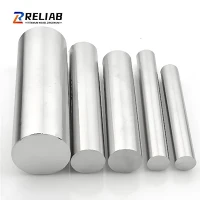
Titanium forgings have long been recognized for their exceptional performance across a wide range of applications, from aerospace to medical devices. One of the most critical environments where titanium forgings are often employed is under high - temperature conditions. As a leading titanium forgings supplier, I have witnessed firsthand the remarkable capabilities of these materials in such challenging scenarios. In this blog, we will delve into how titanium forgings perform under high - temperature conditions, exploring their properties, advantages, and limitations.
Properties of Titanium Forgings at High Temperatures
Thermal Stability
Titanium forgings exhibit excellent thermal stability. The atomic structure of titanium allows it to maintain its integrity at elevated temperatures. Unlike some other metals that may experience significant softening or phase changes, titanium can retain a large portion of its strength even when exposed to high - temperature environments. For example, in applications such as jet engine components, where temperatures can reach several hundred degrees Celsius, titanium forgings can withstand the heat without undergoing rapid degradation.
Oxidation Resistance
One of the key advantages of titanium forgings under high - temperature conditions is their oxidation resistance. When titanium is exposed to high temperatures in the presence of oxygen, it forms a thin, protective oxide layer on its surface. This oxide layer acts as a barrier, preventing further oxidation of the underlying metal. This property is crucial in applications where the forging is in contact with air or other oxidizing agents at high temperatures. For instance, in the manufacturing of heat exchangers, titanium forgings can resist corrosion caused by oxidation, ensuring long - term performance and reliability.
Creep Resistance
Creep is the tendency of a material to deform slowly over time under a constant load at high temperatures. Titanium forgings have relatively good creep resistance compared to many other metals. This means that they can maintain their shape and dimensions even when subjected to prolonged stress at elevated temperatures. In aerospace applications, where components need to maintain their structural integrity over long flights at high altitudes and temperatures, the creep resistance of titanium forgings is highly valued.
Types of Titanium Forgings and Their High - Temperature Performance
Titanium Grade 2 Forgings
Titanium Grade 2 Forgings are known for their excellent corrosion resistance and good formability. At high temperatures, Grade 2 titanium forgings can maintain a reasonable level of strength. They are often used in applications where moderate high - temperature performance is required, such as in some chemical processing equipment. The relatively low cost of Grade 2 titanium forgings makes them an attractive option for applications where cost - effectiveness is a consideration.
Grade 9 Titanium Forged Billets
Grade 9 Titanium Forged Billets contain aluminum and vanadium, which enhance their strength compared to pure titanium. At high temperatures, Grade 9 titanium forged billets offer improved strength and creep resistance. They are commonly used in aerospace applications, such as in the production of aircraft landing gear components. The combination of high strength and good high - temperature performance makes Grade 9 titanium a popular choice in the aerospace industry.
Gr7 Titanium Forged Ring
Gr7 Titanium Forged Ring is alloyed with palladium, which significantly enhances its corrosion resistance, especially in reducing environments. At high temperatures, Gr7 titanium forged rings can maintain their corrosion - resistant properties while also offering good mechanical strength. They are often used in applications such as marine equipment and chemical processing plants, where high - temperature and corrosive conditions are present.


Advantages of Using Titanium Forgings in High - Temperature Applications
Weight Savings
Titanium has a relatively low density compared to many other metals, such as steel. This means that titanium forgings can provide the same level of strength as steel forgings at a much lower weight. In high - temperature applications, such as in aerospace and automotive industries, weight savings are crucial as they can lead to improved fuel efficiency and performance. For example, using titanium forgings in aircraft engines can reduce the overall weight of the engine, resulting in lower fuel consumption and longer flight ranges.
Long - Term Durability
Due to their excellent oxidation and corrosion resistance, titanium forgings can have a long service life in high - temperature environments. This reduces the need for frequent replacement of components, which can be costly and time - consuming. In industrial applications, such as power generation plants, the long - term durability of titanium forgings can lead to significant cost savings over the life of the equipment.
Design Flexibility
Titanium forgings can be easily shaped into complex geometries. This design flexibility allows engineers to create components that are optimized for high - temperature applications. For example, in the design of heat exchangers, titanium forgings can be fabricated into intricate shapes to maximize heat transfer efficiency while maintaining structural integrity at high temperatures.
Limitations of Titanium Forgings at High Temperatures
High Cost
One of the main limitations of using titanium forgings in high - temperature applications is their relatively high cost. The production process of titanium forgings is complex and energy - intensive, which drives up the cost. This can make titanium forgings less attractive for some applications where cost is a major factor. However, in applications where the performance benefits outweigh the cost, such as in high - end aerospace and medical applications, the use of titanium forgings is still justified.
Reactivity with Certain Elements
At very high temperatures, titanium can react with certain elements, such as nitrogen and hydrogen. This can lead to the formation of brittle compounds, which can reduce the mechanical properties of the forging. Therefore, in applications where titanium forgings are exposed to high - temperature environments containing these elements, special precautions need to be taken to prevent such reactions.
Conclusion
In conclusion, titanium forgings offer a range of benefits when used in high - temperature applications. Their excellent thermal stability, oxidation resistance, and creep resistance make them suitable for a variety of industries, including aerospace, automotive, and chemical processing. Different grades of titanium forgings, such as Titanium Grade 2 Forgings, Grade 9 Titanium Forged Billets, and Gr7 Titanium Forged Ring, each have their own unique properties and are suitable for different high - temperature scenarios.
While there are some limitations, such as high cost and reactivity with certain elements, the advantages of using titanium forgings in high - temperature applications often outweigh the drawbacks. If you are in need of high - quality titanium forgings for your high - temperature applications, we invite you to contact us for a detailed discussion on your requirements. Our team of experts is ready to provide you with the best solutions and help you make the most of the remarkable properties of titanium forgings.
References
- Boyer, R. R., Welsch, G., & Collings, E. W. (1994). Materials Properties Handbook: Titanium Alloys. ASM International.
- Donachie, M. J. (2000). Titanium: A Technical Guide. ASM International.
- Schütze, M. (2000). Oxidation of Metals. Springer.