

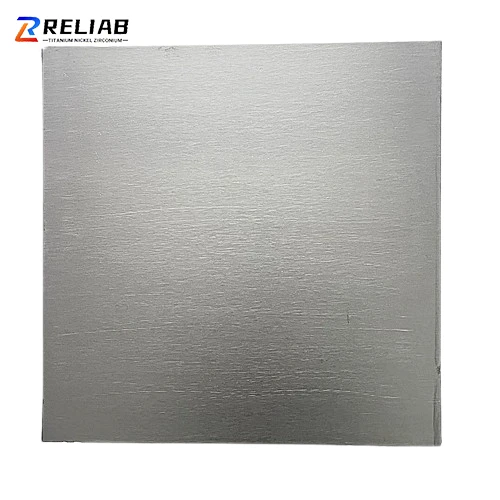
Hey there! As a supplier of AMS 4907 Titanium Alloy Sheet, I've got a ton of experience and knowledge about this amazing material. Today, I'm gonna share with you how to weld AMS 4907 Titanium Alloy Sheet.
First off, let's talk a bit about AMS 4907 Titanium Alloy Sheet. It's a high - performance material known for its excellent corrosion resistance, high strength - to - weight ratio, and good formability. It's widely used in various industries like aerospace, marine, and chemical processing. If you want to learn more about it, check out AMS 4907 Titanium Alloy Sheet.
Preparation before Welding
Before you start welding AMS 4907 Titanium Alloy Sheet, proper preparation is crucial.
Cleaning
Titanium is very reactive to contaminants like oil, grease, dirt, and oxides. Any of these can cause porosity, cracking, and reduced mechanical properties in the weld. So, you need to clean the sheet thoroughly. You can use a mild alkaline cleaner to remove oil and grease. After that, rinse it with clean water and dry it completely. Then, use a stainless - steel wire brush or a chemical etchant to remove the oxide layer on the surface. Make sure to use a brush dedicated to titanium to avoid cross - contamination.
Joint Design
The joint design plays an important role in the welding process. For AMS 4907 Titanium Alloy Sheet, common joint designs include butt joints, lap joints, and T - joints. The choice of joint design depends on the application and the requirements of the final product. For example, if you need a strong and leak - proof joint, a butt joint might be a good choice. The edges of the joint should be machined or ground to ensure a proper fit and alignment.
Shielding Gas
Titanium oxidizes rapidly at high temperatures. To prevent oxidation during welding, you need to use a shielding gas. Argon is the most commonly used shielding gas for titanium welding. It provides an inert atmosphere around the weld pool, protecting it from oxygen, nitrogen, and hydrogen in the air. The purity of the argon gas should be at least 99.99%. You may also need a trailing shield to protect the hot weld area as it cools.

Welding Process
There are several welding processes that can be used for AMS 4907 Titanium Alloy Sheet, such as Gas Tungsten Arc Welding (GTAW) and Plasma Arc Welding (PAW).
Gas Tungsten Arc Welding (GTAW)
GTAW is one of the most popular methods for welding titanium alloys. Here's how it works:
- Equipment Setup: You'll need a GTAW welding machine, a tungsten electrode, a welding torch, and a shielding gas supply. The tungsten electrode should be a pure tungsten or a tungsten - alloy electrode. The size of the electrode depends on the thickness of the sheet and the welding current.
- Welding Parameters: The welding parameters, including current, voltage, and travel speed, need to be carefully adjusted. For thin AMS 4907 Titanium Alloy Sheet (less than 3 mm), a lower current and a faster travel speed are usually used. As the thickness increases, you may need to increase the current. The voltage should be adjusted to maintain a stable arc.
- Arc Initiation: Start the arc by using a high - frequency arc starter. This helps to initiate the arc without touching the electrode to the workpiece, which can contaminate the electrode.
- Welding Technique: Hold the welding torch at a proper angle (usually around 70 - 80 degrees to the workpiece). Move the torch steadily along the joint, maintaining a consistent travel speed. Add filler metal if necessary. The filler metal should be of the same or compatible alloy as the base metal.
Plasma Arc Welding (PAW)
PAW is another option for welding AMS 4907 Titanium Alloy Sheet. It offers some advantages over GTAW, such as higher welding speed and better control of the weld pool.
- Equipment Setup: A PAW welding machine consists of a plasma torch, a power supply, a shielding gas system, and a plasma gas system. The plasma gas is also usually argon.
- Welding Parameters: Similar to GTAW, the welding parameters in PAW need to be optimized. The plasma gas flow rate, the shielding gas flow rate, the current, and the travel speed all affect the quality of the weld. PAW can be used for both keyhole and non - keyhole welding. Keyhole welding is suitable for thicker sheets, while non - keyhole welding is better for thinner sheets.
Post - Welding Treatment
After welding, some post - welding treatments may be required.
Inspection
Once the weld is completed, you should inspect it for any defects. Visual inspection can help you detect surface cracks, porosity, and improper bead shape. You can also use non - destructive testing methods like X - ray, ultrasonic testing, or dye penetrant testing to detect internal defects.
Heat Treatment
In some cases, heat treatment may be necessary to relieve residual stresses in the weld and improve the mechanical properties of the joint. The heat treatment process for AMS 4907 Titanium Alloy Sheet usually involves heating the welded part to a specific temperature and holding it for a certain period of time, followed by a controlled cooling rate.
Cleaning Again
After welding and any post - welding treatments, clean the welded area again to remove any contaminants that may have accumulated during the process. This will help to improve the corrosion resistance of the final product.
Applications of Welded AMS 4907 Titanium Alloy Sheet
The welded AMS 4907 Titanium Alloy Sheet has a wide range of applications. In the aerospace industry, it can be used to manufacture aircraft components like engine parts, airframes, and fuel tanks. Its high strength - to - weight ratio helps to reduce the weight of the aircraft, improving fuel efficiency. In the marine industry, it's used for shipbuilding, especially for parts that are exposed to seawater. The excellent corrosion resistance of titanium makes it ideal for these applications. If you're interested in some related products, you can check out Titanium Thin Sheet for Heat Exchanger. And if you're thinking about using titanium in the kitchen, here's a Titanium Cutting Boards Review.
Conclusion
Welding AMS 4907 Titanium Alloy Sheet requires careful preparation, the right welding process, and proper post - welding treatment. By following the steps and guidelines I've shared above, you can achieve high - quality welds.
If you're in the market for AMS 4907 Titanium Alloy Sheet or have any questions about welding it, don't hesitate to reach out. We're here to help you with your procurement needs and provide you with the best - quality products. Let's start a conversation and see how we can work together to meet your specific requirements.
References
- AWS D16.1/D16.1M:20 Specification for Welding Titanium and Titanium Alloys
- ASM Handbook Volume 6: Welding, Brazing, and Soldering


