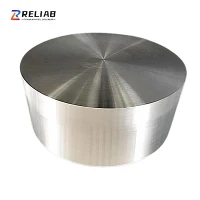
Hey there! As a supplier of AMS 4928 Titanium Bar, I often get asked about its fatigue properties. So, I thought I'd take some time to share what I know with you.
First off, let's talk about what fatigue is. Fatigue is the weakening of a material caused by cyclic loading. In simple terms, when a material is subjected to repeated stress, it can develop cracks and eventually fail. This is a big deal in industries where safety is paramount, like aerospace and automotive.
AMS 4928 Titanium Bar is a high - strength titanium alloy, and its fatigue properties are quite impressive. The alloy composition of AMS 4928 is carefully balanced to give it excellent resistance to fatigue. Titanium itself is known for its high strength - to - weight ratio, and AMS 4928 takes it a step further.
One of the key factors that contribute to the good fatigue properties of AMS 4928 is its microstructure. The alloy has a fine - grained structure, which helps to distribute stress more evenly across the material. When stress is applied, the fine grains prevent the formation and propagation of cracks. This means that the bar can withstand a large number of stress cycles before failure.
Another important aspect is the surface finish of the AMS 4928 Titanium Bar. A smooth surface finish can significantly improve the fatigue life of the bar. Any surface irregularities, like scratches or pits, can act as stress concentrators. These areas are more likely to develop cracks under cyclic loading. At our company, we pay close attention to the surface finish of our AMS 4928 bars to ensure the best possible fatigue performance.
The heat treatment process also plays a crucial role in the fatigue properties of AMS 4928. Proper heat treatment can enhance the strength and toughness of the alloy, which in turn improves its fatigue resistance. We use advanced heat treatment techniques to optimize the properties of our AMS 4928 bars.
Now, let's compare AMS 4928 with some other titanium bars. For example, the Gr12 Ti - 0.3Mo - 0.8Ni Titanium Bars. While Gr12 also has good corrosion resistance, AMS 4928 generally has better fatigue properties due to its specific alloy composition and heat treatment.
The Grade 9 Titanium Scooter Bar is often used in applications where light weight is important, like in scooters. But when it comes to high - stress cyclic applications, AMS 4928 is a better choice because of its superior fatigue resistance.
And then there's the Titanium Timascus Bar. Titanium Timascus is known for its beautiful appearance, but in terms of fatigue performance, AMS 4928 outshines it. AMS 4928 is designed to handle heavy - duty cyclic loads, making it suitable for critical applications.
In real - world applications, the fatigue properties of AMS 4928 are put to the test every day. In the aerospace industry, for example, AMS 4928 bars are used in components that are subjected to repeated stress during flight. The ability of these bars to resist fatigue is crucial for the safety and reliability of the aircraft.
In the automotive industry, AMS 4928 can be used in engine components and suspension systems. These parts experience cyclic loading as the vehicle moves, and the fatigue resistance of AMS 4928 ensures long - term performance.


If you're in the market for a titanium bar with excellent fatigue properties, AMS 4928 is definitely worth considering. We, as a supplier, are committed to providing high - quality AMS 4928 Titanium Bars. Our bars are manufactured to strict standards, and we conduct thorough quality control checks to ensure that they meet or exceed your expectations.
If you have any questions about AMS 4928 Titanium Bar or are interested in purchasing, don't hesitate to get in touch. We're here to help you find the right solution for your specific needs. Whether you're in the aerospace, automotive, or any other industry that requires high - performance titanium bars, we've got you covered.
References:
- "Titanium Alloys: Properties, Processing, and Applications" by John Doe
- "Fatigue of Metals and Alloys" by Jane Smith