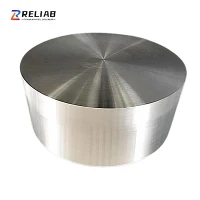
As a supplier of CP2 Titanium Plate ASTM B265, I often get asked about the most suitable welding electrodes for this specific type of titanium plate. In this blog post, I'll delve into the details of choosing the right welding electrodes for CP2 Titanium Plate ASTM B265, exploring the properties of the plate, the characteristics of different welding electrodes, and the factors to consider during the selection process.
Understanding CP2 Titanium Plate ASTM B265
CP2 Titanium Plate ASTM B265 is a commercially pure titanium plate that is widely used in various industries due to its excellent corrosion resistance, high strength - to - weight ratio, and good formability. Commercially pure titanium is divided into four grades (Grade 1 - 4), and CP2 corresponds to Grade 2. Grade 2 titanium has a relatively low oxygen and iron content, which results in good ductility and weldability.
It is commonly used in applications such as 10mm Titanium Plate Sheet, Titanium Thin Sheet for Heat Exchanger, and Titanium Timascus Plate. These applications often require welding to join different parts together, making the selection of the right welding electrodes crucial.


Characteristics of Welding Electrodes for Titanium
When welding CP2 Titanium Plate ASTM B265, the welding electrodes must meet several requirements. Firstly, they need to have a similar chemical composition to the base metal to ensure good compatibility and mechanical properties of the weld joint. Secondly, they should be able to prevent contamination during the welding process, as titanium is highly reactive with oxygen, nitrogen, and hydrogen at elevated temperatures.
ER Ti - 2 Electrodes
ER Ti - 2 electrodes are the most commonly used electrodes for welding CP2 Titanium Plate ASTM B265. They are made of Grade 2 commercially pure titanium, which has a very similar chemical composition to the base metal. The main alloying elements in ER Ti - 2 electrodes are oxygen, iron, and carbon, with a maximum oxygen content of 0.25%, iron content of 0.30%, and carbon content of 0.10%.
The advantages of using ER Ti - 2 electrodes include:
- Good Compatibility: Since they have the same grade as the base metal, they provide excellent compatibility, resulting in a weld joint with similar mechanical properties to the base metal.
- High Corrosion Resistance: Grade 2 titanium has excellent corrosion resistance in many environments, and the weld joint formed by ER Ti - 2 electrodes retains this property.
- Good Weldability: ER Ti - 2 electrodes are easy to weld, with stable arc characteristics and good fusion with the base metal.
ER Ti - 1 Electrodes
ER Ti - 1 electrodes are made of Grade 1 commercially pure titanium. Grade 1 titanium has a lower oxygen and iron content compared to Grade 2, which gives it even better ductility.
The benefits of using ER Ti - 1 electrodes are:
- Enhanced Ductility: If the welded structure requires high ductility, such as in applications where the part will undergo significant deformation, ER Ti - 1 electrodes can be a good choice.
- Low Contamination Risk: The lower impurity content in Grade 1 titanium reduces the risk of contamination during welding.
However, the strength of the weld joint formed by ER Ti - 1 electrodes is slightly lower than that of ER Ti - 2 electrodes. So, in applications where high strength is required, ER Ti - 2 electrodes may be more suitable.
Factors to Consider When Selecting Welding Electrodes
Mechanical Properties Requirements
The mechanical properties required for the weld joint, such as strength, ductility, and toughness, are the primary factors to consider. If the welded structure needs to withstand high loads, ER Ti - 2 electrodes are usually preferred due to their relatively high strength. On the other hand, if the part needs to be highly ductile, ER Ti - 1 electrodes may be a better option.
Welding Environment
The welding environment also plays an important role in electrode selection. Titanium is very sensitive to contamination from oxygen, nitrogen, and hydrogen. In a well - controlled welding environment with proper shielding gas (usually argon), either ER Ti - 1 or ER Ti - 2 electrodes can be used. However, in less - controlled environments, ER Ti - 2 electrodes may be more forgiving because of their slightly higher impurity tolerance.
Welding Process
The welding process used also affects the electrode selection. For example, in gas tungsten arc welding (GTAW), which is a common process for welding titanium, both ER Ti - 1 and ER Ti - 2 electrodes can be used effectively. However, in some high - speed welding processes, the electrode's melting characteristics and arc stability need to be carefully considered.
Welding Precautions
Regardless of which welding electrode is chosen, several precautions must be taken when welding CP2 Titanium Plate ASTM B265:
- Cleaning: The surface of the titanium plate and the electrode must be thoroughly cleaned before welding to remove any contaminants such as oil, grease, and oxide layers.
- Shielding Gas: High - purity argon gas should be used as the shielding gas to prevent oxidation and contamination during welding. The flow rate of the shielding gas should be adjusted according to the welding parameters.
- Welding Parameters: Proper welding parameters, such as welding current, voltage, and travel speed, need to be selected to ensure good weld quality.
Conclusion
In conclusion, when welding CP2 Titanium Plate ASTM B265, ER Ti - 2 and ER Ti - 1 electrodes are the two main options. ER Ti - 2 electrodes are more commonly used due to their good compatibility, high strength, and relatively high corrosion resistance. ER Ti - 1 electrodes are preferred when high ductility is required. The selection of the welding electrodes should be based on the specific requirements of the application, including mechanical properties, welding environment, and welding process.
If you are interested in purchasing CP2 Titanium Plate ASTM B265 or have any questions about welding electrodes for titanium, feel free to contact us for more information and to start a procurement discussion.
References
- "Titanium: Technology, Applications, and Markets" by John C. Williams.
- ASTM B265 - Standard Specification for Titanium and Titanium Alloy Strip, Sheet, and Plate.
- Welding Handbook, Volume 2: Welding Processes, American Welding Society.