Hey there! As a supplier of Gr2 seamless titanium tubes, I often get asked about the bending radius of these tubes. So, I thought I'd write a blog post to share some insights on this topic.
First off, let's talk a bit about Gr2 seamless titanium tubes. Grade 2 titanium is an unalloyed titanium that's known for its excellent corrosion resistance, good formability, and high strength - to - weight ratio. These tubes are used in a wide range of industries, from aerospace and automotive to chemical processing and marine applications.
The bending radius of a Gr2 seamless titanium tube is a crucial factor when it comes to using these tubes in different applications. The bending radius refers to the minimum radius at which a tube can be bent without causing any damage to the tube, like cracking, wrinkling, or flattening.
There are several factors that can affect the bending radius of Gr2 seamless titanium tubes. One of the main factors is the tube's wall thickness. Generally speaking, tubes with thicker walls can withstand tighter bending radii. For instance, if you have a Gr2 seamless titanium tube with a relatively thick wall, you might be able to bend it to a smaller radius compared to a tube with a thinner wall.
Another important factor is the diameter of the tube. Larger - diameter tubes usually require a larger bending radius. This is because when you bend a tube, the outer surface of the bend gets stretched, and the inner surface gets compressed. With a larger - diameter tube, the forces involved in this stretching and compressing are greater, so a larger radius is needed to avoid damage.
The method of bending also plays a role. There are different bending methods, such as rotary draw bending, roll bending, and mandrel bending. Mandrel bending, for example, is often used when a tight bending radius is required. A mandrel is inserted into the tube during the bending process to support the inner wall of the tube, preventing it from collapsing or wrinkling. This allows for a smaller bending radius to be achieved compared to other methods.
Now, let's get into some general guidelines for the bending radius of Gr2 seamless titanium tubes. As a rough rule of thumb, for a Gr2 seamless titanium tube, the minimum bending radius is often around 3 - 5 times the tube's outer diameter. However, this can vary depending on the factors we just discussed.

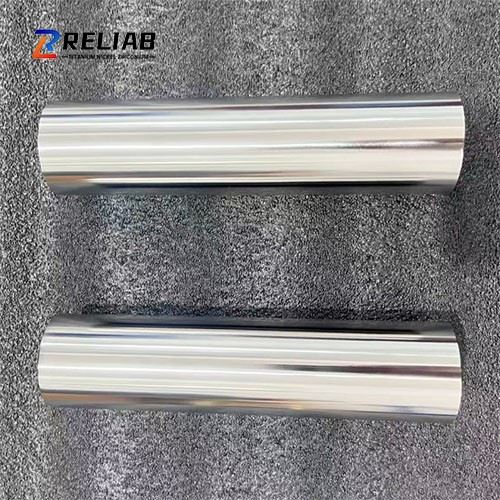
In aerospace applications, where precision and reliability are of utmost importance, the bending radius might need to be carefully calculated based on the specific requirements of the project. For example, if you're using Gr2 seamless titanium tubes in an aircraft's hydraulic system, you'll need to ensure that the bending radius meets the strict safety and performance standards of the aerospace industry.
In the automotive industry, Gr2 seamless titanium tubes are sometimes used in exhaust systems. Here, the bending radius needs to be optimized to ensure proper flow of exhaust gases and to fit within the limited space available in the vehicle.
If you're looking for high - quality titanium tubes for your projects, we also offer 3AL - 2.5V High Quality Titanium Alloy Tubing. This alloy tubing has its own unique properties and can be a great alternative depending on your specific needs.
Our 2'' Gr2 Polished Titanium Pipe is another popular product. The polished finish not only gives it an aesthetically pleasing look but also provides some additional protection against corrosion.
And for those who need to connect and install the tubes, we have Industrial Titanium Tubing Fittings. These fittings are designed to work seamlessly with our Gr2 seamless titanium tubes, ensuring a secure and reliable connection.
When it comes to bending Gr2 seamless titanium tubes, it's always a good idea to work with an experienced fabricator. They have the knowledge and equipment to bend the tubes accurately and safely. They can also help you determine the best bending radius for your specific application based on the tube's dimensions, the bending method, and the end - use requirements.
If you're in the market for Gr2 seamless titanium tubes or have any questions about the bending radius or our other products, don't hesitate to reach out. We're here to help you find the right solutions for your projects. Whether you're working on a small - scale DIY project or a large - scale industrial application, we can provide you with high - quality Gr2 seamless titanium tubes and the support you need.
In conclusion, understanding the bending radius of Gr2 seamless titanium tubes is essential for anyone using these tubes in their projects. By considering factors like wall thickness, diameter, and bending method, you can ensure that the tubes are bent to the appropriate radius without any damage. And if you need high - quality Gr2 seamless titanium tubes or related products, we're your go - to supplier. So, feel free to contact us for more information and to start a procurement discussion.
References
- "Titanium and Titanium Alloys: Fundamentals and Applications" by John C. Williams
- Industry standards and guidelines for titanium tube manufacturing and bending