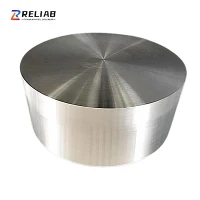
As a supplier of ASTM B348 Titanium Round Bar, I've witnessed firsthand the growing demand for this high - performance material in various industries. One of the most crucial properties that potential buyers often inquire about is the environmental cracking resistance of ASTM B348 Titanium Round Bar. In this blog post, I'll delve into what environmental cracking resistance means, how it pertains to ASTM B348 Titanium Round Bar, and why it's so important.
Understanding Environmental Cracking
Environmental cracking is a phenomenon where a material fails due to the combined action of a corrosive environment and mechanical stress. There are two main types of environmental cracking: stress - corrosion cracking (SCC) and hydrogen embrittlement.
Stress - corrosion cracking occurs when a susceptible material is exposed to a specific corrosive environment while under tensile stress. The corrosive environment initiates and propagates cracks in the material, which can lead to sudden and catastrophic failure. Hydrogen embrittlement, on the other hand, happens when hydrogen atoms diffuse into the material's lattice structure. These hydrogen atoms can cause the material to become brittle and lose its ductility, increasing the likelihood of cracking.
Environmental Cracking Resistance of ASTM B348 Titanium Round Bar
ASTM B348 Titanium Round Bar is made from titanium alloys, which are known for their excellent corrosion resistance. Titanium forms a passive oxide layer on its surface when exposed to oxygen, which acts as a protective barrier against corrosion. This passive layer is self - healing, meaning that if it is damaged, it will reform quickly in the presence of oxygen.
In terms of stress - corrosion cracking, ASTM B348 Titanium Round Bar exhibits high resistance in many environments. Titanium alloys are generally not susceptible to SCC in most aqueous solutions, including seawater, which is a highly corrosive environment. This makes ASTM B348 Titanium Round Bar an ideal choice for applications in marine and offshore industries, where components are constantly exposed to saltwater.
Regarding hydrogen embrittlement, titanium alloys have relatively good resistance. However, in some specific environments, such as those with high hydrogen partial pressures or in the presence of certain chemicals that can generate hydrogen, the risk of hydrogen embrittlement may increase. But proper material selection, heat treatment, and surface finishing can further enhance the resistance of ASTM B348 Titanium Round Bar to hydrogen embrittlement.
Factors Affecting Environmental Cracking Resistance
Several factors can affect the environmental cracking resistance of ASTM B348 Titanium Round Bar.
Alloy Composition: Different titanium alloys have different compositions, which can significantly impact their environmental cracking resistance. For example, some alloying elements can enhance the formation and stability of the passive oxide layer, improving corrosion resistance. ASTM B348 covers several grades of titanium alloys, each with its own unique properties and performance characteristics.
Heat Treatment: Heat treatment can alter the microstructure of the titanium alloy, which in turn affects its mechanical properties and environmental cracking resistance. Proper heat treatment can optimize the grain size, phase distribution, and hardness of the material, making it more resistant to cracking.
Surface Condition: The surface finish of ASTM B348 Titanium Round Bar can also influence its environmental cracking resistance. A smooth and clean surface is less likely to initiate cracks compared to a rough or contaminated surface. Surface treatments such as passivation can further improve the corrosion resistance of the material by enhancing the stability of the passive oxide layer.
Applications Benefiting from High Environmental Cracking Resistance
The excellent environmental cracking resistance of ASTM B348 Titanium Round Bar makes it suitable for a wide range of applications.
In the aerospace industry, components made from ASTM B348 Titanium Round Bar are used in aircraft structures, engine parts, and landing gear. These components are exposed to various environmental conditions during flight, including high - altitude air, moisture, and temperature variations. The high environmental cracking resistance of ASTM B348 Titanium Round Bar ensures the long - term reliability and safety of these critical components. You can learn more about titanium bars for aerospace applications at Titanium AMS 6242 Bar for Aerospace.
In the chemical processing industry, ASTM B348 Titanium Round Bar is used in reactors, heat exchangers, and piping systems. These components are exposed to corrosive chemicals and high - pressure environments. The corrosion resistance of ASTM B348 Titanium Round Bar helps prevent leaks and failures, reducing maintenance costs and downtime.
In the automotive industry, especially in high - performance vehicles, ASTM B348 Titanium Round Bar can be used in suspension components and engine parts. The high strength - to - weight ratio and environmental cracking resistance of titanium alloys contribute to improved vehicle performance and durability. For more information on titanium alloy round bars, visit Titanium Alloy Round Bars.
Another interesting application is in the scooter industry. Grade 9 Titanium Scooter Bar made from ASTM B348 Titanium Round Bar offers high strength and corrosion resistance, making scooters more reliable and long - lasting.


Importance of Environmental Cracking Resistance in Product Design
When designing products using ASTM B348 Titanium Round Bar, considering environmental cracking resistance is crucial. Components that are prone to environmental cracking can lead to product failures, which can have serious consequences in terms of safety, cost, and reputation.
By choosing ASTM B348 Titanium Round Bar with high environmental cracking resistance, designers can ensure the longevity and reliability of their products. This reduces the need for frequent maintenance and replacement, saving both time and money in the long run. Additionally, it can enhance the safety of the products, especially in critical applications where failure can result in accidents or injuries.
Conclusion
The environmental cracking resistance of ASTM B348 Titanium Round Bar is one of its most valuable properties. Thanks to the excellent corrosion resistance of titanium alloys and the formation of a passive oxide layer, ASTM B348 Titanium Round Bar exhibits high resistance to stress - corrosion cracking and relatively good resistance to hydrogen embrittlement in many environments.
As a supplier of ASTM B348 Titanium Round Bar, I understand the importance of providing high - quality products with superior environmental cracking resistance. Whether you're in the aerospace, marine, chemical processing, automotive, or other industries, ASTM B348 Titanium Round Bar can meet your needs for reliable and long - lasting components.
If you're interested in purchasing ASTM B348 Titanium Round Bar or have any questions about its environmental cracking resistance and other properties, please feel free to contact us for a detailed discussion. We are committed to providing you with the best products and services to support your business.
References
- "Titanium: A Technical Guide", ASM International.
- ASTM B348 Standard Specification for Wrought Titanium and Titanium - Alloy Bars and Billets.
- "Corrosion Resistance of Titanium Alloys", Journal of Materials Science and Technology.