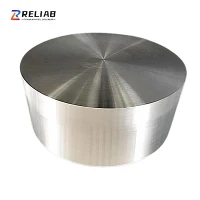
What is the shear strength of Grade 3 Pure Titanium Plate?
As a trusted supplier of Grade 3 pure titanium plates, I often encounter inquiries regarding the shear strength of these high - performance materials. Understanding the shear strength is crucial for various applications, from aerospace to medical devices, where the material's ability to withstand forces is of utmost importance.
Understanding Shear Strength
Shear strength refers to the maximum amount of shear stress a material can withstand before failure. Shear stress occurs when two parallel forces act in opposite directions, causing one part of the material to slide over another. In the case of a Grade 3 pure titanium plate, shear strength is a measure of its resistance to this type of deformation.
Grade 3 pure titanium is known for its excellent combination of strength, ductility, and corrosion resistance. It contains a relatively low amount of impurities, which contributes to its favorable mechanical properties. The chemical composition of Grade 3 titanium typically includes a minimum of 99.2% titanium, along with small amounts of iron, oxygen, carbon, nitrogen, and hydrogen.
Factors Affecting Shear Strength
Several factors can influence the shear strength of a Grade 3 pure titanium plate.
-
Microstructure: The microstructure of the titanium plate plays a significant role in determining its shear strength. A fine - grained microstructure generally results in higher strength because the grain boundaries impede the movement of dislocations, which are responsible for plastic deformation. During the manufacturing process, processes such as hot rolling and heat treatment can be used to control the grain size and shape, thereby optimizing the shear strength.
-
Temperature: Temperature has a notable impact on the shear strength of titanium. As the temperature increases, the shear strength of Grade 3 pure titanium typically decreases. At elevated temperatures, the atoms in the material have more thermal energy, which allows dislocations to move more easily, leading to reduced resistance to shear stress. This is an important consideration in applications where the material may be exposed to high - temperature environments, such as in aerospace engines.


-
Strain Rate: The rate at which the shear force is applied, known as the strain rate, also affects the shear strength. At high strain rates, the material has less time to deform plastically, and as a result, the shear strength may increase. This phenomenon is particularly relevant in dynamic applications, such as impact loading.
Measuring Shear Strength
The shear strength of a Grade 3 pure titanium plate is typically measured through standardized testing methods. One common method is the single - shear test, where a specimen is subjected to a shear force applied parallel to the plane of the specimen. The shear force is gradually increased until the specimen fails, and the maximum shear stress at failure is recorded as the shear strength.
Another method is the double - shear test, which is more commonly used for thicker specimens. In a double - shear test, the specimen is held between two supports, and a shear force is applied at the center, causing the specimen to fail in two shear planes simultaneously.
Typical Shear Strength Values
The shear strength of Grade 3 pure titanium plates can vary depending on the factors mentioned above. Generally, at room temperature, the shear strength of Grade 3 titanium ranges from approximately 275 MPa to 345 MPa. However, it's important to note that these values are approximate and can be affected by the specific manufacturing process, heat treatment, and the orientation of the plate.
Applications and Significance of Shear Strength
The shear strength of Grade 3 pure titanium plates is a critical property in many applications.
-
Aerospace Industry: In the aerospace industry, Grade 3 titanium plates are used in various components, such as aircraft frames and engine parts. The high shear strength of these plates allows them to withstand the complex loading conditions experienced during flight, including shear forces due to air pressure and vibrations.
-
Medical Devices: Titanium is widely used in medical devices because of its biocompatibility. Grade 3 pure titanium plates are used in orthopedic implants, such as bone plates and screws. The shear strength of these plates ensures that they can withstand the forces exerted on the implant during normal use, such as walking or lifting.
-
Chemical Processing: In the chemical processing industry, Grade 3 titanium plates are used in equipment that comes into contact with corrosive chemicals. The combination of high shear strength and excellent corrosion resistance makes these plates suitable for applications where the equipment may be subjected to mechanical stress and chemical attack simultaneously.
Related Products
If you are interested in other titanium products, we also offer a wide range of options. You can explore our Titanium Flat Bar, which is known for its high strength - to - weight ratio and excellent corrosion resistance. Our ASTM F136 Ti6AL4V ELI Titanium Sheets are specifically designed for medical and aerospace applications, offering superior mechanical properties. Additionally, our Titanium Timascus Plate is a unique product with a beautiful pattern and high performance.
Conclusion
The shear strength of Grade 3 pure titanium plates is a complex property that is influenced by multiple factors. As a supplier, we ensure that our Grade 3 pure titanium plates meet the highest quality standards and offer consistent shear strength. Whether you are in the aerospace, medical, or chemical processing industry, our Grade 3 pure titanium plates can provide the reliability and performance you need.
If you have any questions about the shear strength of Grade 3 pure titanium plates or are interested in purchasing our products, please feel free to contact us. We are more than happy to assist you in finding the right titanium solution for your specific application.
References
- ASM Handbook Volume 2: Properties and Selection: Nonferrous Alloys and Special - Purpose Materials.
- Titanium: A Technical Guide, Second Edition by John R. Davis.
- ASTM standards related to titanium materials testing.