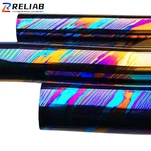
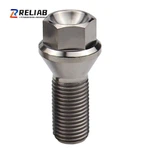
Titanium alloys feature high mechanical strength, excellent fatigue resistance, and good oxidation resistance. However, they also present challenges in machining: they are chemically reactive, prone to oxidation, have low thermal conductivity, and exhibit a low modulus of elasticity. These characteristics make titanium alloys susceptible to thermal damage, microcracks, and deformation during the polishing process, placing higher demands on the polishing process.
Comparison of the Three Mainstream Polishing Processes
1. Mechanical Polishing
Principle: Through the micro-cutting and rolling action of abrasive particles, the protruding material on the surface undergoes plastic flow and fills in the valleys, gradually reducing surface roughness.
Key Process Parameters:
Linear Speed: 900–1,800 m/min (Too high causes burning; too low results in insufficient efficiency)
Polishing pressure: 0.3–0.5 MPa (light pressure is the general rule to avoid a secondary deformation layer)
Rotational speed: 700–900 rpm (when using polyurethane polishing pads, speeds exceeding 1,500 rpm can cause the pad to crystallize and the titanium surface to turn black)
Abrasive Selection: Prioritize superhard abrasives such as diamond and cubic boron nitride (CBN); avoid SiC (which readily reacts with titanium)
Direction per Pass: Rotate 90° when changing abrasive grit size to facilitate inspection of whether scratches from the previous pass have been removed
Achievable surface roughness: Ra 0.01–0.05 μm (mirror finish, achieved through multiple passes of fine polishing) - Search for titanium products
Advantages: Low equipment investment, flexible process, suitable for single pieces or small batches, intuitive and controllable
Disadvantages: Low efficiency, high labor intensity, difficult to access complex cavities, prone to residual stress and deformation layers
2. Chemical Polishing
Principle: By utilizing a chemical solution to preferentially dissolve microscopic protrusions on the surface (where current density is high and dissolution is rapid), the process achieves surface leveling and brightness. No complex equipment is required; it is a purely immersion-based process.
Typical Formulation Systems:
Hydrofluoric Acid–Nitric Acid System (Traditional Mainstream): HF + HNO₃ + additives; achieves a bright finish through the balance between dissolution and passivation.
Room-Temperature Rapid System: New formulations can achieve a mirror-like finish within 10–20 seconds, significantly reducing processing time.
Process Features:
No power supply or complex fixtures required; simple equipment
Can process complex shapes, internal cavities, micro-pores, and other areas inaccessible to mechanical polishing
Fast polishing speed, suitable for batch processing
Advantages: Extremely low equipment investment, high efficiency, good adaptability to complex shapes, and no mechanical stress
3. Electrolytic Polishing (EP)
Principle: With the workpiece serving as the anode and an insoluble material as the cathode, a direct current is applied in a specific electrolyte solution. This process utilizes the "selective dissolution" effect-where the current density is higher and the dissolution rate is faster at microscopic surface protrusions-to achieve surface leveling and a bright finish. It is a type of electrochemical finishing process.
Achievable Surface Roughness: Ra ≤ 0.1 μm (ASTM B912 standard), with a uniform, consistent mirror-like finish makerstage.com
Key Advantages:
No Deformation Layer: Pure electrochemical dissolution produces no mechanical stress or processing-induced degradation layers-this is particularly critical for metallographic specimen preparation; high-purity titanium must be electrolytically polished to avoid surface deformation Chuanhe Truer
Excellent uniformity: Complex shapes, internal cavities, and crevices can all be polished uniformly
Enhanced corrosion resistance: A dense passivation film forms on the surface after polishing, providing significantly better corrosion resistance than mechanical polishing
High efficiency: Much faster than mechanical polishing for batch processing
Good reproducibility: Results are highly consistent once parameters are fixed Struers


 E-mail: garychen3215@hotmail.com
 Address: No.35, Baoti Rd, Baoji city, Shaanxi Province, China
 Contact: Mr. Gary Chen
 Phone: +86-917-8883215
 Mobile/WhatsApp: +86 13092900605