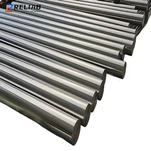
In the processing of titanium alloys, due to the differences in product processing techniques, titanium forgings and titanium castings have become two extremely important processing steps. Today, let's explore the differences between these two processing methods.
A. Titanium Forging:
A processing method that, under the action of forging equipment and tools (dies), causes plastic deformation of titanium billets or ingots to obtain forgings with certain geometric dimensions, shapes and qualities. Dense, used for important parts. During forging, metals undergo plastic deformation, which has the effect of refining grains and cutting fibers continuously. Therefore, it is often used in the rough manufacturing of important parts, such as shafts and gears.

B. Titanium Casting:
A forming method in which metals are melted, molds are made, and the molten metal is poured into the molds. After solidification, titanium castings of certain shapes, sizes, compositions, structures, and properties are obtained. It is loose and not dense, and is not suitable for important components. Casting does not have many of the advantages of forging, but it can produce parts with complex shapes, and thus is often used in the rough manufacturing of support parts with low mechanical performance requirements. For example, machine tool casings, etc."

Comparison: After metals undergo forging processing, their microstructure and mechanical properties can be improved. After the casting structure undergoes hot working deformation through forging methods, due to the deformation and recrystallization of the metal, the original coarse dendrites and columnar grains are transformed into fine-grained and uniformly sized equiaxed recrystallized structures. This compacts and welds the original segregation, porosity, and slag inclusions within the steel ingot, making the structure more compact and enhancing the plasticity and mechanical properties of the metal.
The mechanical properties of castings are lower than those of forgings of the same material. In addition, forging processing can ensure the continuity of the metal fiber structure, keeping the fiber structure of the forging consistent with its shape, and ensuring the integrity of the metal flow lines. This can guarantee that the parts have good mechanical properties and a long service life. Forgings produced by precision die forging, cold extrusion, warm extrusion and other processes are all incomparable to castings.
Choose BAOJI RELIAB METAL for your titanium products needs.
If you are seeking for titanium materials such as titanium plates, bars, tubes, wires and titanium CNC machined parts, BAOJI RELIAB METAL is your one-stop supplier. We supplying the high quality titanium products with fast delivery, and 24-hours sales and after-sales services.
Contact us as below information:
Baoji Reliab Metal Materials Co.,Ltd
Tel: +86-917-8883215
Mobile: +8613092900605
+8613092913521
E-mail:garychen3215@hotmail.com