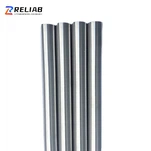
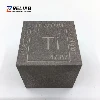
If annealing is like "taking a sauna and slowly relaxing," then the visual image of solution treatment is exactly the opposite: heating the titanium component to a very high temperature, holding it there until it's thoroughly heated through, and then "running it through cold water" as quickly as possible-water quenching. One is slow heating, the other is rapid cooling; the processes are exactly opposite. But don't be too quick to equate this with the "hardening through quenching" process used for steel. This "cold water" treatment for titanium alloys hides a secret that defies common sense: the purpose of quenching is not to harden the material immediately.
I. Let's start by debunking a myth: Why doesn't titanium harden instantly like steel does when quenched?
When steel is heated until red-hot and then plunged into water, it makes a "sizzle" sound and becomes hard enough to scratch glass. This is all thanks to carbon-carbon atoms are tiny, so during rapid cooling, they don't have time to diffuse and are effectively locked into the crystal lattice, causing severe distortion and forming hard, brittle martensite. This single step alone maximizes the material's strength. Many people assume that titanium alloys can be treated the same way. But titanium martensite doesn't work that way. The alloying elements in titanium-such as aluminum, vanadium, and molybdenum-are roughly the same size as titanium atoms; they "displace" other atoms to fit into the crystal lattice, unlike carbon, which is a small particle forced into the gaps. Therefore, the lattice distortions caused by the martensite formed during rapid cooling-hexagonal α′ and orthorhombic α″-are far less severe than those in steel. As a result, the martensite obtained by quenching titanium alloys provides only a limited strengthening effect and even retains decent ductility.
II. What exactly is being "solidified" and what is being "dissolved" in solid solution?
At high temperatures, a portion of the α phase present in the titanium alloy at low temperatures gradually dissolves into the β phase. The higher the temperature-and the closer it is to the β transformation temperature (Tβ)-the more α phase dissolves, and the higher the concentration of β-stabilizing elements (vanadium, molybdenum, iron, and chromium) enriched in the β phase. Solid solution treatment involves heating the alloy to a sufficiently high temperature (above the α+β phase region, or even into the β single-phase region), holding it at that temperature for a sufficient duration to allow complete dissolution of the soluble components, thereby achieving a "uniform microstructure" at high temperatures; then rapidly cooling it to freeze the diffusion process in an instant-the β phase enriched with alloying elements is forced to remain at room temperature before it has time to precipitate during cooling. This frozen state may be martensitic α′/α″, or it may be metastable β that has been directly retained. While it is not the strongest state in itself, it is "stuffed" with elements that should have precipitated but did not. In technical terms, this is called a supersaturated solid solution-a "tense" state that is thermodynamically unstable and ready to decompose at any moment.
III. How long should the holding time be? It's not determined by a timer, but by the thickness of the workpiece. The solution treatment temperature is set close to the phase transformation point, while the holding time is entirely determined by whether the workpiece can be fully heated through. The differences are stark: sheet metal and foil typically require only 2 to 30 minutes of holding time, while very thin pieces can be fully heated in just a few seconds; bars and forgings often require several tens of minutes, and special large forgings may even need to be held for up to 4 hours-if the core isn't heated uniformly, the degree of solution treatment will be inconsistent between the interior and exterior, resulting in two distinct sets of properties after quenching. The book also specifically notes: if a thermocouple is used to measure the temperature directly on the furnace charge, the holding time can actually be shortened.
IV. Remember: The solution-treated state is not the final product-this is an important point to emphasize. A titanium component that has just been quenched is in a supersaturated, metastable state; its strength is often not yet fully developed, and its microstructure is unstable. It is not a finished product ready for immediate delivery. It is like a dish whose ingredients have been prepared and flash-frozen-ready to be cooked-but to truly bring out its flavor, it relies on the subsequent aging process. In engineering practice, it is generally not advisable to delay the transition from solution treatment to aging; this is especially true for grades where the metastable β phase undergoes slow changes at room temperature-these must be placed in the aging furnace promptly.


 E-mail: garychen3215@hotmail.com
 Address: No.35, Baoti Rd, Baoji city, Shaanxi Province, China
 Contact: Mr. Gary Chen
 Phone: +86-917-8883215
 Mobile/WhatsApp: +86 13092900605