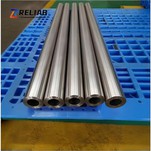
The application of titanium alloy tubing in bicycles offers the ultimate metal solution for riders seeking exceptional durability, a unique riding experience, and timeless aesthetics. From the tubing itself to the partially forged joints, the entire manufacturing process requires precise control over heat treatment and welding techniques.
I. Mainstream Grades and Performance Division of Titanium Alloy Tubing for Bicycles
The bicycle industry does not use a single titanium alloy. Instead, it selects the appropriate alloy based on the stress and processing requirements of the components. There are three main grades, forming a clear performance division:
Grade 9 (Ti-3Al-2.5V, domestic grade TA18) – The Gold Standard for Frame Tubing
Composition: 3% aluminum + 2.5% vanadium, balance titanium, belonging to near-alpha type titanium alloy.
Core Advantages: Twice the strength of industrial pure titanium, while retaining excellent cold-working plasticity and weldability. It is the only high-strength titanium alloy suitable for cold-drawing and reducing tube diameter, achieving a perfect balance between strength, toughness, and machinability.
Applications: All main body tubing of the frame, including the top tube, down tube, seat tube, rear fork, and rear chain fork, accounting for over 90% of titanium bicycle tubing usage.
Riding Characteristics: With a modulus of elasticity of approximately 105 GPa, between steel (206 GPa) and aluminum (70 GPa), it provides a unique "tough yet firm" road feel, efficiently transmitting power while filtering high-frequency micro-vibrations from the road surface.
Grade 5 (Ti-6Al-4V) – High-Strength Localized Reinforcement Components
Composition: 6% aluminum + 4% vanadium, α+β type titanium alloy, the most commonly used high-strength titanium alloy in industrial applications.
Core Advantages: Tensile strength can reach over 900 MPa, approximately 50% higher than Gr9, with greater rigidity, but cold working is difficult and the welding process window is narrow.
Applications: Rarely made as a single tube; mostly CNC machined from bar stock into bottom bracket shells, head tubes, rear derailleur hangers, fork shoulders, and other stress-concentrated node components, welded with Gr9 tubing to achieve a performance combination of "tough tube body and high node rigidity." A few top-tier racing frames use Gr5 thin-walled tubing, but the processing cost is extremely high.
Grade 2 (Industrial Pure Titanium) – Entry-level Titanium Tubing
Composition: Industrial pure titanium with a purity of over 99%, very low alloying elements.
Characteristics: Good toughness, simple welding process, lower cost, but lower strength, requiring thicker tubing to meet structural strength requirements.
Applications: Frames for entry-level recreational titanium bicycles and urban commuter bikes, as well as seatposts, handlebars, and other components where high strength is not required.
II. Core Applications of Titanium Alloy Tubing in Bicycles
Titanium alloy tubing is not only used in the frame; its tubular shape allows it to be used in several core components of the bicycle:
1. Frame Body (Most Core Application)
The frame is where the value of titanium alloy tubing is most fully realized. It is composed of multiple titanium tubes of different diameters and wall thicknesses welded together to form the main triangle and rear triangle structures.
The mainstream design uses a **butted tube** process: the walls at both ends of the tube are thicker (0.9~1.2mm) to ensure structural strength in the welded area; the wall thickness in the middle section is reduced to 0.6~0.8mm, achieving weight reduction while maintaining strength. Simultaneously, the gradual change in tube diameter optimizes the rigidity and elasticity matching at different locations.
Typical Weight: Adult road bike titanium frames weigh approximately 1.3~1.6kg, 30%~40% lighter than steel frames of the same strength, and 10%~20% lighter than high-end aluminum frames; slightly heavier than top-tier carbon frames, but with far superior durability and lifespan.
2. Fork System
Firm Fork Legs: High-end titanium alloy rigid forks use Gr9 seamless tubing fork legs, combined with Gr5 precision-cast fork shoulders and steerer tubes, offering both shock absorption resilience and steering rigidity, making them the preferred configuration for gravel bikes and long-distance touring bikes.
Steerer Tube: Some mountain bike forks use titanium alloy tubing for the top tube (steerer tube), reducing weight and improving fatigue life.
3. Seatpost/Seat Post
Titanium alloy seatposts are a popular component in the aftermarket: Utilizing the elastic properties of titanium alloy, it can absorb road vibrations through slight deformation, significantly reducing discomfort in the hips during long rides; It weighs approximately 20% less than a comparable aluminum alloy seatpost and will not corrode due to sweat or rain, with no issues of paint peeling or rusting throughout its lifespan.
4. Handlebar Assembly (Barrel Crossbars, Stem)
Titanium alloy bar rails are made of thin-walled titanium tubing, which filters high-frequency vibrations transmitted to the hands from the road surface, reducing hand numbness during long rides. Compared to carbon fiber bar rails, they are more impact-resistant and drop-resistant, less prone to breakage in crashes, and more suitable for off-road and long-distance adventure riding.
5. Other Tubular Components
Wheels: Some high-end rims use titanium alloy sheet rolled and welded into tubular rims, balancing extreme lightweighting and impact resistance; titanium alloy spoke caps are also common lightweight modification components.
Load-bearing Components: Touring bike racks and fender brackets are made of titanium tubing, significantly reducing the overall weight of the bike while ensuring load-bearing strength.


 E-mail: garychen3215@hotmail.com
 Address: No.35, Baoti Rd, Baoji city, Shaanxi Province, China
 Contact: Mr. Gary Chen
 Phone: +86-917-8883215
 Mobile/WhatsApp: +86 13092900605