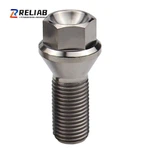
Titanium alloys have a density of just 4.51 g/cm³-less than 60% that of steel-yet their tensile strength far exceeds that of ordinary carbon steel and some types of stainless steel. At equivalent strength levels, CNC-machined titanium alloy parts are lighter, resulting in significant weight savings in aerospace, drones, racing cars, medical devices, and outdoor gear.
Thanks to their high precision, high automation, and ability to handle complex structures, CNC-machined parts have become deeply integrated into core areas of modern industry. Their typical application fields and representative parts are as follows:
I. Aerospace
Turbine blades: 5-axis simultaneous machining of complex surfaces to meet micron-level aerodynamic profile tolerances;
Missile casings/engine nozzles: Machined from titanium alloys to balance lightweight design with strength required for extreme environments;
Spacecraft Bearing Housings: Designed with ultra-high dimensional stability to withstand extreme space environments.
II. Automotive Manufacturing
New Energy Vehicle Battery Cooling Plates: Precision milling of multi-chamber flow channels to ensure thermal management efficiency;
Transmission Gears/Crankshafts: Hard turning processes achieve IT7 precision and low surface roughness (Ra 0.8);
Brake Calipers/Clutch Housings: Uniform structural milling ensures braking safety.
III. Electronics and Semiconductors
Semiconductor Ceramic Substrates: Drilling of 0.1 mm ultra-micro holes to advance chip packaging miniaturization;
Mobile Phone Heat Sinks: High-speed milling of thin-walled aluminum alloy components, thickness ≤ 0.5 mm;
High-Speed Connectors: Precision turning of gold-plated contacts to ensure high-frequency signal stability.
IV. Industrial Equipment
Precision Valves/Bearings: Corrosion-resistant machining of stainless steel, with sealing surface roughness ≤ Ra 1.6;
Robotic Joint Components: Combined turning and milling of multi-feature integrated parts, with repeatability of ±0.02 mm;
Custom Frames/Guide Rails: Segmented machining and high-precision assembly of large structural components.
Directions for Technological Expansion
Material Innovation: High-speed machining of carbon fiber composites (for lightweight aerospace applications);
Extremes of Miniaturization: Advancing toward the machining of nanoscale minimally invasive medical devices;
Smart Manufacturing: Robot-CNC collaboration to achieve 24-hour unmanned production lines (in the automotive sector).
Quality Characteristics of Workpieces After CNC Machining
1. Controllability of Dimensional Accuracy
With appropriate fixtures, low-speed high-feed machining, and carbide/diamond cutting tools, CNC milling, turning, drilling, and boring can consistently achieve the following tolerances: ±0.02 to ±0.05 mm for standard parts; for precision titanium structural components and sealing grooves, high-precision tolerances of ±0.005 mm can be achieved.
Titanium exhibits minimal thermal deformation, and dimensional changes due to aging are negligible when left at room temperature after machining. This ensures excellent dimensional consistency in finished parts, making it suitable for mass production of export orders.
2. Surface Finish Characteristics
1) Standard milling: uniform texture, surface roughness Ra 1.6–Ra 6.3; after precision milling, polishing, sandblasting, and anodizing, a variety of finishes-including mirror, matte, and satin-can be achieved.
2) Titanium alloys can undergo anodic coloring (blue, gold, gray, black, and other colors); the oxide film simultaneously enhances wear and corrosion resistance, providing high aesthetic value and serving as a common surface treatment for export products.
3) There are no issues with machining-induced rust; bare parts are unlikely to rust during storage, and complex anti-rust packaging is unnecessary for warehousing and ocean freight (making it more hassle-free compared to carbon steel).
3. Advantages in Workpiece Structural Forming
Five-axis CNC machining can process complex curved surfaces, irregular cavities, flow channels, and multi-hole, irregularly shaped titanium parts. Titanium has reasonable plasticity, allowing for integrated machining that combines milling, turning, drilling, tapping, and slotting. The structural strength of integrally formed parts is far superior to that of welded assemblies; since titanium welding tends to cause embrittlement, high-end products prioritize integral CNC machining.


 E-mail: garychen3215@hotmail.com
 Address: No.35, Baoti Rd, Baoji city, Shaanxi Province, China
 Contact: Mr. Gary Chen
 Phone: +86-917-8883215
 Mobile/WhatsApp: +86 13092900605