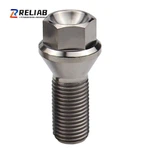
High-precision titanium rods are widely used in various high-tech and high-end manufacturing sectors due to their excellent physical and chemical properties, such as high strength, light weight, corrosion resistance, and biocompatibility.
(1) Aerospace
Titanium alloys (such as Ti-6Al-4V) have strength comparable to that of steel but are 40% to 50% lighter, which can significantly improve fuel efficiency and payload capacity. Applications: aircraft engine compressor blades, airframe structural components, landing gear, rocket fuel tanks, satellite mounts, etc. Case Study: The Boeing 787 and Airbus A350 extensively use titanium alloy components, and the liquid oxygen tanks on SpaceX rockets feature titanium alloy-reinforced structures.
(2) Healthcare
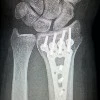
Titanium offers excellent biocompatibility; it is non-toxic and resistant to corrosion within the body, and can be precision-machined to achieve a perfect fit with bone. Applications: Artificial joints (hip and knee), orthopedic implant screws, dental implants, cardiovascular stents, and surgical instruments. Case Studies: 3D-printed titanium alloy intervertebral fusion devices for spinal surgery; customized titanium rods for repairing skull defects.
(3) Chemical Engineering and Marine Engineering
Titanium is virtually corrosion-resistant in chloride-ion environments (such as seawater and acidic media), with a service life far exceeding that of stainless steel. Applications: Piping for seawater desalination equipment, chemical reaction vessels, deep-sea submersible hulls, and submarine pressure hulls. Case Studies: Titanium alloy piping is used in seawater desalination plants in the Middle East, and the pressure hull of the deep-sea submersible "Jiaolong" is manufactured from titanium alloy.
(4) Precision Manufacturing and High-End Equipment
Titanium's low coefficient of thermal expansion and high thermal stability make it suitable for precision temperature-controlled environments. Applications: Semiconductor wafer processing equipment, lithography machine mounts, high-precision optical instruments, and vacuum coating chambers. Case Study: Certain components of ASML lithography machines are made of titanium alloys to maintain stability.
(5) Automotive and Racing
Weight reduction enhances acceleration performance and fuel efficiency; titanium exhaust systems are heat-resistant and have a long service life. Applications: High-performance engine connecting rods, titanium alloy exhaust systems, lightweight components for racing chassis. Examples: Ferrari F1 race cars use titanium alloy piston connecting rods, and some components of the Tesla Cybertruck are made of titanium alloy.
(6) Sports and Outdoor Equipment
A balance of light weight and high strength enhances athletic performance. Applications: Golf club heads, bicycle frames, climbing carabiners, and diving equipment. Examples: Titleist Vokey wedges use titanium alloys, and high-end mountain bike brands use titanium alloy frames. (7) Energy and Nuclear Power
Titanium exhibits high stability under high-temperature, high-pressure, and radiation environments, and its corrosion resistance extends equipment lifespan. Applications: Piping in nuclear power plant cooling systems, fuel cell bipolar plates, and geothermal power generation equipment. Examples: Steam generators in French nuclear power plants use titanium alloy tubes, and titanium bipolar plates in hydrogen fuel cells enhance electrical conductivity.
(8) Military and Defense
Titanium's impact resistance and corrosion resistance make it suitable for extreme military environments. Applications: lightweight components for armored vehicles, missile casings, ship propellers, and bulletproof armor.


 E-mail: garychen3215@hotmail.com
 Address: No.35, Baoti Rd, Baoji city, Shaanxi Province, China
 Contact: Mr. Gary Chen
 Phone: +86-917-8883215
 Mobile/WhatsApp: +86 13092900605