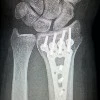
Titanium alloys are often hailed as the "wonder metal" of biomedicine, with applications ranging from orthopedic implants and dental restorations to cardiovascular stents and surgical instruments, encompassing virtually every field of modern medicine.
Why can this seemingly ordinary metal "disappear" within the human body, seamlessly integrating with our tissues? What is its remarkable "biological magic"? Where does this magic come from? Let's explore these questions in this article.
In the 1950s, titanium alloys officially entered the medical field. The initial star product, Ti-6Al-4V (containing 6% aluminum and 4% vanadium), performed well, but doctors discovered that the vanadium content might pose health risks. Therefore, materials scientists began to develop new formulations, replacing vanadium with the safer element niobium, resulting in new alloys such as Ti-6Al-7Nb.
In the world of medical materials, titanium alloys are like an all-around champion-strong, lightweight, and perfectly biocompatible.
Advantage 1: Excellent biocompatibility.
If a piece of metal is placed inside the human body, what is the biggest concern? That's right-the risk of a rejection reaction. However, titanium alloys can coexist peacefully with the human body thanks to a unique property: the ability to automatically form a protective layer (titanium dioxide). This layer is virtually insoluble in body fluids, effectively prevents the release of metal ions, and is resistant to corrosion, thus minimizing the risk of an immune system response.
Advantage 2: Strong and lightweight.
The second remarkable feature of titanium alloys is their mechanical properties. Doctors have found that an ideal implant material should have two characteristics: sufficient strength to withstand daily activities, and elasticity similar to that of natural bone. Titanium alloys perfectly meet these requirements.
Advantage 3: Excellent corrosion resistance.
Due to its excellent overall performance, titanium alloy has found widespread application in modern medical fields, covering key areas such as dental restorations, cardiovascular stents, and orthopedic implants.
A comprehensive overview of medical applications of titanium alloys
Titanium alloys have the widest application in orthopedics, primarily used for repairing or replacing damaged bones and joints. Their wear resistance and fatigue resistance make them an ideal material for long-term implants in knee and shoulder joints.
Secondly, titanium alloys have been used in dentistry for decades, primarily for dental implants, dentures, and orthodontic treatments. Pure titanium (CP-Ti) and Ti-6Al-4V are the most commonly used materials for dental implants.
Another important application of titanium alloys is in cardiovascular medicine. In the field of cardiovascular stents, Nitinol stents, made of nickel-titanium alloy, possess superelastic properties, allowing them to be compressed to a very small diameter (1-2 mm) and then automatically restore their original shape after being implanted in blood vessels, thus supporting narrowed arteries.
As mentioned earlier, advanced manufacturing processes have transformed titanium alloys from mere inert metals into bioactive "medical companions" that play an irreplaceable role within the human body. With further breakthroughs in the intersection of materials science and bioengineering, future titanium implants could become even smarter, potentially possessing self-healing, immune-modulating, or even sensing capabilities, thus continuing to play a key role in regenerative medicine, nanotechnology, and other fields.