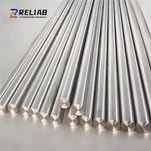
The selection of materials for large-aperture mirror support structures is shifting from Invar and C-SiC toward titanium alloys. Thanks to their extremely low deformation characteristics, titanium alloys are becoming the material of choice for these structures.
Why Titanium Alloy? An Overlooked Key Metric
As the apertures of astronomical telescopes grow ever larger, the requirements for surface figure accuracy are pushing against physical limits. For the primary mirror of a space-based gravitational wave telescope, the required surface accuracy is RMS ≤ λ/50-meaning surface deviations must be controlled within the range of just over ten nanometers. At this scale, even the slightest dimensional drift in the support structure is magnified into imaging distortion. When selecting materials for such structures, conventional practice focuses on density, Young's modulus, and the coefficient of thermal expansion. However, in this specific context, a more fundamental metric comes into play: micro-yield strength. While standard yield strength describes the stress at which a material undergoes significant plastic deformation, micro-yield strength measures the stress a material can withstand while experiencing only residual strain on the order of one part per million. Material screening conducted by the Battelle Memorial Institute for NASA's Goddard Space Flight Center revealed that, among numerous candidates, Grade 5 (GR5) titanium alloy offers the highest ratio of micro-yield strength to density, with a micro-yield strength of approximately 480 × 10⁶ N/m². Support structures must bear the weight of the mirror assembly over long periods; if the material undergoes continuous, irreversible plastic creep at the microscopic level, the mirror's surface figure will slowly "drift." For a telescope designed to operate stably over several years, such drift is far more detrimental than instantaneous deformation. Ultimately, the value of titanium alloy lies in its ability to maintain dimensional stability throughout its service life.
Thermal Operating Conditions: CTE Matching Is Just the Starting Point
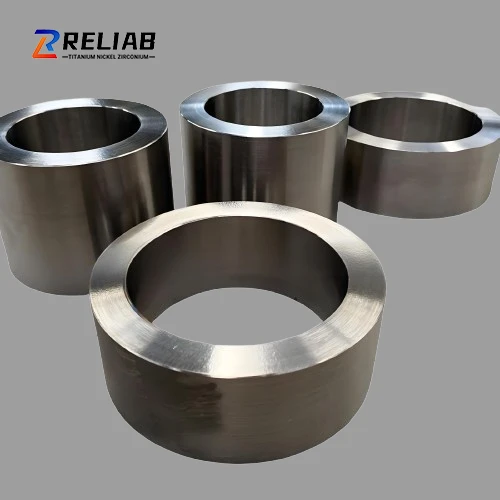
Maintaining a precise surface figure across varying thermal conditions is the core challenge in mirror support design. Grade 5 (GR5) titanium alloy has a coefficient of thermal expansion (CTE) of approximately 9.1 × 10⁻⁶ K⁻¹, a density of 4.4 g/cm³, and an elastic modulus of about 109 GPa. Compared to Invar or carbon/silicon carbide composites, the CTE of GR5 is not particularly low. However, engineering material selection is never a competition based on a single metric. In the central support design for a Φ500 mm glass-ceramic primary mirror, both the bushing and the support sleeve are made of titanium alloy, with a flexible adhesive layer connecting the mirror body to the support structure. Simulations indicate that under a uniform temperature change of 40°C, the surface figure accuracy (RMS) remains within 4.2 nm, and the assembly's fundamental frequency exceeds 53 Hz. The adhesive layer plays a pivotal role here: it relieves the load of the mirror's own weight while absorbing thermal stresses caused by the CTE mismatch between the titanium alloy and the glass-ceramic. The value of GR5 titanium alloy lies not in having the "optimal" CTE, but in enabling-through rational interface design-the control of thermal stress within acceptable limits while simultaneously providing sufficient structural rigidity. This represents a systems-level engineering approach rather than a simple material substitution.
Two Configurations: Flexure Hinges and Integrated Lattice Structures
In terms of specific structural design, titanium alloys are utilized in mirror support systems in more than one form, with different structural configurations reflecting distinct design philosophies. Flexure hinges-using flexibility to overcome rigidity. In the 1.93-meter precision measurement telescope project led by the Nanjing Institute of Astronomical Optics & Technology (NIAOT), Chinese Academy of Sciences, the research team replaced traditional self-aligning ball bearings with Ti-6Al-4V (GR5) dual-diaphragm flexure hinges. This modification reduced the axial parasitic force on the primary mirror from 60 N to 2.5 N. With the lateral support fully operational, the primary mirror achieved a surface figure accuracy of 4.15 nm RMS and 24 nm PV, consistently meeting the design requirement of RMS ≤ λ/35 across a wide temperature range of -30°C to 30°C. The combination of high yield strength and relatively low elastic modulus in titanium alloys enables flexure hinges to achieve precise positioning within the elastic range without introducing friction or backlash. Integrated lattice-and-skin structures-minimizing weight through hollow design. This represents one of the most groundbreaking approaches in recent years. In a project involving a large-cantilever space mirror for an aerospace remote sensor, the 508 Institute of the China Academy of Space Technology (CAST) collaborated with Shanghai Jiao Tong University. They employed topology optimization to determine the macro-configuration, utilizing a Body-Centered Cubic (BCC) lattice for the internal structure and an outer skin for enclosure. The resulting support structure weighed only 6.5 kg, keeping the total mass of the mirror assembly under 16.5 kg. Test results showed a mirror rotation of less than 6 arcseconds and a rigid-body displacement of less than 0.02 mm-both well within the tolerances for optical alignment errors.
Summary
From micro-yield strength and flexure hinges to 3D-printed lattice structures, the value of titanium alloys in large-aperture mirror support systems extends far beyond mere material substitution. What they truly enable is the engineering feasibility of achieving nanometer-level surface figure accuracy under conditions involving wide temperature ranges and long-term operation. For the titanium industry, success in this arena hinges not on production capacity, but on the ability to translate material properties into structural design solutions.
 E-mail: garychen3215@hotmail.com
 Address: No.35, Baoti Rd, Baoji city, Shaanxi Province, China
 Contact: Mr. Gary Chen
 Phone: +86-917-8883215
 Mobile/WhatsApp: +86 13092900605